


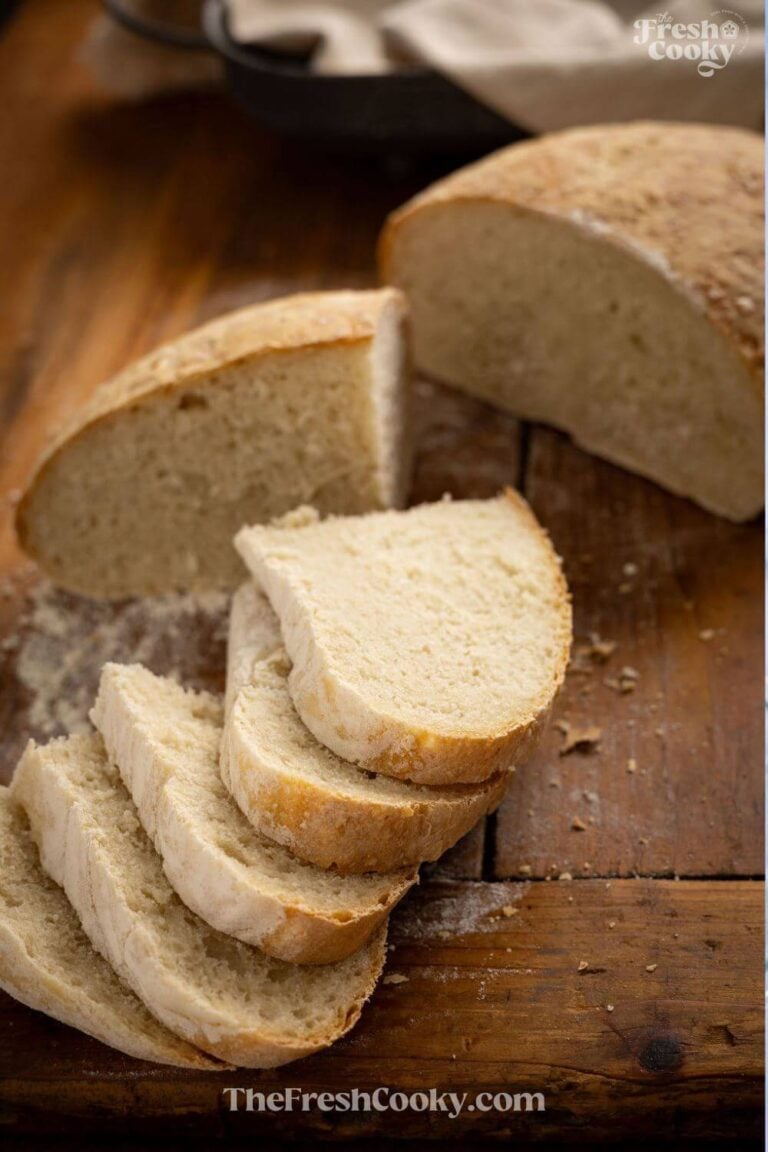

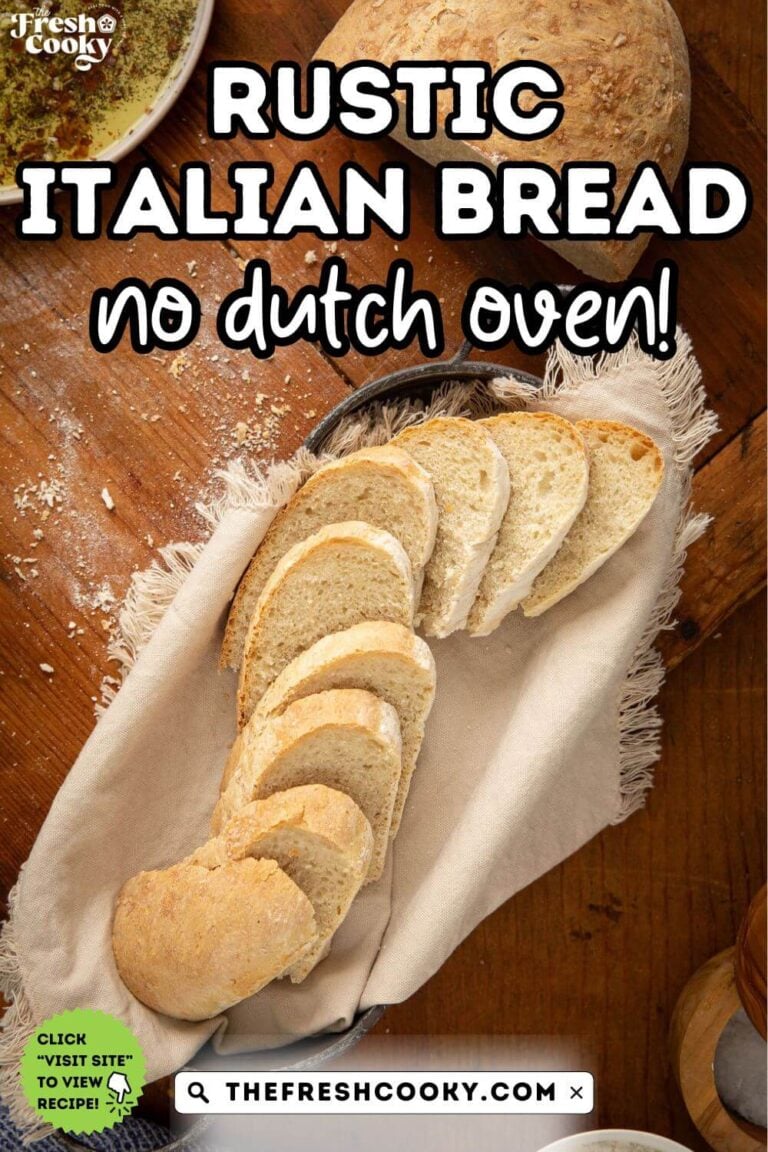

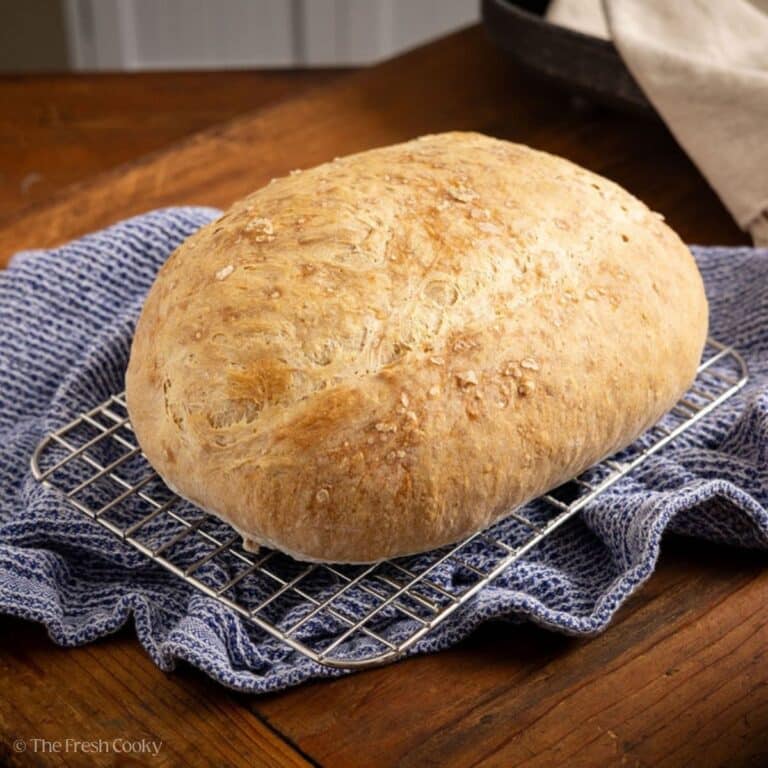
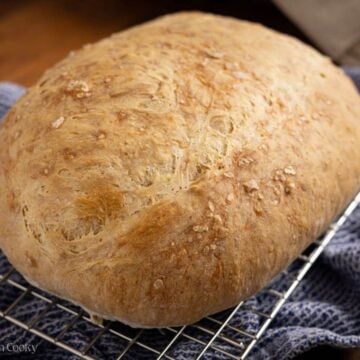
Homemade Italian bread doesn’t have to be complicated! I tested this rustic recipe over and over, tweaking everything until I got the absolute best loaf. The result is a crunchy crust with a soft, chewy, airy inside. Plus, you only need one rise, oh, and no kneading!

You will love this easy Italian bread recipe
When I say I tested this recipe, I really mean it. I baked so many loaves that I was giving Italian bread away by the droves. Some went to friends, some to neighbors, and even the “rejects” were quickly devoured.
A friend told me her daughter said the so-called reject loaf was “FIRE”, and honestly, she wasn’t wrong. In the end, a small tweak to my original formula gave me exactly what I was after: a rustic loaf with that golden, chewy crust and pillowy interior. It’s simple, satisfying, and ready to enjoy in just a few hours. Homemade bread has never been so easy!
What is Italian Bread?
Italian bread is often shaped into oval loaves with a slightly tapered ends, and is known for its chewy crust and tender crumb. It’s a versatile bread that pairs well with pastas, soups, and saucy dishes!
French bread vs Italian bread
French bread and Italian bread may look similar, but they have some notable differences. French bread tends to have a crunchier crust and a leaner dough, made with just flour, water, yeast, and salt.
Italian bread often includes a bit of olive oil, which adds flavor and tenderness. They also tend to be shorter, wider, and a bit chewier!
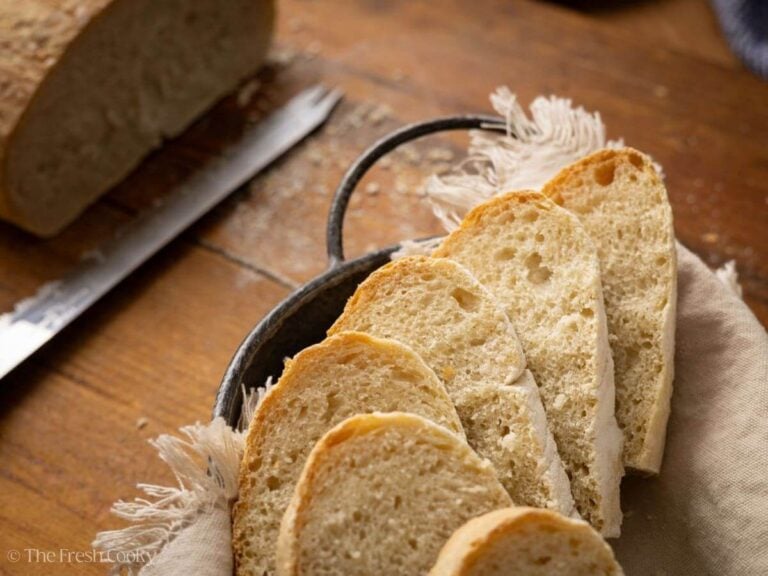
What you’ll need to make the BEST Italian Bread Recipe
- All-Purpose Flour: I used unbleached, organic all-purpose flour. I have tested this loaf with other flours, such as Tipo 00 Italian flour and bread flour, but I think all-purpose flour yields the best results.
- Instant Yeast: You can also use active dry yeast, but instant will work faster.
- Sea Salt: For flavor! Salt is also essential to control the gluten formation of the bread. If you don’t add the salt, you’ll end up with a wonky-looking loaf!
- Warm Water: Warm water helps to activate the yeast. Just don’t make it too warm; it should be between 75°F and 100°F.
- Olive Oil: Adds a layer of rich flavor to the bread, setting this Italian bread apart.
- Flaky sea salt to sprinkle on top (optional)
Get the full recipe in the recipe card below.
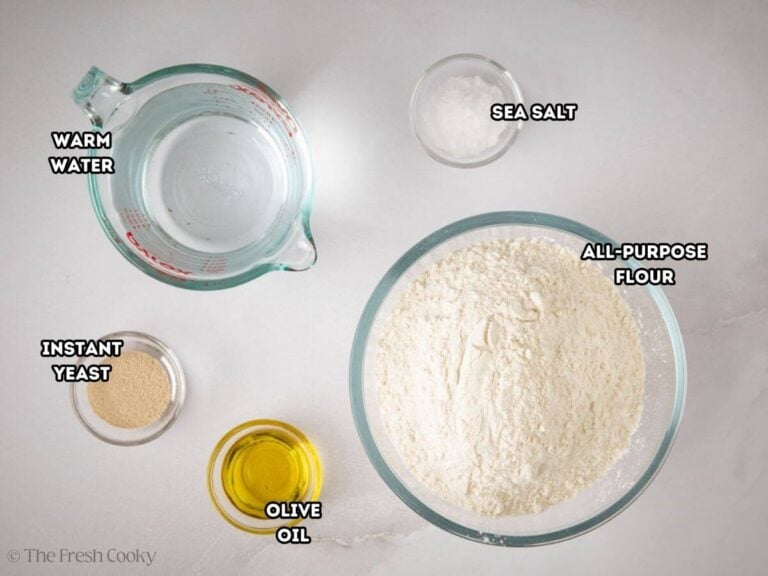
How to make Italian Bread Loaf
Step 1 – Mix the Dough
In a large mixing bowl or using a stand mixer, combine the flour, yeast*, and salt. Add olive oil and warm water. Mix until a sticky dough forms. Adjust with a little flour if needed. But it should be pretty sticky. Use the paddle attachment or dough hook.
Yeast Note: If using active yeast, it must be activated first (or your dough will take longer to rise). To activate: dissolve the yeast in ¼ cup of the recipe’s total water. Stir, then let it sit for 7–10 minutes until it becomes foamy, add yeast mixture to bowl and proceed.
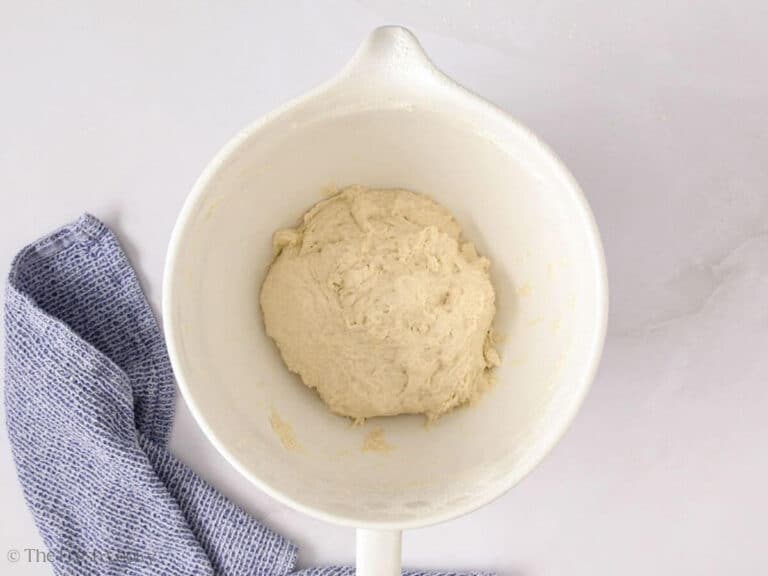
Step 2 – 1st rise
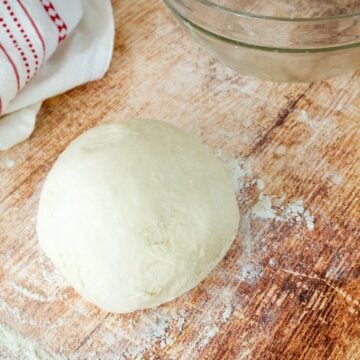
Cover the bowl loosely and let it rise at room temperature (or a warm location) for 2–3 hours, until doubled in size.
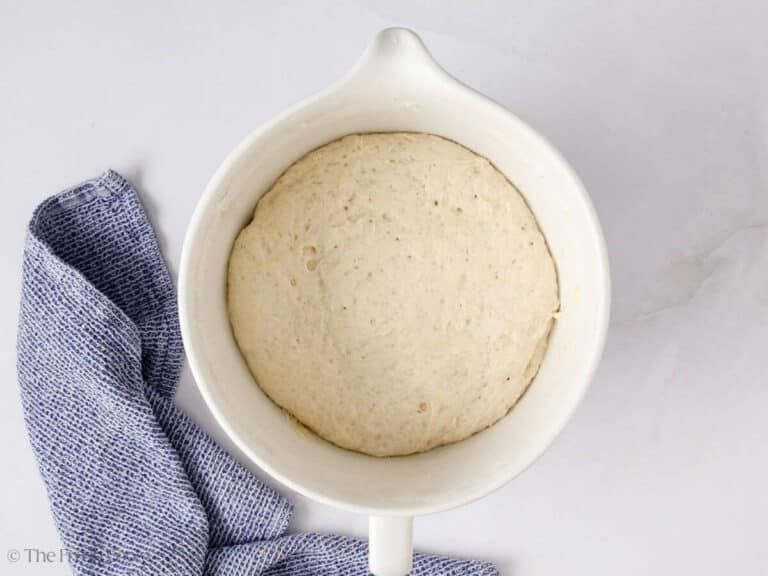
Step 3 – Shape the Dough
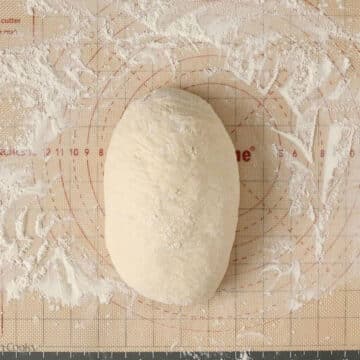
Flour your hands and countertop, then gently shape the bread dough into an oval or football shape. You can pull the edges towards the middle or scoot it around cupping and tucking with your hands. The idea here is not to overwork the dough, there’s no need for a second rise, though you can certainly do a second rise. Gently shape into a round ball, place back in the bowl, cover and rise again.

Step 4 – Prepare for Baking
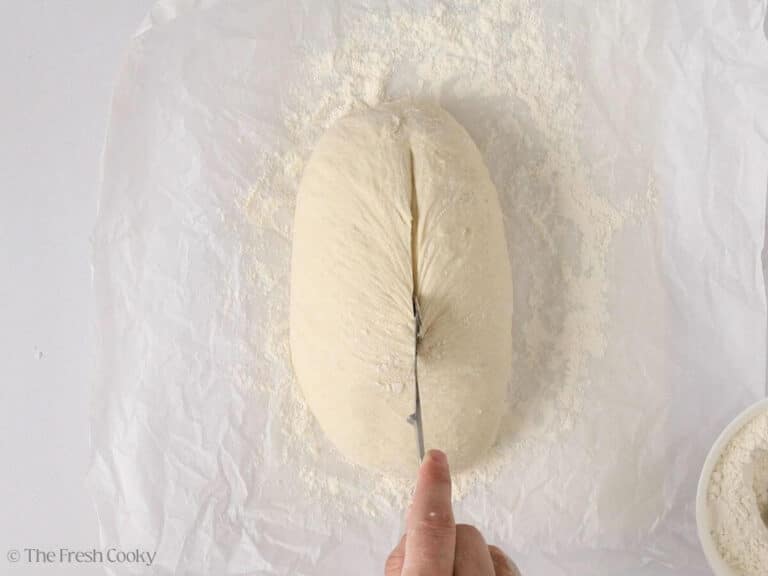
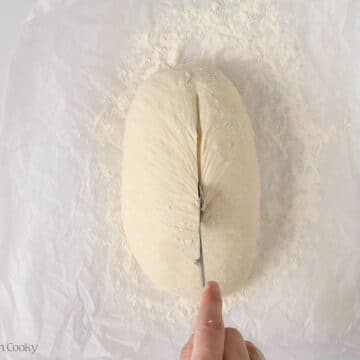
Place seam-side down on floured parchment or a baking sheet. Slash the top of the loaf with a sharp knife, brush the top with water, and sprinkle with flaky salt. Rest while oven preheats.
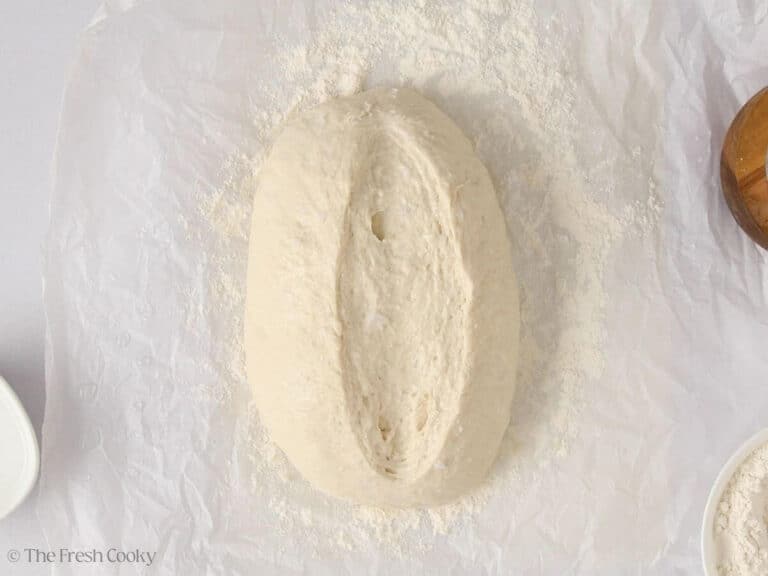
Step 5 – Preheat Oven & Bake
Heat your oven to 450°F (230°C) with a baking stone or steel inside. Place a 9×13-inch pan filled halfway with hot water on the bottom rack to create steam.
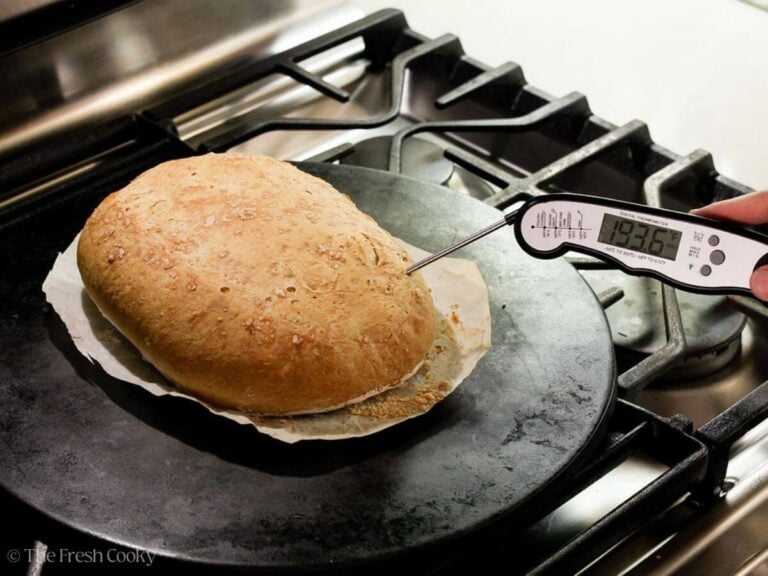
Transfer the dough to the hot stone or steel and bake 30–45 minutes, until golden brown and 190–200°F inside. Cool on a cooling rack for 2 hours before slicing.
My favorite loaf when testing is was when I accidentally had the oven on convection, it really darkened the outside, without burning. So if you have convection, give it a try. It was ready in about 35 minutes, too.


Tips for making this Recipe for Italian Bread
- Don’t skip the pan of water! A pan of water in the oven will create steam as it evaporates, which helps the crust to become firm and perfectly chewy.
- If you are new to baking on a pizza stone, use parchment paper to transfer the dough from the counter onto the stone. It will be hot, so be careful!
- Don’t slice into the bread too soon. It needs time to set up in the middle and get that perfect crumb! Cool least 2 hours before slicing to prevent a gummy inside.
- For more flavor, feel free to allow the dough to rise in the fridge overnight! This also helps if you started the bread process a little late in the day; you can just store it in the fridge until the next day, and then bake.
How to use Italian White Bread
This rustic Italian bread can be used in so many ways! Eat it toasted with bit of butter on it, dip warm bread into dipping oil, pair with your favorite saucy meals as a side dish. Oh, and don’t forget to use it in sandwiches. This made a killer grilled cheese and garlic bread! Here are some of my favorite things to pair it with:

Rustic Italian bread recipe storage tips
- Countertop: Store your cooled loaf in a breadbox, paper bag, or wrapped loosely in a clean kitchen towel for 2–3 days. This helps keep the crust crisp while protecting the inside from drying out. Avoid airtight plastic bags unless you don’t mind a softer crust, which I personally don’t mind.
- Freezing: For longer storage, let the bread cool completely, then wrap it tightly in plastic wrap, followed by foil, and place it in a freezer baggie. Freeze for up to 3 months. Thaw at room temperature, still wrapped, to keep in the moisture.
- Reheating & Refreshing: To revive your bread, preheat your oven to 350°F (175° C), then place the loaf inside for 5–10 minutes. This revives that crusty exterior and warms the inside. If reheating frozen bread, let it thaw first, then reheat in the oven. I will also place a few slices in aluminum foil and seal it; this will soften the bread while keeping it from drying out. Heat at the same temperature and for the same amount of time.
👉 Note: I don’t recommend refrigerating bread – any bread, because it tends to dry it out rather than extend its life.

FAQs for Artisan Italian Bread
My house tends to run chilly, especially in the winter, so I’ve learned a few tricks for helping bread rise. You can use your oven’s proof setting (many countertop ovens have this feature as well), warm up a cup of water in the microwave, and then place your dough inside with the door shut. Alternatively, you can simply set the bowl on top of the fridge, where it will naturally be a bit warmer. Basically, any warm place in your house.
Artisan Italian bread is a type of homemade bread crafted with simple, traditional ingredients and methods. It usually has a rustic look, a chewy inside, and a crisp, golden crust, very different from storebought.
More Italian recipes you’ll love
Popular recipes on The Fresh Cooky
Like this recipe?
Don’t forget to give it a ⭐️⭐️⭐️⭐️⭐️ star rating and leave a comment below the recipe!
Video
Equipment
Ingredients
- 3 ½ – 4 cups all-purpose flour 476–480g, I like organic, unbleached
- 2 teaspoons instant yeast 7 g, (or active dry yeast, see notes below)
- 1 ½ teaspoons sea salt 10 g
- 1 ½ cups warm water 357 g
- 1 tablespoon olive oil 357 g
- Flaky sea salt for topping (optional)
Instructions
Step 1: Mix the Dough
- In a large bowl or stand mixer, combine flour, yeast (Note 1), and salt. Stir with a wooden spoon or use the paddle attachment.

- With the mixer on low, add olive oil and warm water (75–100°F).1 ½ cups warm water, 1 tablespoon olive oil
- Mix until a soft, sticky dough forms. It should cling to the bottom of the bowl but not the sides. If too sticky, add flour 1 tablespoon at a time until it pulls away from the sides.

Step 2: Let It Rise
- Cover the bowl with a shower cap, plastic wrap (loosely) or a tea towel.
- Allow the dough to rise in a warm spot (note 2) for 2–3 hours, until doubled in size.

Step 3: Shape the Dough
- Generously flour your countertop. Gently ease the dough out of the bowl with floured hands or a scraper (it will be sticky; this is normal!).
- Flour your hands and fold the dough onto itself, pulling the edges toward the center to form a tight oval or round loaf. I prefer a “football” shape, thick in the middle, tapered at the ends.
Step 4: Prepare for Baking
- Place the dough seam-side down on a generously floured piece of parchment paper, the back of a baking sheet, or a pizza peel. Use flour or cornmeal underneath to prevent sticking.
- Using a sharp knife or razor blade, slice a 1-inch deep line down the center.
- Brush the top lightly with water and sprinkle with flaky sea salt.Flaky sea salt
- Cover loosely with a tea towel or plastic wrap and let it rest while the oven preheats.

Step 5: Preheat Oven
- Place a pizza stone or steel in middle-lower rack of your oven. Fill a 9×13-inch oven-safe pan halfway with hot water, then place the pan on the bottom rack. This creates steam for a crisp, chewy crust.Preheat to 450°F (230°C) for at least 30 minutes (45 minutes is best).
Step 6: Bake the Bread
- When oven and dough are ready, carefully transfer the dough to the hot pizza stone or steel.
- For beginners: use parchment paper as a sling and place loaf, parchment, and all onto the stone.For experienced bakers: slide it off a well-floured pizza peel (or back of a cookie sheet) with a quick flick. This takes some practice!
- Bake for 30–45 minutes, until golden brown. Internal temperature should reach 190–200°F using an instant-read thermometer.
- Cool on a wire rack for at least 2 hours before slicing. (If you cut too soon, the bread will be gummy.)


Notes
- Preheat oven with Dutch oven inside (lid on).
- Transfer the dough using parchment paper and carefully place it inside the hot pot.
- Bake covered for 30 minutes, then remove lid and bake 5–10 minutes more, until golden.
- Remove bread from the pot and cool on a wire rack.
- Recipe doubles easily; bake one large rustic loaf or two smaller loaves.
- Use parchment rated for 450°F.
- The pan of water mimics a steam oven, creating that beautiful artisan crust.
- For even more flavor, let the dough rise overnight in the fridge. Shape, rest, and bake the next day.
- Countertop: Keep in a breadbox, paper bag, or wrapped in a kitchen towel for 2–3 days.
- Freezing: Cool completely, wrap well, and freeze up to 3 months. Thaw at room temp while wrapped.
- Reheating: Warm in a 350°F oven for 5–10 minutes. For softer bread, wrap slices in foil before reheating.
- I don’t recommend refrigerating bread; it usually dries out rather than keeps it fresh.
Nutrition







Heidi D
As a bread-maker, I really enjoyed this loaf! Great crumb and crust. It slices up wonderfully!
Yay!! I love hearing that! Thanks!