


After more bowls of homemade ramen than I can count, I can tell you exactly where this goes wrong: the broth. Nail that, and everything else falls into place fast, even on a weeknight. This one’s ready in 30 minutes, and it’s the bowl my family asks for on repeat. Here’s exactly how I make it.
⭐️⭐️⭐️⭐️⭐️ Tara raved, “This is a great basic recipe. Delicious! Thank u for this recipe!”
Originally posted in January 2025, updated in July 2026 with more tips, a new FAQ section, and a few details to make this recipe even easier to follow.
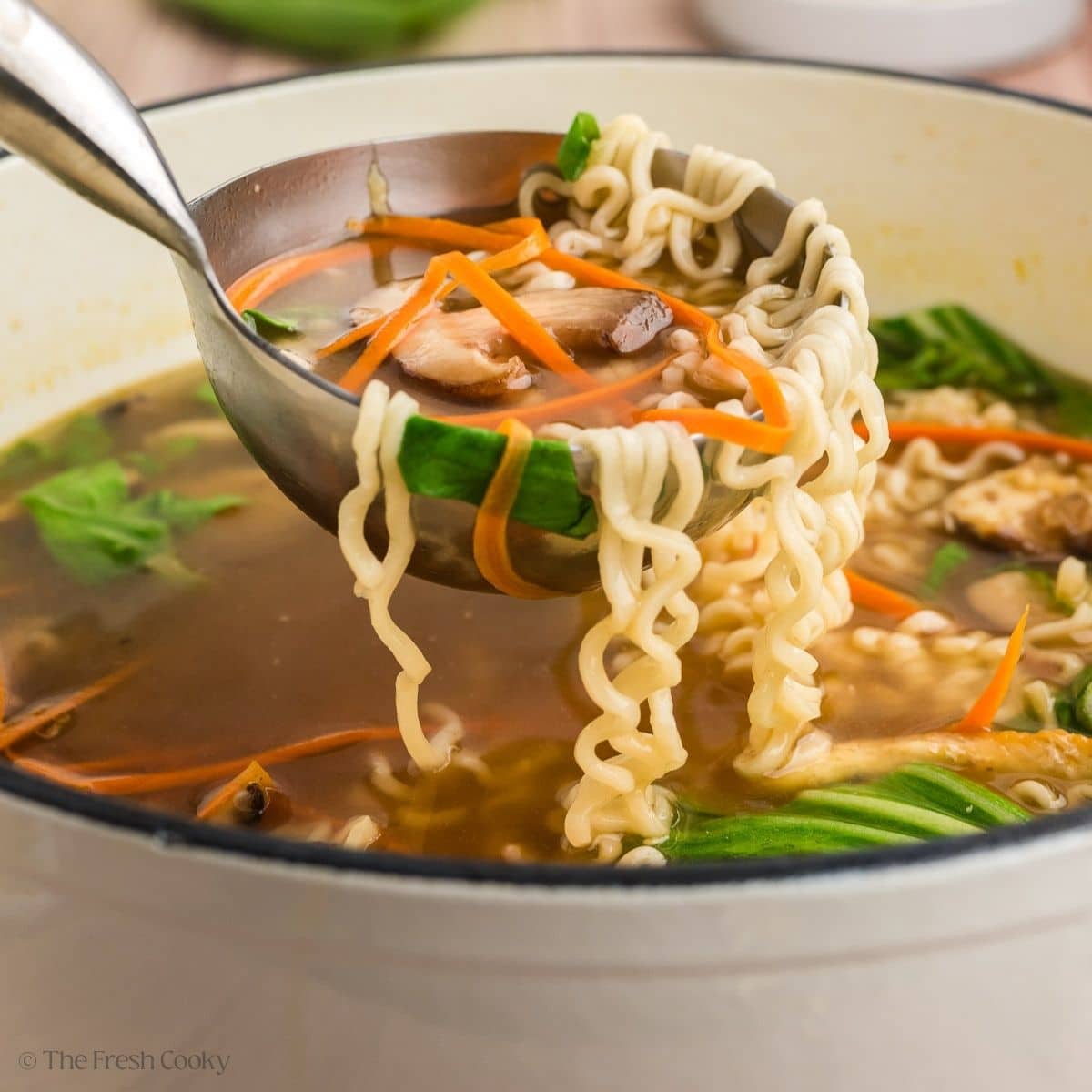
The Secret to Ramen That Tastes Like It Simmered All Day
The first few times I made this, the broth was boring. Flavorless, thin, the kind of soup you eat because it’s dinner, not because you actually want it. I tried a shio style first, thinking simple would be enough; it wasn’t, even with the kombu I love in my Homemade Vegetable Mineral Broth. Miso came next, but it tasted more like miso soup than ramen and meant a special trip to the Asian market for half the ingredients. I’m all about a good soup, the deep, long-simmered flavor of my Zuppa Toscana or the bright, brothy punch of my Tom Kha soup, so a flat, boring ramen broth wasn’t going to cut it.

Back to the drawing board: more mushrooms, more vegetables, more herbs and spices, and searing the chicken first so those brown bits in the pan (that’s the flavor, right there) make it into the broth instead of down the drain. Even if you’re not a mushroom person, like me, don’t skip them. They’re doing something a boxed broth by itself just can’t.
Our boys have always loved a good bowl of noodle soup. Our youngest, Gabe, used to drag us to his favorite neighborhood Pho place more times than I can count (yes, I know, pho and ramen are different bowls, more on that below). At some point I figured I could make something just as good at home, maybe even better. Now this is the one Gabe asks for every time he’s home from college, ready in 30 minutes flat, even on a night I’ve got nothing left to give.
And for another easy chicken dinner, try my Greek Yogurt Marinated Chicken.

What is Ramen?
Ramen is a Japanese noodle dish, wheat flour noodles served in a savory broth with a handful of toppings. The dish traces back to Chinese immigrants in Japan, and one of the country’s first ramen shops is often credited as opening in Tokyo’s Asakusa district back in 1910. Its real explosion in popularity came after World War II, when American wheat flour flooded the Japanese market during food shortages, and returning workers opened noodle stalls all over the country. What started as an inexpensive street food has since gone worldwide, with countless regional styles and endless ways to customize a bowl.
A classic ramen topping is the ramen egg, or ajitsuke tamago, a soft boiled egg marinated in soy sauce and seasonings for a rich, umami flavor and a creamy yolk. I skip the marinating step here and use perfectly soft boiled eggs instead, a simple shortcut that still gets you that same jammy, custardy yolk everyone loves.
From tonkotsu to shoyu, there’s a ramen style for everyone, and part of the fun is making it your own.
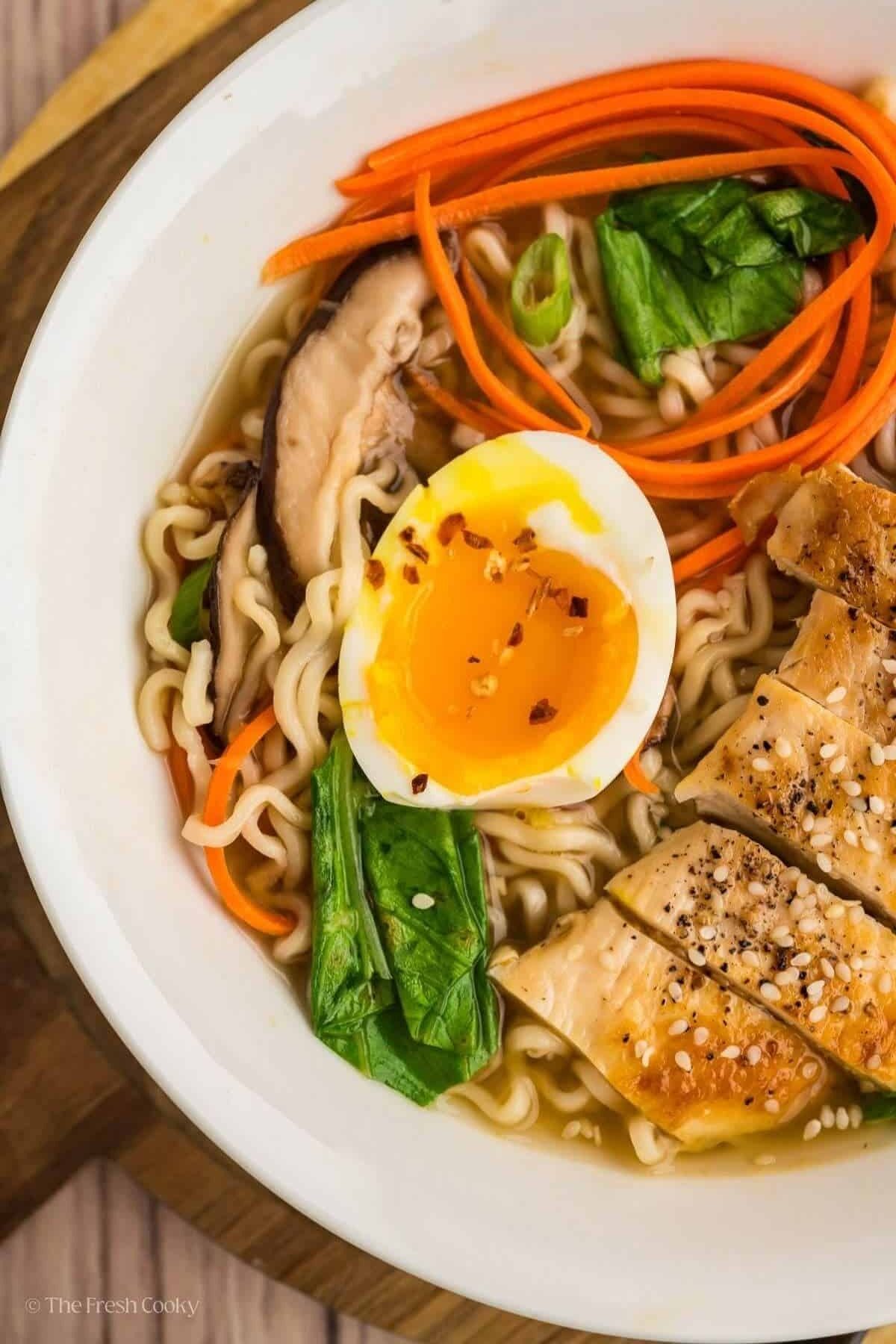
Types of Ramen
Japanese ramen isn’t one thing; it’s a handful of very different bowls that all happen to share noodles and broth. Here’s how the main styles compare:
- Shoyu Ramen: A clear brown broth built on soy sauce. Balanced, savory, and probably the style you’ve had at a restaurant without knowing its name.
- Shio Ramen: Seasoned mostly with salt, so the broth stays light and clear. Simple, with the noodles and toppings doing most of the talking.
- Miso Ramen: Fermented soybean paste goes into the broth here, giving it a deep, almost nutty richness the other styles don’t have.
- Tonkotsu Ramen: The one that takes real patience, a creamy pork bone broth simmered for hours until it turns rich and hearty.
This is really a shoyu ramen recipe at heart, with soy sauce doing most of the work to build depth in that 30-minute broth.
Difference between Pho and Ramen
Remember Gabe’s favorite pho place from earlier? Here’s the thing, pho and ramen aren’t the same soup wearing different names. They’re not even really cousins, more like neighbors.
Pho comes from Vietnam and leans on flat rice noodles sitting in a light, fragrant broth built from star anise, cloves, cardamom, coriander, and cinnamon, then finished with fresh herbs, bean sprouts, lime, and thin slices of meat. It’s bright and herbaceous, the kind of bowl that wakes your whole mouth up.
Ramen is Japanese, built on those springy wheat noodles instead of rice, and the broth goes a different direction entirely, richer, usually built on soy sauce or miso rather than warm spices. Soft-boiled eggs, sliced pork, nori, and green onions round it out into something hearty rather than bright.
We love both in this house. I started with ramen because it’s simply more fun to make at home, and the bold flavors and endless topping options are half the appeal. And who can resist a jammy egg on top?
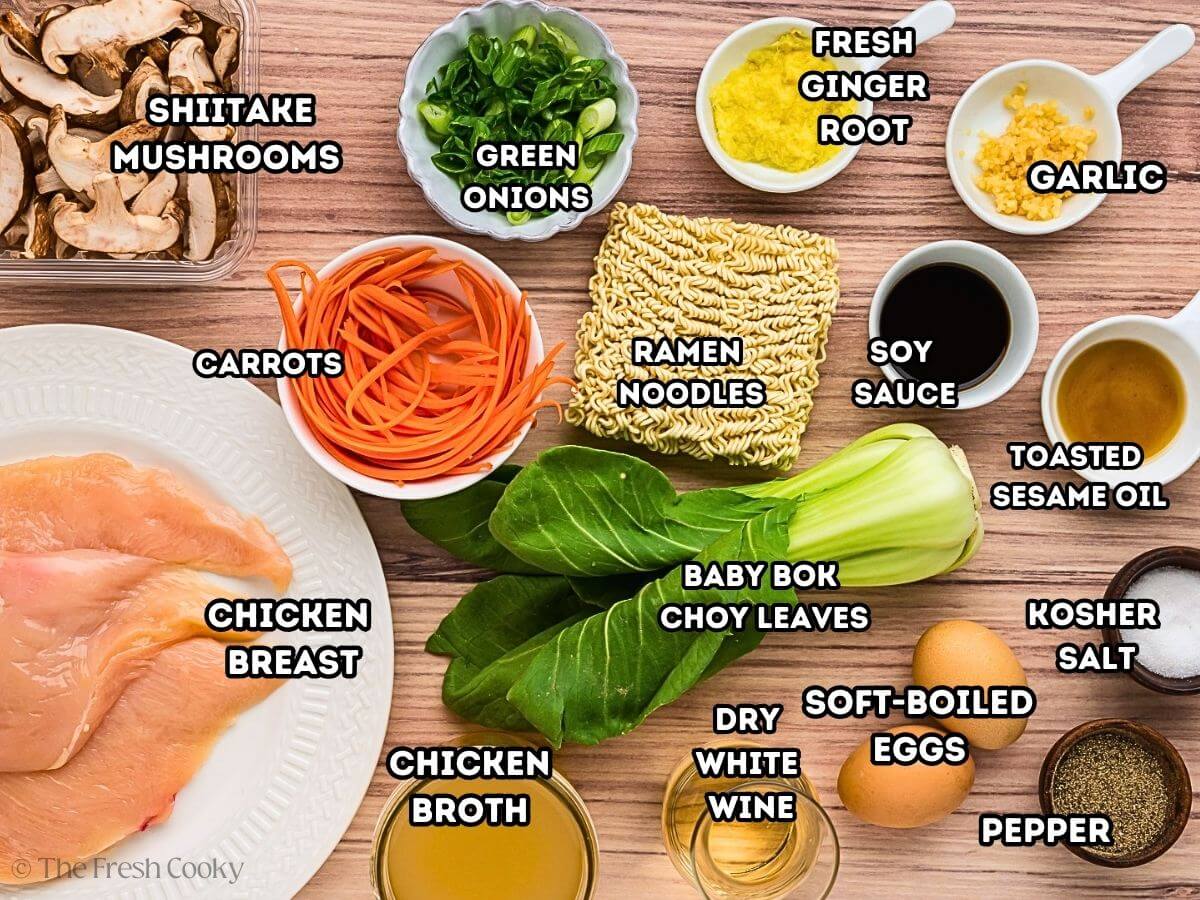
Ramen Recipe Ingredients
- Toasted Sesame Oil: Brings that authentic nutty flavor you can’t fake with a regular oil.
- Shiitake Mushrooms: These meaty mushrooms pack serious umami, the savory “wow” factor that makes the broth rich and crave-worthy. Fun fact: “shiitake” comes from Japanese, “shii” for the tree they grow on, “take” for mushroom. See the tips below for substitutes.
- Chicken Breast: Pound to an even thickness so it cooks through evenly and fast.
- Kosher Salt & Pepper: To taste.
- Dry White Wine: A Pinot Grigio or Sauvignon Blanc works well. No wine on hand? A small splash of rice vinegar, about a teaspoon to start, gives you similar acidity and brightness.
- Aromatics: Minced garlic and grated fresh ginger, the backbone of the broth’s flavor and aroma.
- Chicken Broth: Whatever you keep stocked in the pantry works fine here.
- Soy Sauce: Low-sodium adds savory depth without overwhelming the broth. Swap in Tamari for less sodium and more flavor, Bragg’s Liquid Aminos, or Coconut Aminos for a soy-free option.
- Baby Bok Choy: Tender greens for color and nutrition. Regular bok choy works too, just chop it into bite-sized pieces.
- Carrots: A julienne peeler gives you those perfect restaurant-style matchsticks, but pre-shredded carrots save time if you’re in a hurry.
- Ramen Noodles: Look for fresh or dried ramen noodles in the Asian foods aisle, or keep things gluten-free with these ramen noodles.
- Green Onions: For crunch, flavor, and a little color on top.
- Soft-Boiled Eggs: A jammy soft boiled egg is non-negotiable on a bowl of ramen. Don’t worry, I’ll show you exactly how below.
- Garnishes: Red pepper flakes, sesame seeds, or chili sauce, whatever makes your bowl feel like yours.
Get the full recipe in the recipe card below.
How to Make Ramen
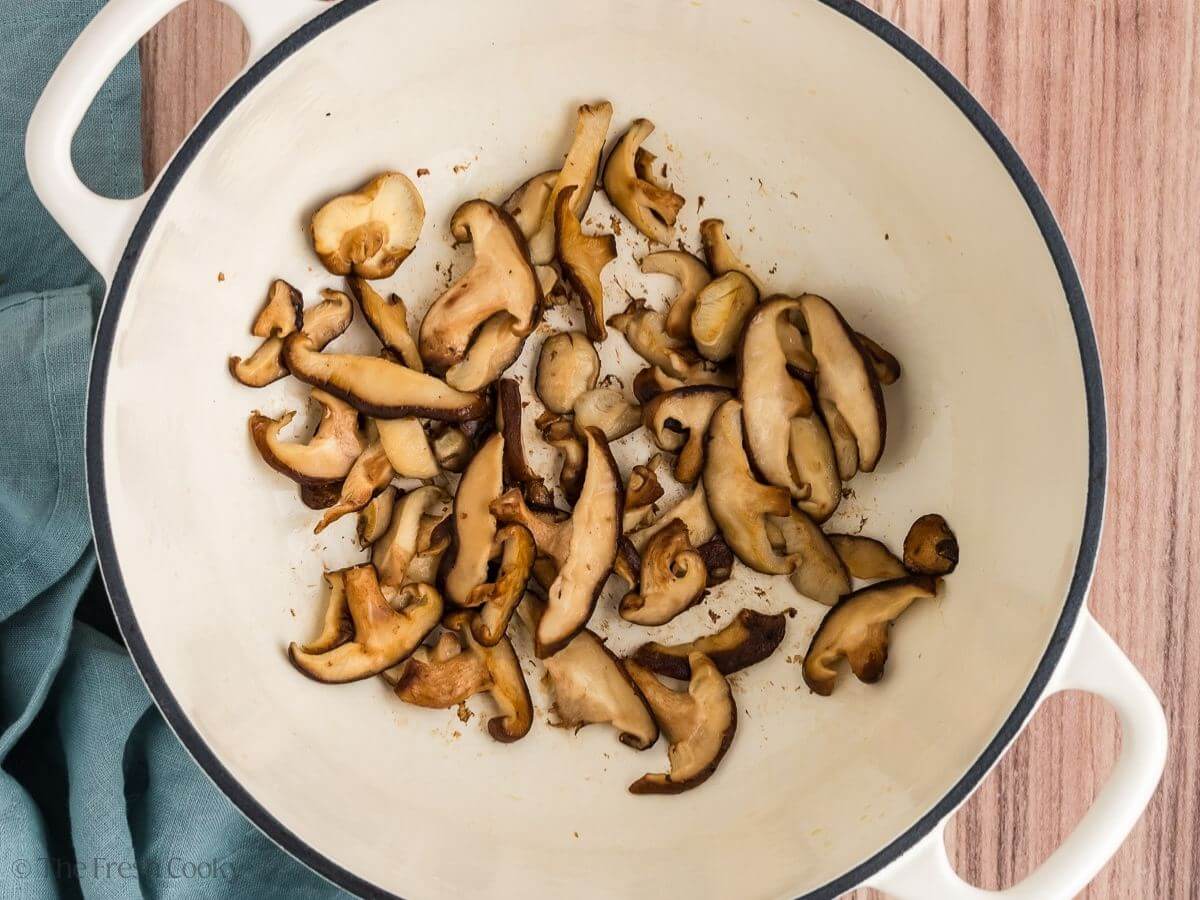
Step 1 – Cook the Mushrooms & Chicken Breast
Heat a Dutch oven over medium heat and add one tablespoon of sesame oil. Once it’s warm, add the mushrooms and let them cook, stirring occasionally, until they release their juices. Remove the mushrooms and set aside.
Season the chicken with salt and pepper. Add the remaining sesame oil to the pan if needed, then add the chicken breasts. Let them cook undisturbed for 3 to 6 minutes, then flip and cook the other side until they reach 165°F (use a meat thermometer if you’re not sure). Remove the chicken to a plate, tent with foil, and let it rest while you build the broth.

Step 2 – Make the Broth
Deglaze the pan with the white wine, then add the garlic and ginger and stir until fragrant, about 30 seconds.
Pour in the chicken broth and soy sauce and bring it to a simmer.
While the broth simmers, bring a separate pot of water to a boil over high heat. Add the ramen noodles and cook about 1 minute less than the package directs, then drain and set aside.
Slice the rested chicken into strips. Return the sautéed mushrooms to the broth along with the sliced chicken, then add the carrots, bok choy, and green onions. Simmer 2 to 4 minutes for crisp-tender vegetables, longer if you like them fully cooked. Plenty of authentic recipes actually serve the vegetables raw on top of the hot broth instead, so this part is really up to you.


Step 3 – Add the Noodles & Serve
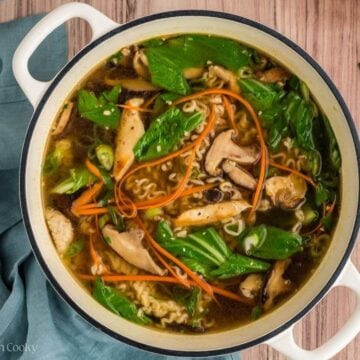
Add the noodles to the broth. Ladle into ramen bowls, top with a soft-boiled egg, and garnish with sesame seeds, red pepper flakes, or chili sauce.
Grab your chopsticks and don’t be shy about slurping; that’s half the fun of a bowl of ramen.
How to Make Homemade Ramen Broth
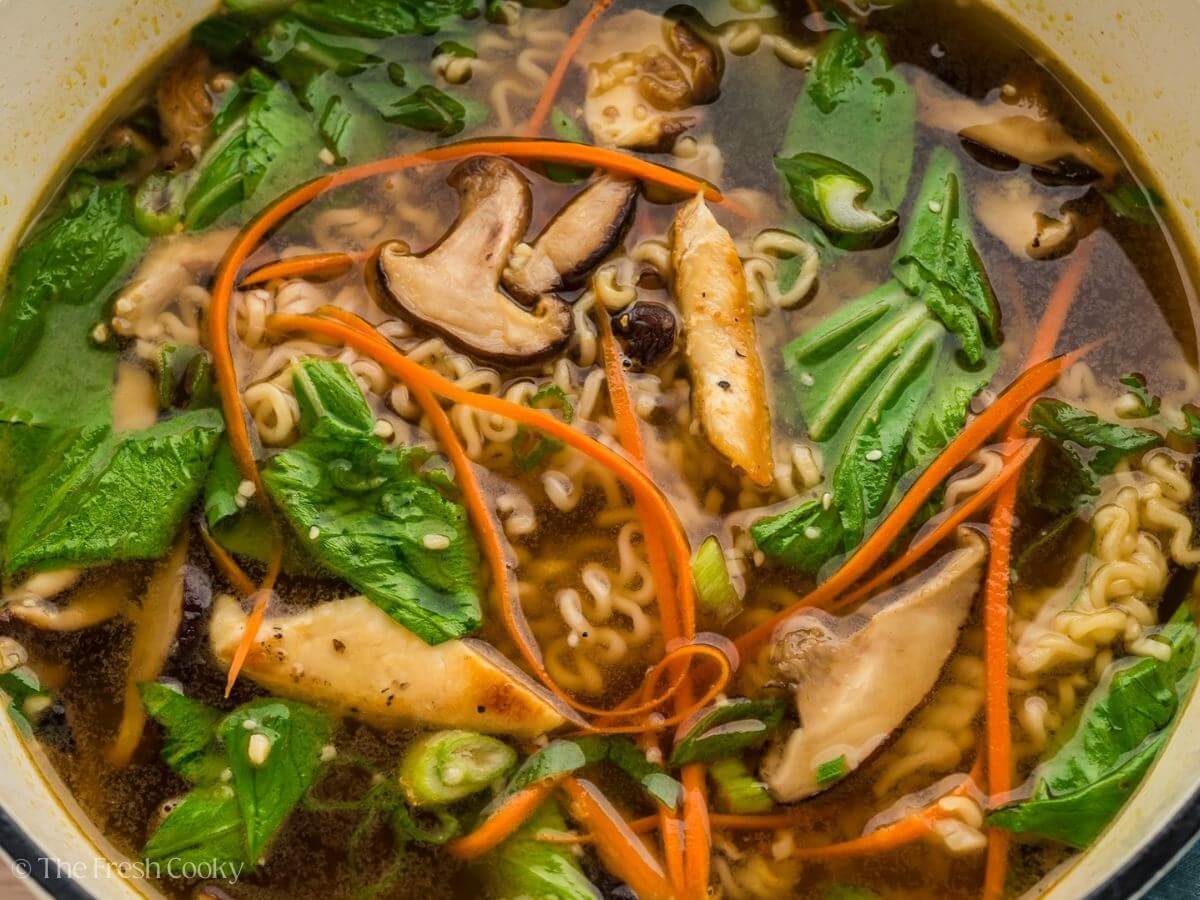
Traditional ramen broths often start with a kombu and bonito dashi, simmered low and slow for hours, similar to the kombu base in my Homemade Vegetable Broth. Ours skips all that, starting with your favorite store-bought chicken broth and building flavor fast through three moves:
- Searing the chicken and mushrooms in the same pot, then deglazing with white wine.
- Adding aromatics like garlic and fresh ginger.
- Simmering it all with soy sauce for deeper, savory flavor.
That’s the whole shortcut, and it’s why this tastes as if it took a lot longer than it did.
How to Make Homemade Ramen Noodles
Want to skip the package? There’s a trick I’ve read about but haven’t tried myself: bring a pot of water to a boil, stir in about a tablespoon of baking soda per quart of water, then cook regular spaghetti in it for 8 to 10 minutes. The alkaline water is supposed to change the texture and color of the pasta, turning it springy and slightly yellow, closer to real ramen noodles than a box of spaghetti has any right to be. If you try it before I do, let me know how it goes.
If you’d rather make ramen noodles completely from scratch, flour, egg, water, and an alkaline solution worked into a real dough, Pinch and Swirl has a great from-scratch method worth trying on a weekend when you’ve got the time.
For this recipe, though, I still reach for quality store-bought ramen noodles. They’re consistent, quick, and let the broth be the star. I like these without preservatives.
How to Add Egg to Homemade Ramen
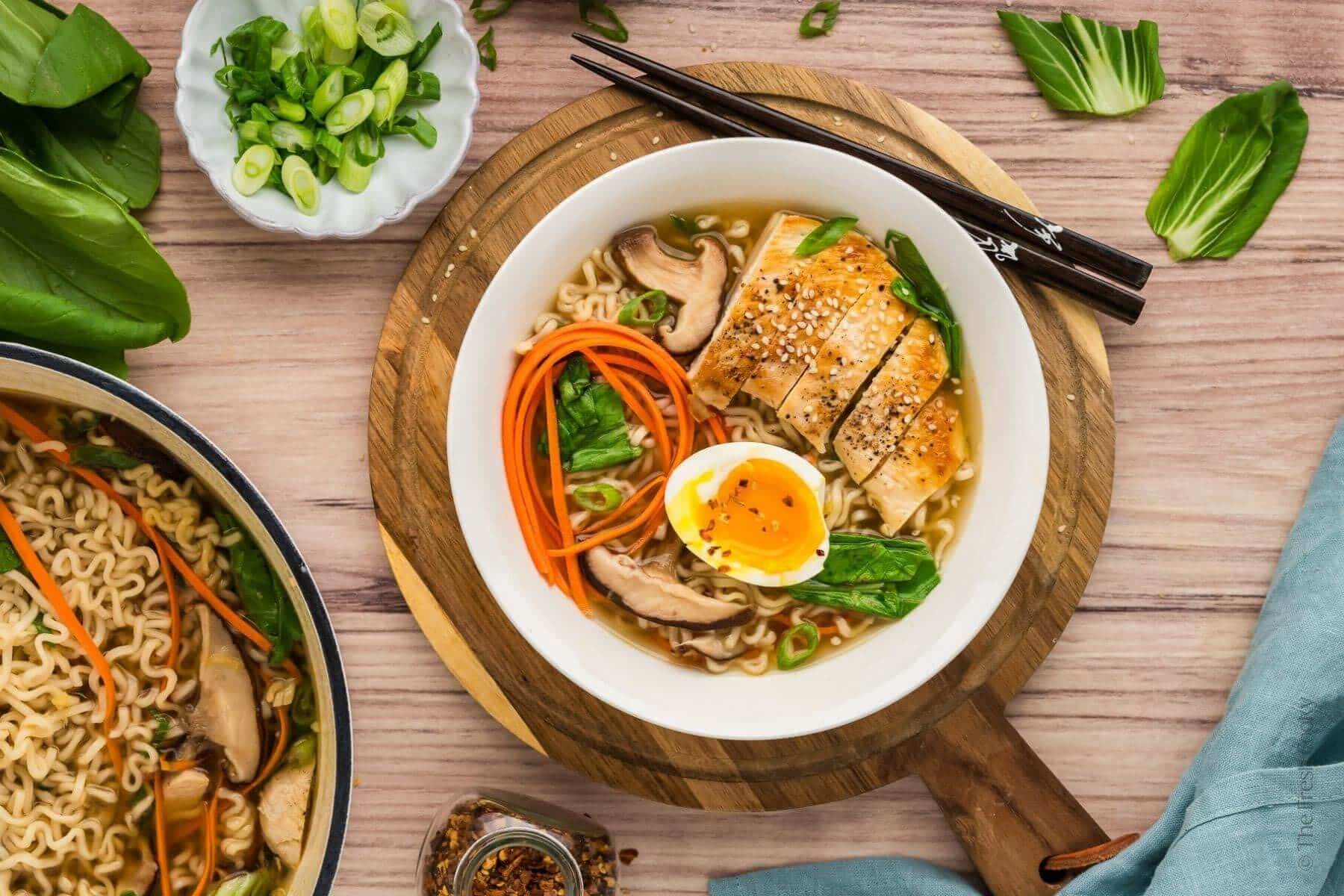
A soft-boiled egg is what makes this feel like a real bowl of ramen instead of just chicken soup with noodles. Slice it in half and let that yolk melt straight into the hot broth.
To make them, bring a pot of water to a boil, then gently lower the eggs in and cook for 6 to 7 minutes. Transfer them straight to a bowl of ice water with a slotted spoon to stop the cooking. Peel and slice them in half just before serving, yolk side up, right on top of the ramen.
High Altitude Soft-Boiled Ramen Egg Instructions
Water boils at a lower temperature the higher up you are, so at altitude you’ll need a couple extra minutes to get that same jammy yolk. Instead of 6 to 7 minutes, aim for 7 to 9, depending on your elevation. I tested this at 5,280 feet and landed on 8 ½ minutes for perfect eggs every time. Same rule applies here: straight into an ice bath the moment they come out of the pot.
Ramen Toppings
Sometimes less is more here. Pick 3 to 4 toppings that balance each other in texture and flavor rather than piling on everything at once. My favorites:
- Soft-boiled eggs (see the instructions above)
- Nori (dried seaweed)
- Bean sprouts
- Corn, fresh or frozen
- Pork belly
- Roasted chicken
- Tofu
- Thai basil, cilantro, or mint
- Pickled vegetables
- Chili oil
Ramen Recipe Tips
- Oil swap: Olive oil works fine in place of toasted sesame oil, though the sesame oil brings a lot more flavor to the broth.
- Chicken doneness: Cooking time depends on the thickness of your chicken breasts. They need to hit 165°F internally, a meat thermometer takes the guesswork out of it.
- Mushroom swap: Baby bella mushrooms can replace shiitake, and you can buy them pre-sliced to save prep time. Use whatever mushroom you already love.
- Soy sauce: Low-sodium is what I recommend. If all you have is regular, cut back on the amount, taste as you go, and adjust the salt from there.
- Vegetarian: Swap in vegetable broth and skip the chicken.
- Bok choy: Regular bok choy works just as well as baby bok choy here; just chop it into bite-sized pieces.
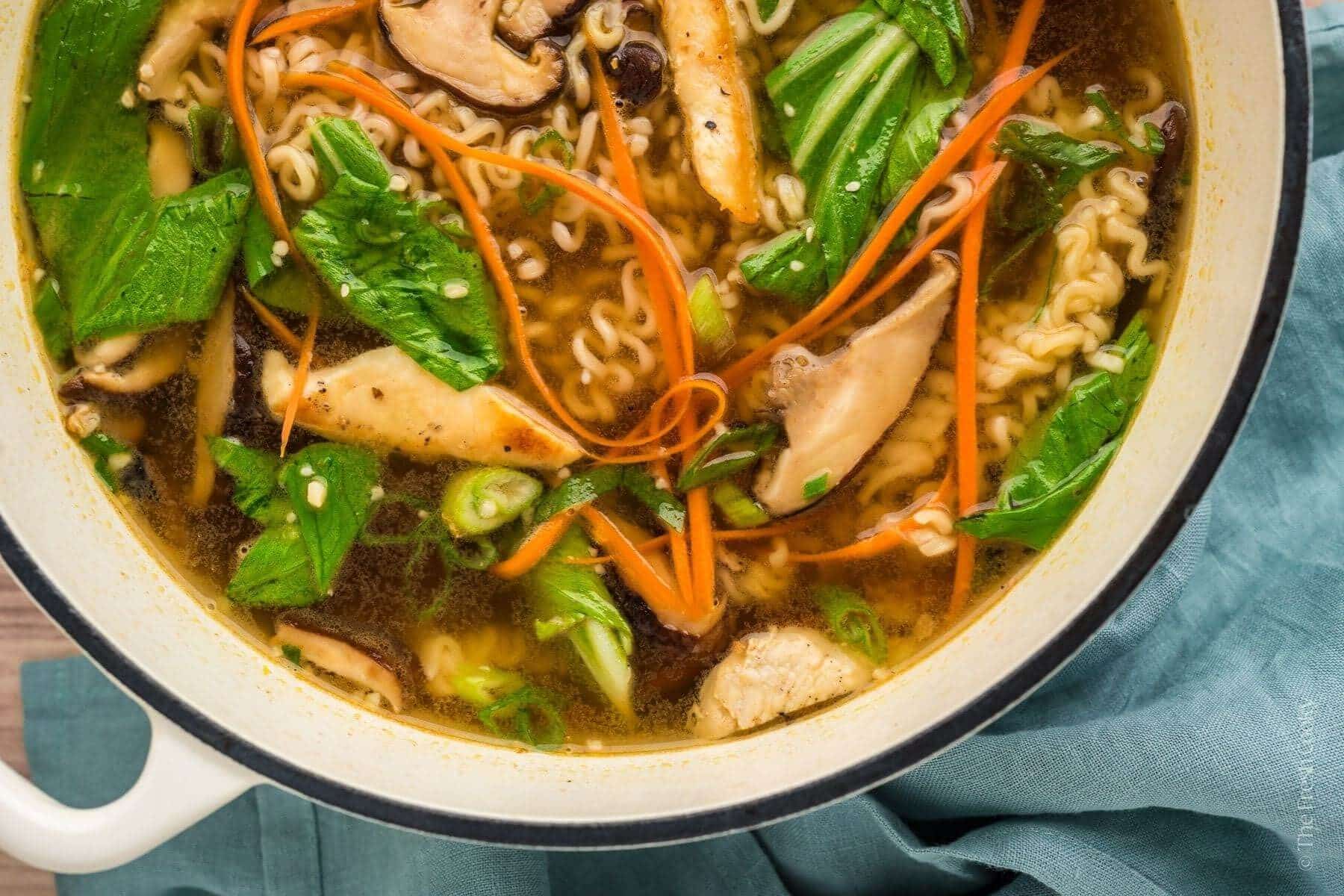
- Carrots: A julienne peeler gets you thin, restaurant-style matchsticks in a few swipes, but a knife, a vegetable peeler for ribbons, or a bag of pre-shredded carrots all work fine too. This soup doesn’t simmer long, so keep whatever cut you choose on the thinner side.
- Where to find ramen noodles: Look in the World Foods or Asian foods section of your grocery store. Some are labeled “instant” and cook in about 3 minutes; others take closer to 7, so check the package. Skip the flavor packets that come with them; they’re mostly MSG and filler. You’ll need about 6 ounces of noodles for this recipe; a little extra is fine.
- Noodles separately or in the broth: I cook mine separately so the broth stays clear and the noodles don’t turn to mush sitting in the pot, but cooking them right in the broth works too if you’d rather have one less pan to wash.
How to Eat Ramen
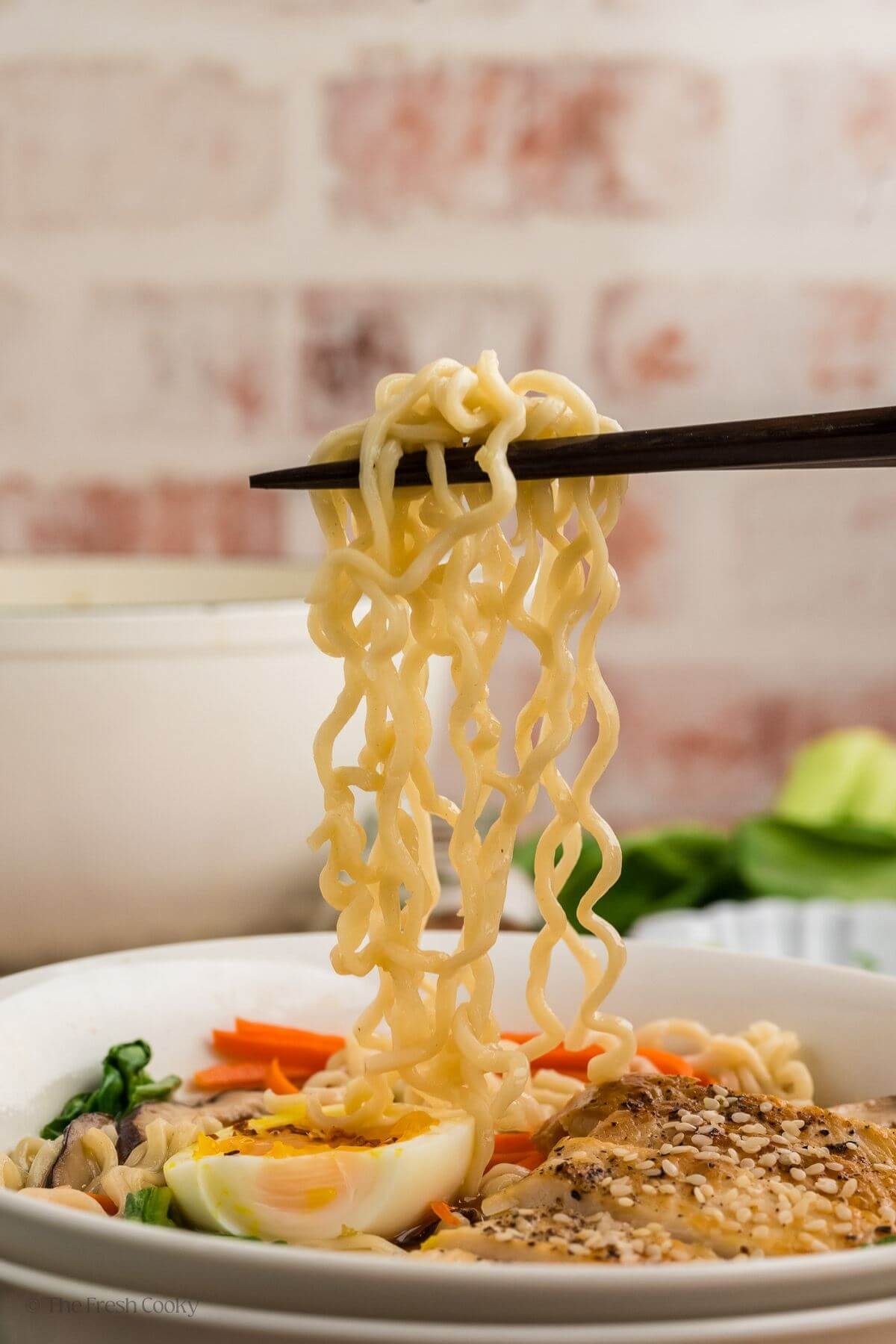
Traditional ramen etiquette actually encourages slurping. It cools the hot noodles as they hit your mouth, and in Japan, it’s considered a compliment to the chef, a way of saying you’re enjoying every bite. A few more tips for eating it right:
- Lift the bowl to your mouth and drink the broth directly; don’t be shy about it.
- Use chopsticks to gather and lift the noodles rather than fighting them with a fork.
- Get a little of everything in each bite, noodles, broth, and toppings together, for the best flavor and texture.
How to Store Ramen
Leftover ramen keeps in the fridge for 3 to 4 days in an airtight container. Reheat gently in a pan on the stove, or microwave individual servings.
Can I freeze Ramen?
To freeze, keep the broth separate from the noodles and toppings so they don’t turn mushy. Let the broth cool completely, then store it in airtight containers or freezer bags, leaving a little room for expansion, and freeze for up to 3 months. When you’re ready to eat, thaw the broth in the fridge overnight or heat it straight from frozen on the stovetop, then cook fresh noodles and toppings and assemble once the broth is hot.
If you’ve already combined everything into one container, you can still freeze it, just know the noodles and vegetables will soften and change texture once thawed.

Ramen Recipe FAQs
This is the most common complaint I see in other ramen recipes online, and it usually comes down to skipping the browned bits (technically called “fond”) left in the pan after searing the chicken and mushrooms. Deglazing with wine picks up all of that and builds real depth into a broth that simmers for only a few minutes instead of hours. If your broth still tastes flat, it’s almost always a salt problem, not a time problem. Taste and adjust before you add the noodles.
Either works. This recipe holds up well with quality dried or fresh ramen noodles, found in the Asian foods aisle of most grocery stores. If you’re using an instant ramen variety, just skip the seasoning packet; that’s where most of the sodium and MSG hide.
Cooking them in the broth releases starch, turning your beautiful clear broth cloudy and thick, and the noodles keep cooking and go mushy if any broth is left in the pot. Cooking them in their own pot for a minute less than the package says keeps the broth clean and the noodles springy.
Nope, different animal. Pho leans on warm spices like star anise, cinnamon, and cloves for a light, herbaceous broth. Ramen broth gets its depth from soy sauce or miso, aromatics, and umami-rich ingredients like mushrooms. Same comfort, totally different flavor direction.
I’m the same way, and I still make this often. The mushrooms are doing all the umami heavy lifting in the broth, so I leave them in while it cooks and just don’t eat them myself, my husband gets my share. If you want to skip them completely, you can, but I’d cook them in and strain them out rather than leaving them out from the start. They also add a nutritional boost.
Yes. Swap in your favorite gluten-free ramen noodles and use tamari instead of regular soy sauce, both linked in the ingredients above. I’ve tested this swap, and it holds up just as well as the original.
Swap the chicken broth for vegetable broth and skip the chicken breast; the mushrooms and seasonings carry plenty of flavor on their own. Tofu is a solid stand-in if you want extra protein, or top it with edamame for even more.
Shoyu is soy sauce-based, clear and brown, the style this recipe leans on. Miso swaps in fermented soybean paste for a deeper, nuttier broth. Tonkotsu is pork bone broth simmered for hours until it turns rich and creamy, worth trying on a weekend, not a Tuesday. This recipe borrows shoyu’s speed and depth, so you get real flavor without the all-day commitment.
Absolutely, that’s exactly what this recipe does. A good carton of chicken broth gets doctored up with sesame oil, garlic, ginger, and soy sauce, plus all those browned bits from searing the chicken. I love Kettle & Fire Chicken Bone Broth. You just have to build the flavor back in, which is what I do in this recipe.
Look for alkaline wheat noodles made with kansui; that’s the ingredient behind ramen’s springy bite, and it’s what keeps noodles from turning mushy in hot broth.
– Fresh or frozen: Sun Noodle is the gold standard among home cooks and restaurants alike, and Whole Foods carries it in the refrigerated section if you’d rather grab it in person.
– Dried: Nissin Raoh Ramen gives you that same restaurant-quality chew without the fry, found at Walmart. Hakubaku Organic Ramen Noodles are a pantry-friendly organic pick, at World Market or Amazon.
Skip the seasoning packets that come with instant ramen, mostly salt and filler. Need gluten-free? Swap in gluten-free ramen noodles; the method stays the same.
Our Favorite Soup Recipes
More Popular Recipes from The Fresh Cooky
Like this recipe?
Don’t forget to give it a ⭐️⭐️⭐️⭐️⭐️ star rating and leave a comment below the recipe!
Video
Equipment
Ingredients
- 2 tablespoons toasted sesame oil divided
- 1 ½ cups shiitake mushrooms sliced
- 1 pound boneless, skinless chicken breast pounded so it is even thickness
- 1 teaspoon kosher salt
- ½ teaspoon ground pepper
- ½ cup dry white wine Pinot Grigio, Sauvignon Blanc, etc.
- 4 cloves garlic minced or pressed
- 2-inch piece fresh ginger root peeled and grated
- 6 cups chicken broth low-sodium or regular chicken stock
- 2 tablespoons low sodium soy sauce or my favorite, Tamari, Bragg's Liquid Aminos or Coconut Aminos (last three are all gluten-free)
- 1 cup baby bok choy chopped
- 2 medium carrots sliced into julienne
- 2 3-ounce packages ramen noodles seasoning packets discarded
- 3 green onions sliced
- 2 – 4 soft boiled eggs see notes for instructions
- red pepper flakes, sesame seeds and chili sauce for garnish, if desired
Instructions
- Heat a Dutch oven over medium heat, add one tablespoon of sesame oil. Once it’s warm, add the mushrooms and allow them to cook, stirring occasionally, until the juices are released. Remove the mushrooms and set aside.2 tablespoons toasted sesame oil, 1 ½ cups shiitake mushrooms

- Season the chicken with salt and pepper. Add the remaining sesame oil (if needed) to the pan, and add the chicken breasts. Allow them to cook without disturbing them, 3-6 minutes. Then flip over and cook on the other side until cooked through (based on thickness, make sure they reach 165°F). Remove the chicken and place it on a clean plate, covered with foil to rest while you prepare the rest of the soup.1 pound boneless, skinless chicken breast, 1 teaspoon kosher salt, ½ teaspoon ground pepper
- Deglaze the pan with white wine. Add the garlic and ginger and stir until fragrant, about 30 seconds.½ cup dry white wine, 4 cloves garlic, 2-inch piece fresh ginger root
- Add chicken broth and soy sauce and bring to a simmer.6 cups chicken broth, 2 tablespoons low sodium soy sauce
- While the broth is simmering, bring another pan of water to a boil. Add the ramen noodles and cook for about 1 minute less than directed. This method is preferred as it will keep the broth more clear and your noodles won't be as mushy. But feel free to cook the noodles right in the broth, adding an extra minute to your simmering, until al dente. Using a strainer (if making noodles seperately), drain the noodles and set aside. Slice the chicken into strips and add it to the broth and mushrooms.2 3-ounce packages ramen noodles
- Now is a great time to soft-boil your egg, if using.2 – 4 soft boiled eggs
- Add the carrots, bok choy, and green onions, simmer for 2-4 minutes for crisp tender veggies, longer if you like fully cooked veggies. We like them crisp-tender and typically simmer just 4 minutes or so. Many authentic recipes actually serve the veggies raw on top of the hot ramen, so make it yours!1 cup baby bok choy , 2 medium carrots, 3 green onions
- Finally, add the noodles to the broth. Serve in soup bowls and add 1 or 2 halves of the soft-boiled egg, garnish with sesame seeds, red pepper flakes, and/or chili sauce.red pepper flakes, sesame seeds and chili sauce


Notes
Ramen Soft-Boiled Eggs
The perfect soft-boiled egg for ramen has a runny yolk and a just-set white. To make the soft-boiled eggs, bring a pot of water to a boil, then gently lower the eggs into the water and cook for 6-7 minutes (7-9 minutes at high altitude – above 3200 feet; mine were perfect at 8 ½ minutes, my sea-level testers were in between 6-7 minutes). Using a slotted spoon, transfer the eggs to a bowl of ice water using a slotted spoon to stop the cooking. Peel and slice the eggs in half just before serving. Gluten-Free: Swap in your favorite gluten-free ramen noodles and use tamari in place of regular soy sauce, both work great here. Storage: Keeps in the fridge for 3 to 4 days in an airtight container. Reheat: Warm gently in a pot on the stove, or microwave individual servings. Freeze: Freeze the broth separately from the noodles and toppings for up to 3 months. Thaw in the fridge overnight, or heat straight from frozen on the stovetop. For more tips, substitutions, and answers to common questions, head back up to the full post above.Nutrition








Tara
This is a great basic recipe. I almost didn’t make it b/c it had only one review so I am leaving a review so others make it! I seared my chicken breasts on both sides and finished in the oven w a little broth so they wouldn’t dry out. And used about 2 tsp’s white miso at the end. I am not a fan of chicken so I cubed some tofu and heated it separately w some broth. Delicious! Thank u for this recipe!
Awe thank you so much Tara, it’s fairly new and you gotta start somewhere!! And I love your twist on it in making it yours!
chellie
No need to use those flavor packets full of junk. This recipe was so much better and not much more effort
Yay!! I’m with you!! Thanks, Chellie!