

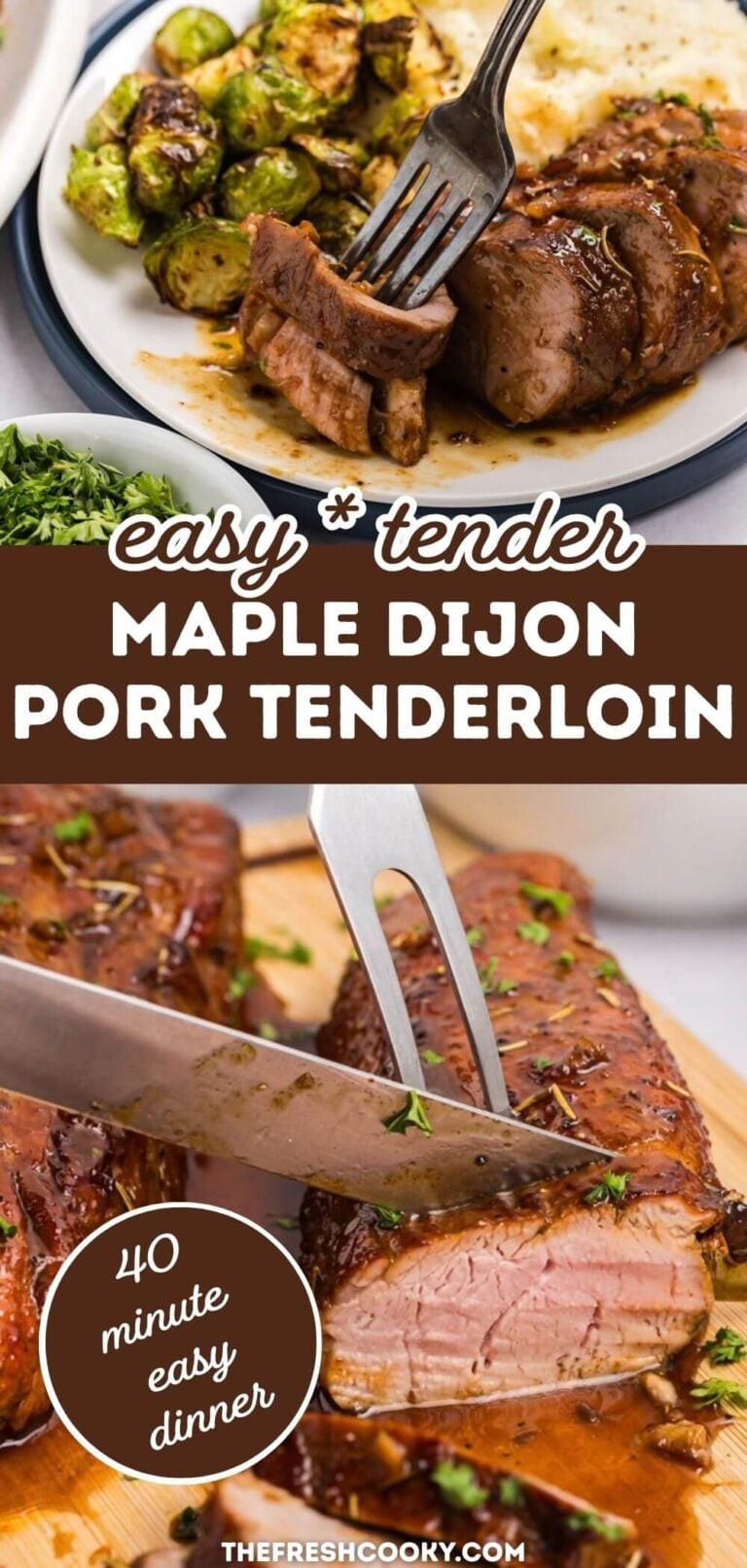
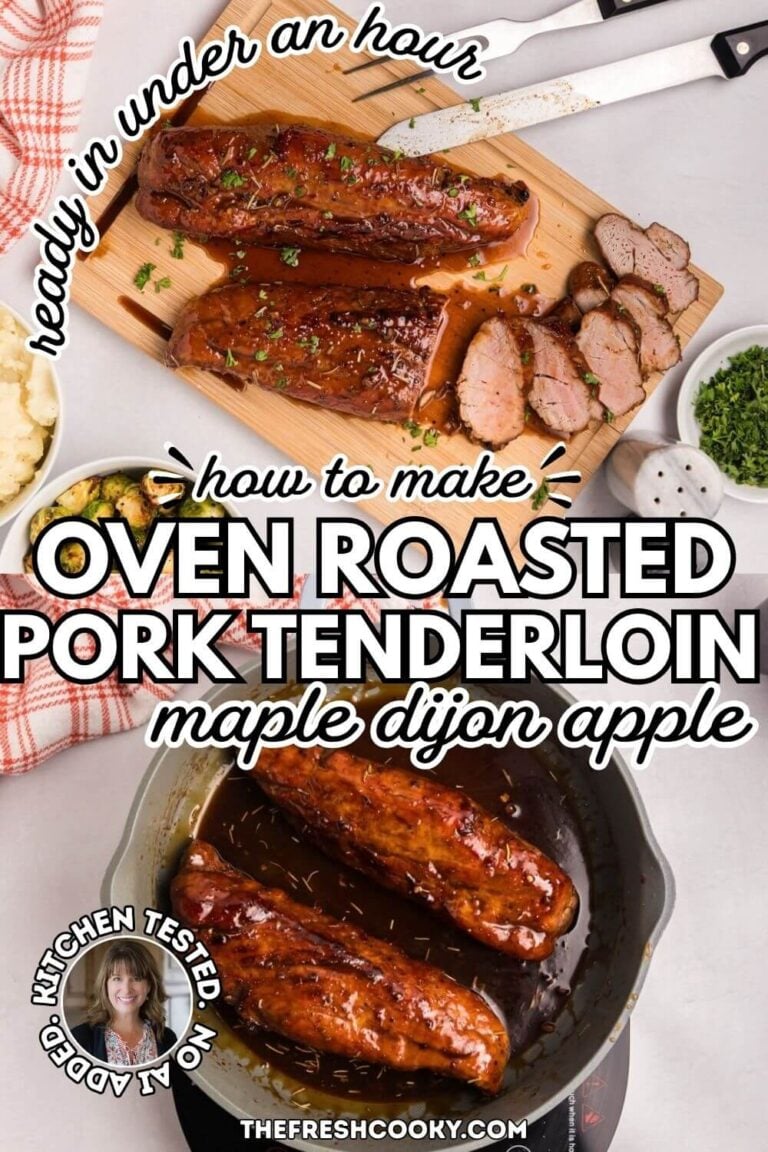
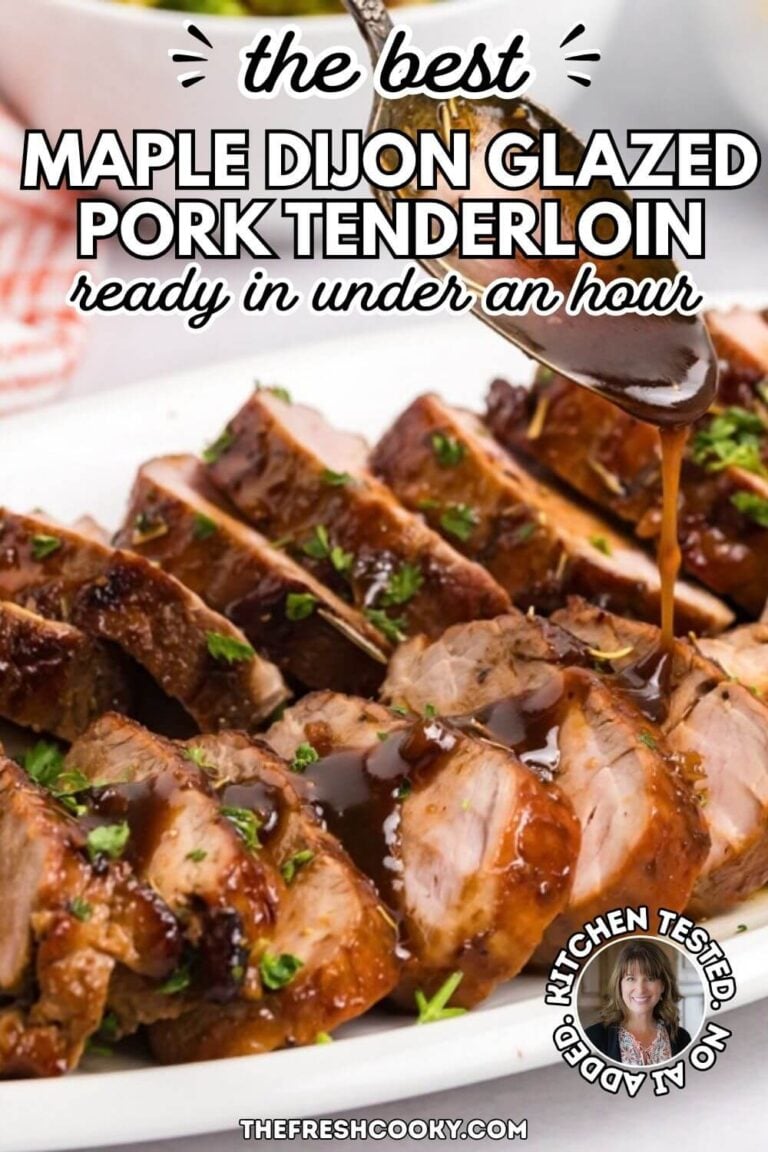
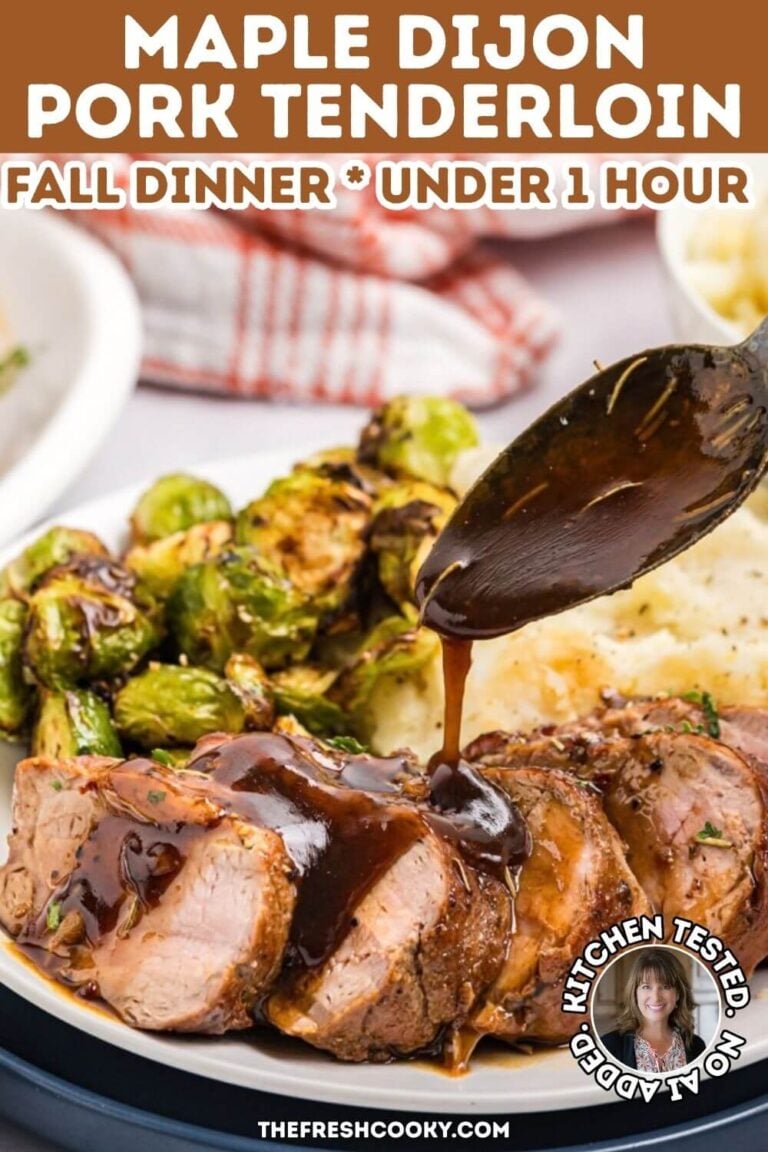
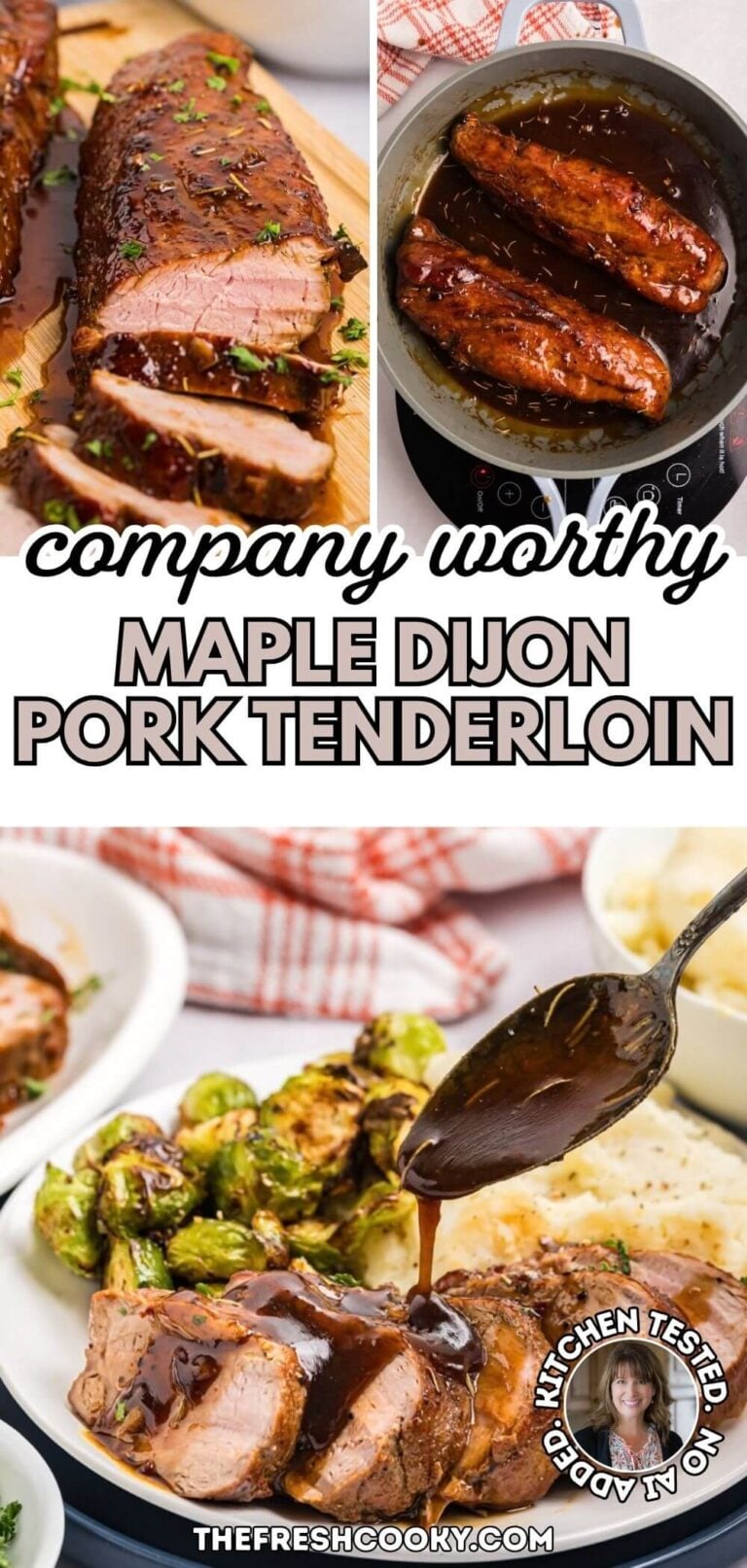
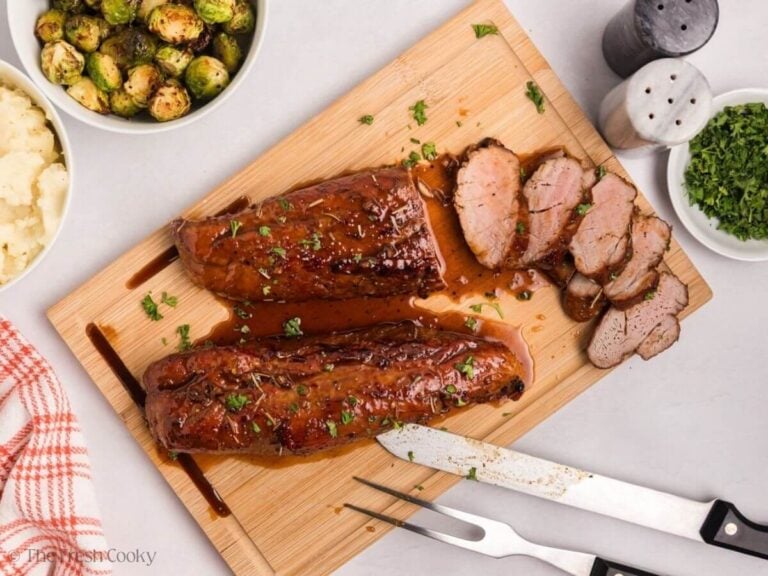
This Maple Dijon Pork Tenderloin gets a brown sugar herb rub, a quick sear in butter, and a short trip to the oven. Then it rolls around in a glossy glaze of apple cider, pure maple syrup, and tangy Dijon, simmered right in the searing pan. No bottled sauce. No hard cider. This maple pork tenderloin is my go-to on busy weeknights and for Sunday dinner, and it’s on the table in under an hour.
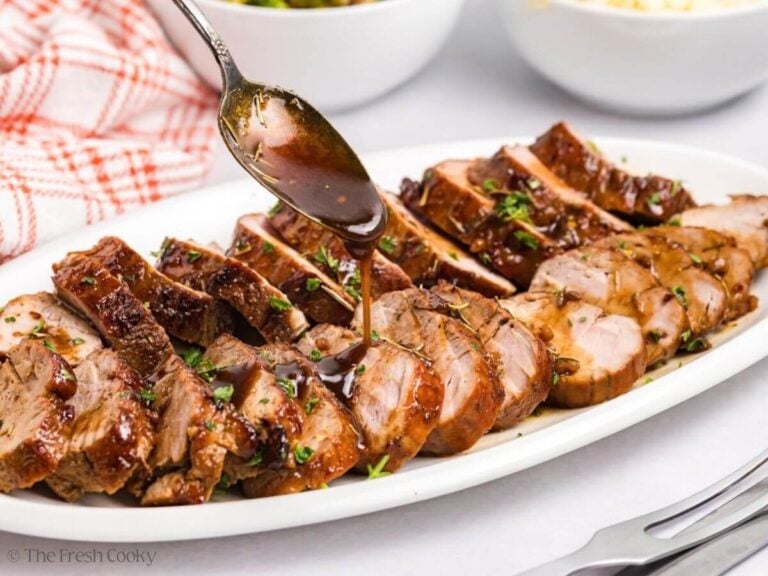
I Tested the Hard Cider Version. Here’s Why I Ditched It.
I’ll admit it, I went down a bit of a rabbit hole with this one.
I wanted a pork tenderloin with a real apple cider reduction. Thick. Glossy. The kind that actually clings to every slice. Most recipes I found used a quick splash of vinegar or leaned on hard cider. I tested the hard cider version, and honestly? It didn’t do it for me. So I made up my own.

The pork gets a brown sugar and herb rub and a quick sear in butter. Then it heads to the oven. While it roasts, I make the glaze in that same skillet, browned bits and all. Apple cider, pure maple syrup, Dijon, and a splash of cider vinegar simmer down until they’re sweet, tangy, and sticky in the best way.
The rested pork goes back in the pan for a good roll in the glaze before slicing. (Rather wash just one pan? I’ll show you how below.)
This is my favorite kind of recipe. Easy enough for a busy Tuesday. Pretty enough for company on Sunday. If you love weeknight dinners that dress up nicely, I make my Garlic Honey Salmon on repeat. And come holiday time, this tenderloin earns its spot next to the classics in my holiday main dish lineup.

Why You Will Love This Maple Dijon Pork Tenderloin
- That glaze. Apple cider, maple syrup, and Dijon cook down into a sticky, glossy glaze that tastes like you fussed all afternoon. It’s sweet, but it never tips into candy territory.
- Dinner in under an hour. Tenderloin cooks fast. The glaze simmers while the pork roasts and rests, so you’re never standing around waiting.
- One skillet does the heavy lifting. Sear in it, glaze in it. All the browned flavor ends up in the sauce.
- Juicy, not dry. A quick sear and an instant-read thermometer take out the guesswork. You get tender slices with a blush of pink every time.
- Weeknight easy, company ready. This is my go-to pork tenderloin Sunday dinner when I want something that looks special without keeping me stuck in the kitchen.
- Tested at any altitude. Tested at any altitude. I tested this at Mile High, and my recipe testers made it at sea level.
Maple Dijon Pork Tenderloin Ingredients
For the pork rub:
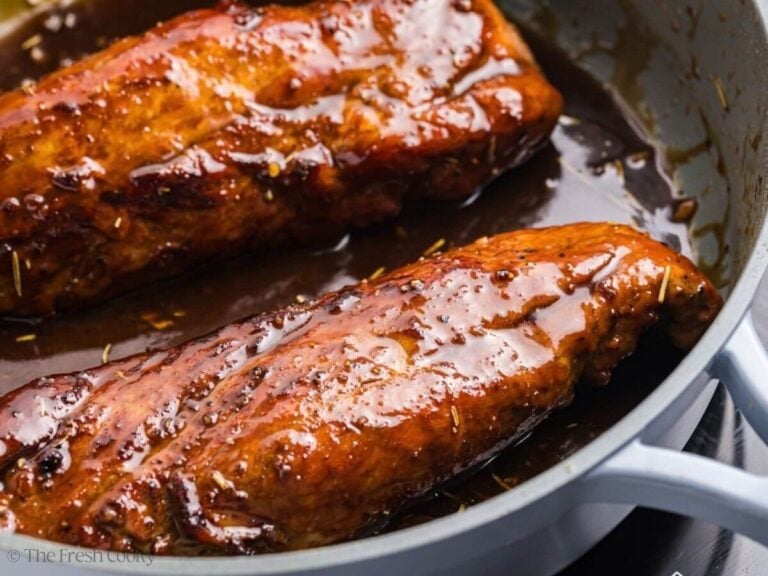
- Pork tenderloin: Two tenderloins, about 1 pound each. Look for the long, skinny cut that’s usually sold two to a pack. Not pork loin! (More on that below.) Trim off the silver skin if your butcher hasn’t.
- Brown sugar: Caramelizes into a golden crust during the sear.
- Kosher salt & black pepper: Keep it simple and let the glaze shine.
- Dried rosemary or thyme: Whichever you have. Crush rosemary between your fingers first so it isn’t pokey.
- Garlic powder & smoked paprika: Savory depth, a little smokiness, and gorgeous color on the outside.
- Olive oil & butter: The oil keeps the butter from burning. The butter gives you that nutty, golden sear.
For the glaze:
- Butter & fresh garlic: The glaze base. Watch the garlic closely, because burnt garlic turns bitter.
- Apple cider: Grab the fresh, unfiltered kind from the produce section or refrigerated case for the deepest apple flavor. Apple juice works in a pinch, but your glaze will be sweeter and a little flat.
- Apple cider vinegar: Brightens everything and keeps the glaze from tasting one-note sweet.
- Pure maple syrup: The real stuff, not pancake syrup. A dark, robust maple syrup gives this maple pork tenderloin the most maple flavor.
- Dijon mustard: Tang and a little bite to balance the sweet. (Why Dijon? See below.)
- Red pepper flakes: Just a pinch for gentle warmth. Skip them for spice-sensitive eaters.
To finish:
- Fresh parsley: A pop of fresh green on the platter.
Get the full recipe in the recipe card below.
The Maple Dijon Glaze
Here’s why this glaze works.
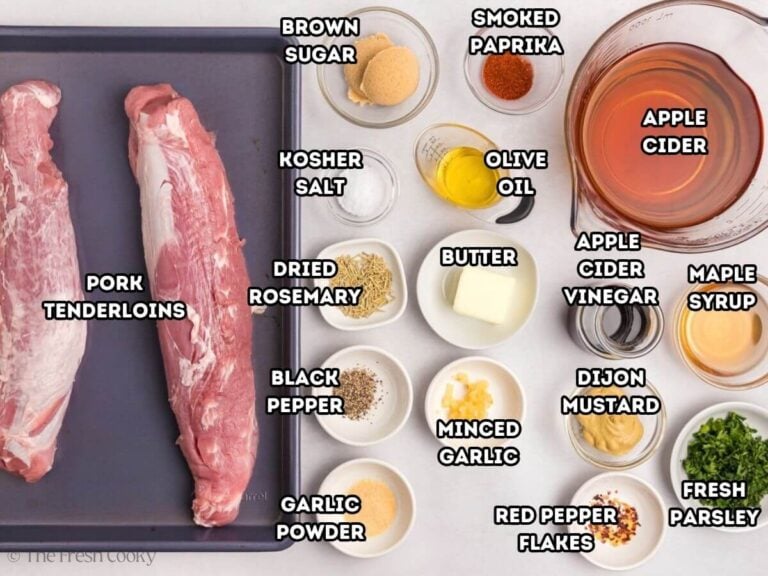
Apple cider simmers down slowly until its natural sugars concentrate into a thick, glossy syrup. It tastes like real apples, not apple-flavored candy. Maple syrup adds a warm, caramel-like sweetness, and maple and pork are a natural match.
Then there’s the Dijon. It does two jobs. First, it brings a sharp, tangy bite to cut through all that sweetness. Second, it helps the butter and cider hold together, so the glaze clings to the pork instead of separating into a greasy puddle.
Why Dijon and not yellow mustard? Dijon is smoother and sharper, and it’s often made with white wine. Yellow mustard leans hard on vinegar and turmeric. Use it here and your glaze tastes like the ballpark. Dijon is what makes this Dijon pork tenderloin taste grown-up.
A splash of apple cider vinegar brightens it all at the end, and the red pepper flakes add just a little warmth. Sweet, savory, tangy. Every bite.
How to Make Maple Dijon Pork Tenderloin
If you’ve been wondering how to cook pork tenderloin without drying it out, it comes down to three things. Sear it hot, pull it early, and let it rest. Here’s how I do it.
Step 1: Prep and Season the Pork
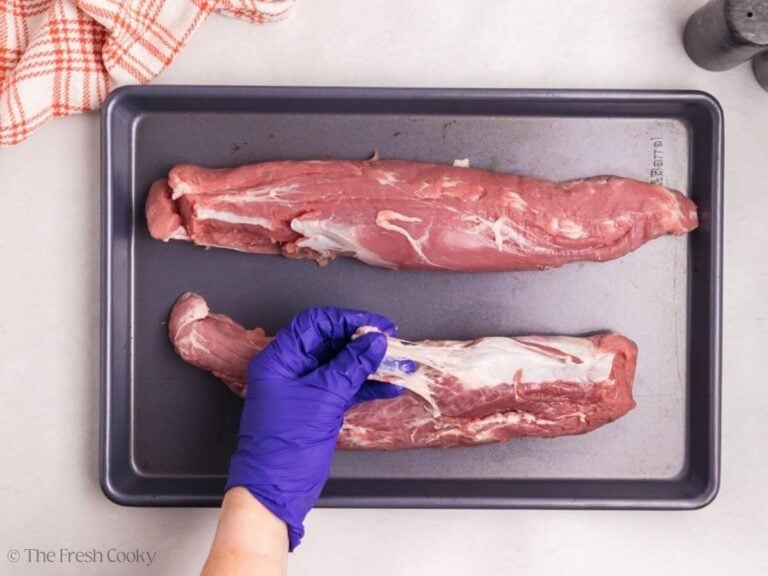
Trim off the silver skin first. That’s the thin, shiny membrane running along the tenderloin, and it won’t break down as it cooks. It just gets tough and chewy. Slide a thin, sharp knife under one end, angle the blade slightly up toward the membrane, and pull the strip tight as you go. You’ll lose almost no meat that way.
Then pat both tenderloins really dry with paper towels. Dry pork sears. Wet pork steams.
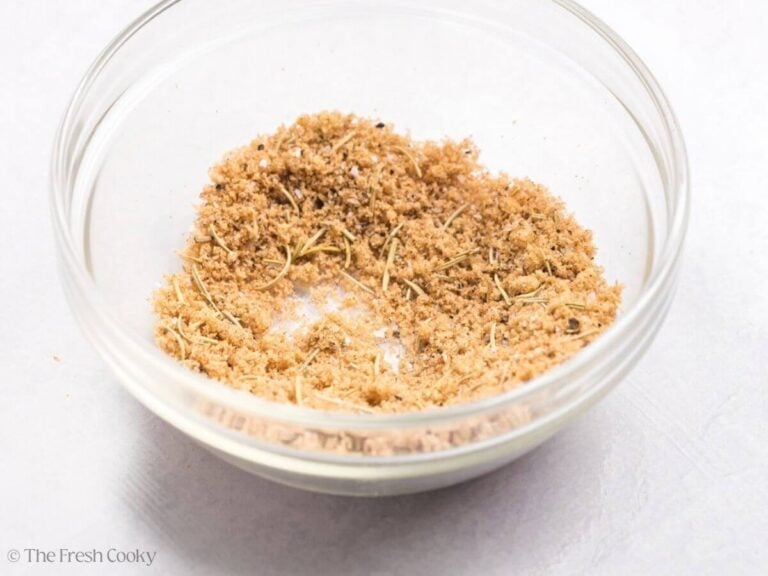
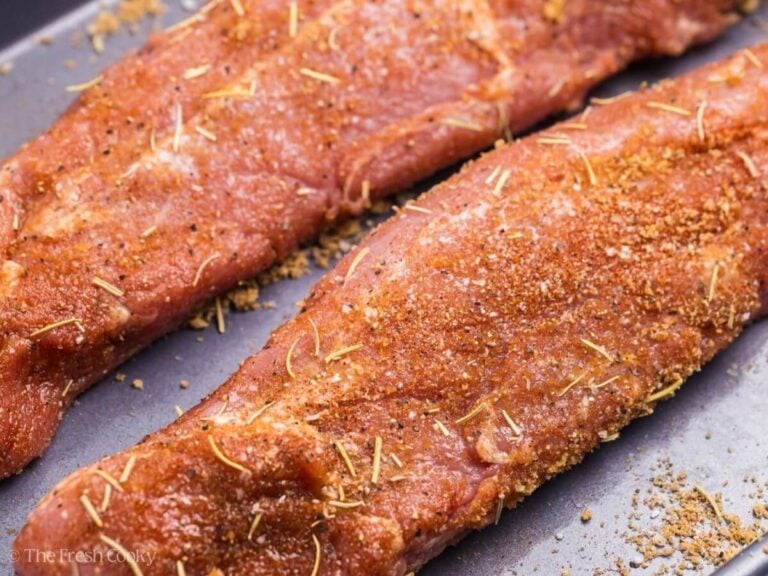
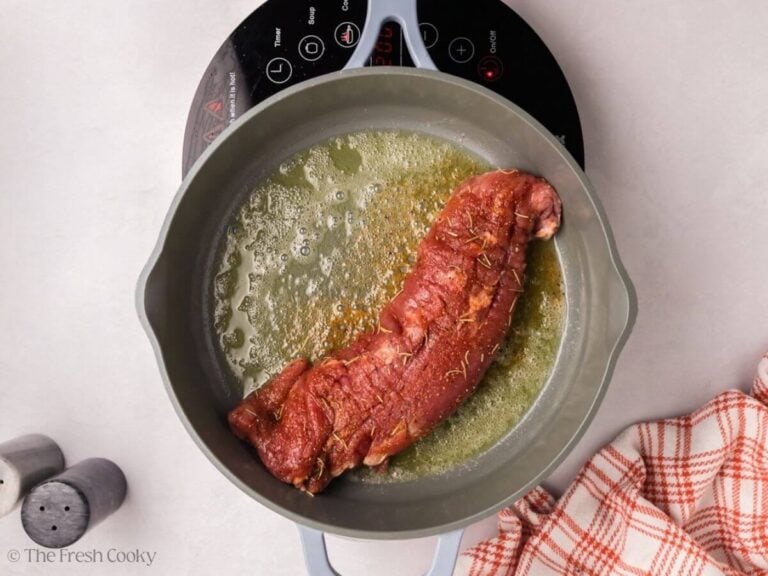
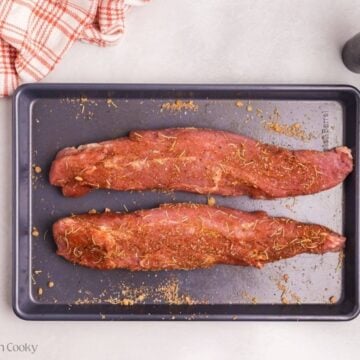
Stir together the brown sugar, salt, pepper, rosemary, garlic powder, and smoked paprika. Rub it all over both tenderloins, ends included.
Tuck the skinny tail end under and tie it with kitchen twine, or just fold it under. It cooks more evenly and fits the pan better.
Pro Tip: Rub the pork up to a day ahead. Refrigerate it loosely covered for deeper flavor and an even better sear.
Step 2: Sear and Roast
Preheat the oven to 400°F (205°C). Using convection? Drop the oven to 375°F and start checking at 10 minutes.
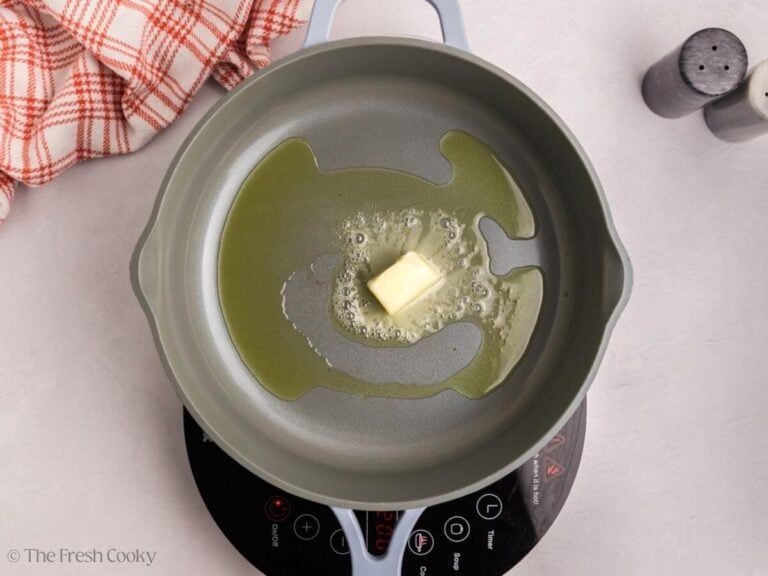
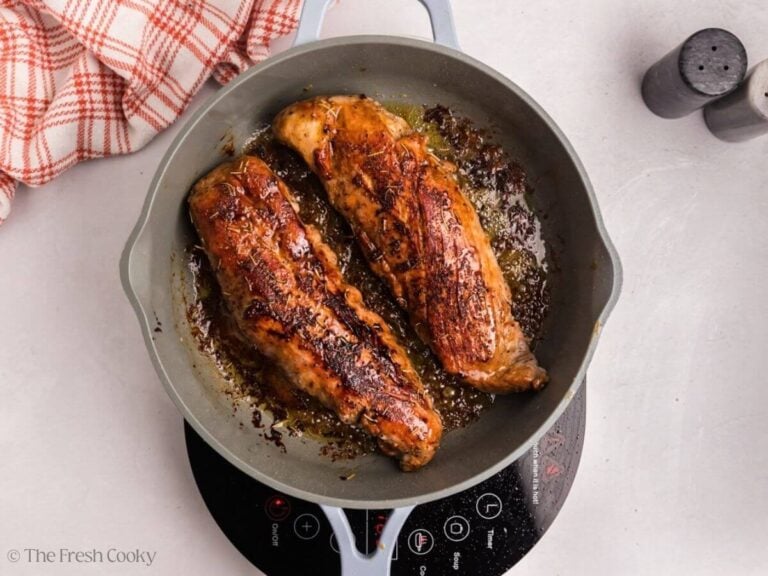
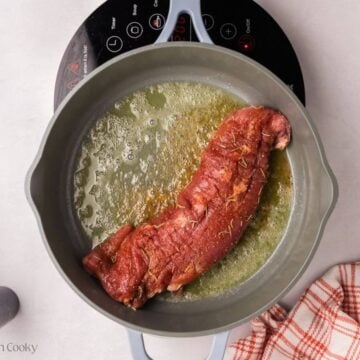
Heat the olive oil and butter in a large skillet over medium-high heat. Once the butter stops foaming, add the pork. Sear, turning every couple of minutes, until it’s deep golden all over, about 5 minutes total. Any longer and the brown sugar in the rub starts to burn.
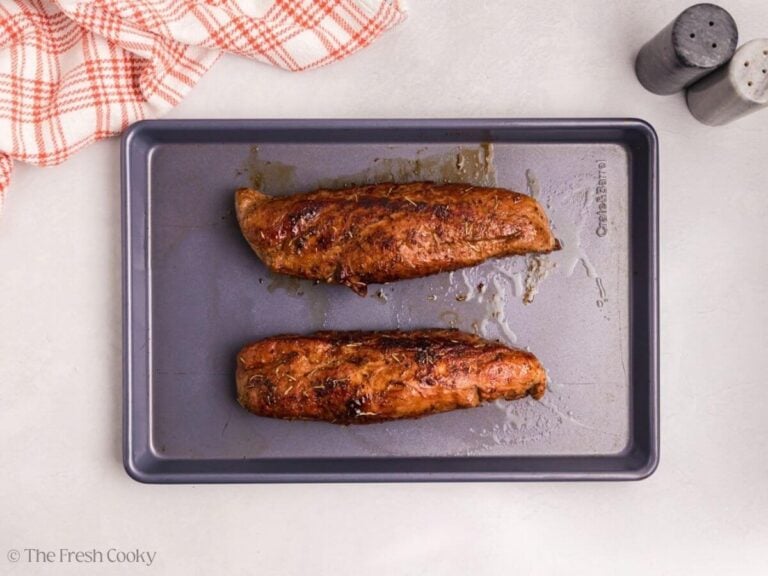
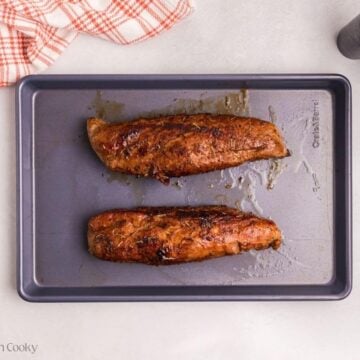
Move the pork to a lightly oiled baking dish or sheet pan. And don’t you dare wash that skillet! Those browned bits are the base of your glaze.
Roast until the thickest part reads 140°F on an instant-read thermometer, usually 15 to 20 minutes. Start checking at 12. Tenderloins cook fast.
As soon as the pork goes in the oven, start the glaze (Step 3). That way it’s thick and ready right when the pork is done resting.
Prefer one skillet? Sear in an oven-safe skillet, like cast iron, and slide the whole thing right into the oven. When the pork hits 140°F, move it to a cutting board to rest, then make the glaze in that same skillet. The glaze won’t get a head start, so dinner takes about 15 minutes longer. And that handle will be screaming hot, so leave an oven mitt draped over it as a reminder. Ask me how I know!
Step 3: Make the Maple Dijon Glaze
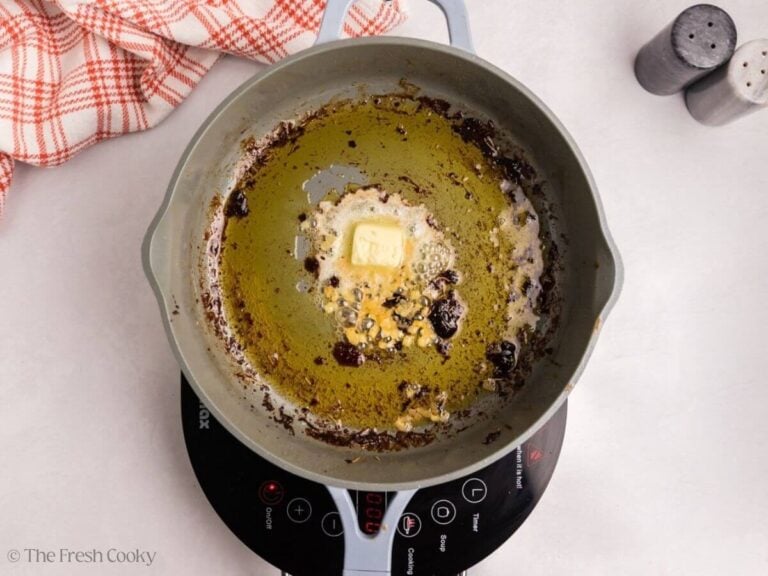
Set that same skillet over medium heat. Take a quick look at the browned bits first. Golden to dark brown means flavor. Black and burnt means bitter, so wipe those out.
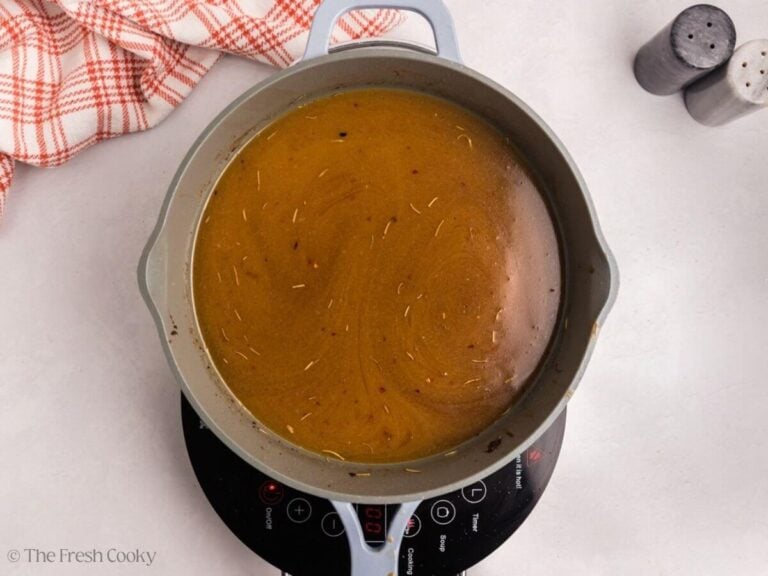
Melt the butter and add the garlic. Stir for about 1 minute, just until it smells amazing. Pour in the cider and scrape up all those browned bits with a wooden spoon.
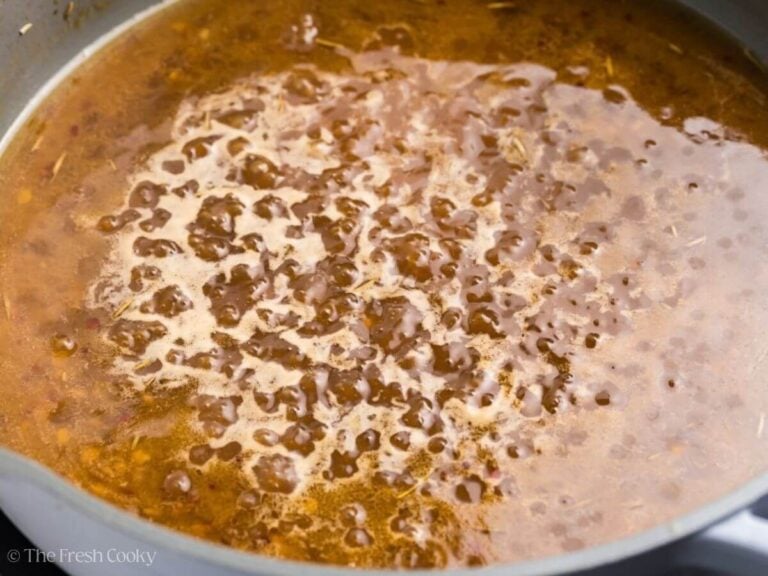
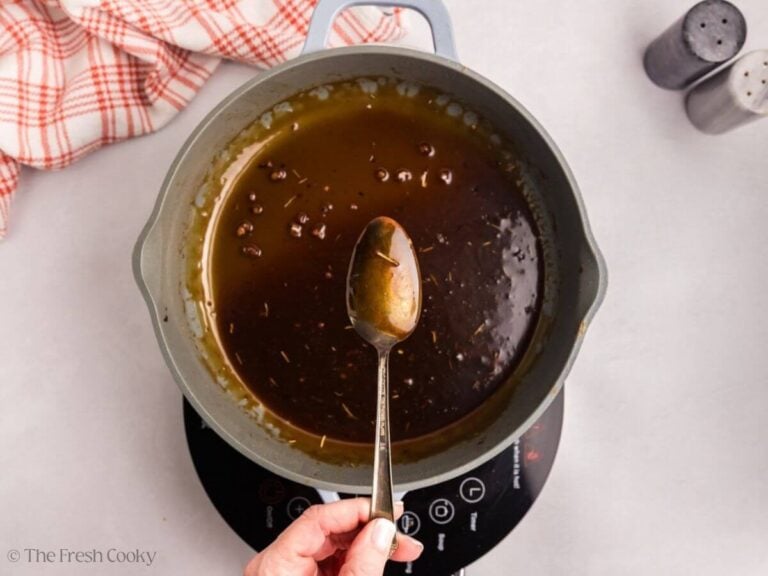
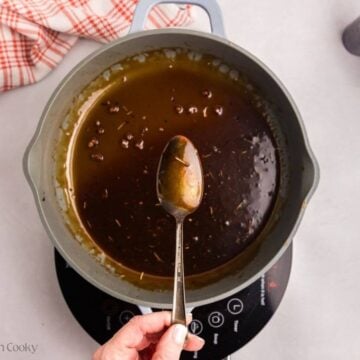
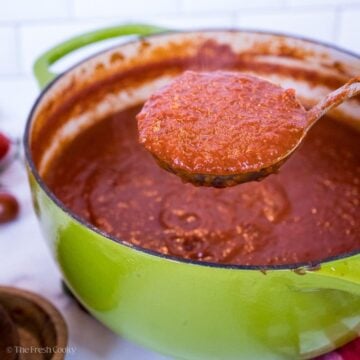
Stir in the vinegar, maple syrup, Dijon, salt, and red pepper flakes. Bring it to a boil, then turn it down to a steady simmer. Let it bubble away until it has cooked down by more than half and coats the back of a spoon, about 15 minutes.
Not sure it’s ready? Drag your finger across the back of the spoon. If the line holds, you’re there.
Pro Tip: The glaze stays thin for what feels like forever, then thickens fast at the end. Stay close! At high altitude, plan on closer to 20 minutes. Overshoot it and it’s too thick? Whisk in a splash of cider to loosen it back up.
Step 4: Rest and Slice
Tent the pork loosely with foil and let it rest for 5 to 10 minutes.
I know. Everyone’s hungry and it smells incredible. Don’t skip this! Slice it right away and all those juices run straight onto the cutting board instead of staying in the meat. Give it a few minutes and they settle back in. The temperature also climbs a few degrees while it sits, which is exactly why I pull it at 140°F.
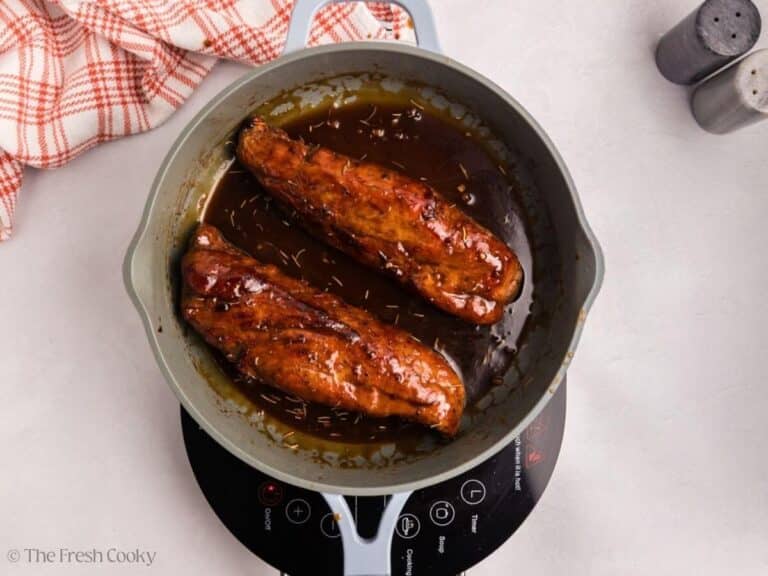
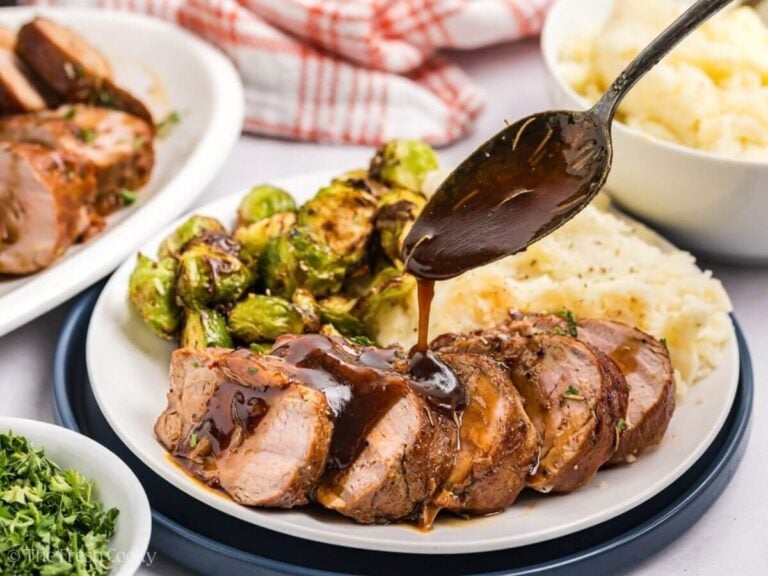
When it’s done resting, turn the glaze down to low. Add the whole tenderloins to the skillet and turn them for 1 to 2 minutes, until they’re coated and glossy. Pour any juices from the resting plate right into the glaze too. That’s pure flavor.
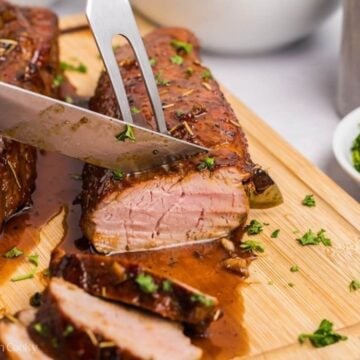
Move the pork to a cutting board. Slice crosswise into ½-inch medallions. Slicing crosswise cuts against the grain, which keeps every bite tender. Spoon the remaining glaze over the top and sprinkle with parsley.
What Temperature is Pork Tenderloin Done?
Pork tenderloin is safe to eat at 145°F (63°C) followed by a 3-minute rest. The National Pork Board’s pork cooking temperature chart is a handy reference to keep nearby.
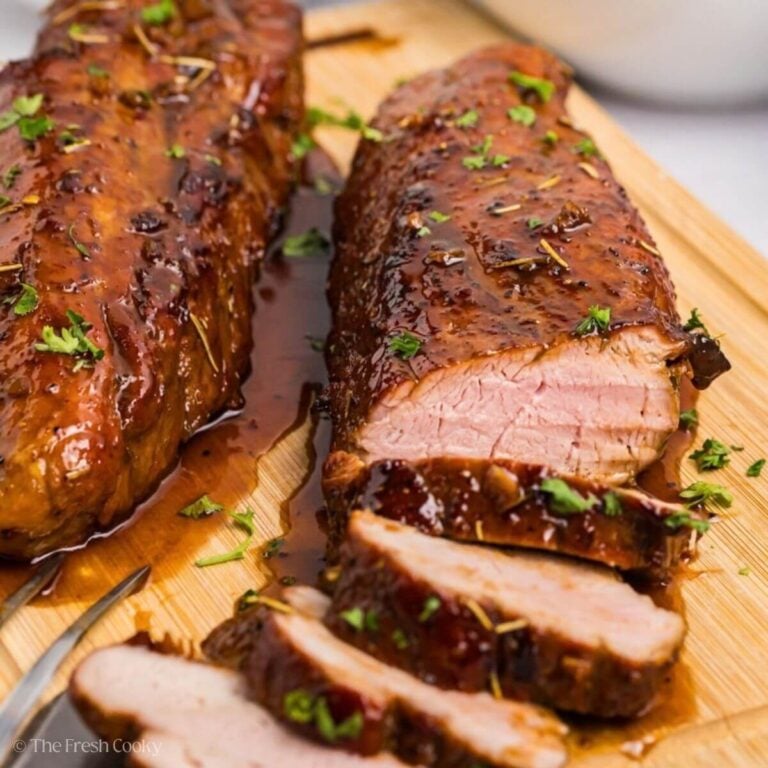
At 145°F, the center still has a rosy blush of pink. That’s medium-rare, and yes, it’s completely safe. It’s also the juiciest your pork will ever be.
I pull mine at 140°F. The temperature keeps climbing while it rests. That’s called carryover cooking, and it takes the pork right to about 145°F. Then the glaze gives it one final warm-up.
Still a little nervous about pink pork? You’re not alone. My husband is in that club too! If you’d rather have it medium, with just a hint of pink, pull it closer to 145 to 150°F, so it lands around 150 to 155°F after resting. Every few degrees past that trades a little juiciness for peace of mind.
If you grew up cooking pork to 160°F, you’re not wrong. That was the old rule. The USDA lowered it to 145°F back in 2011.
Pork Tenderloin Doneness Chart
| Doneness | Pull from Oven | After Resting | What It Looks Like |
|---|---|---|---|
| Medium-rare | 140°F | 145 to 150°F | Rosy pink center, juiciest |
| Medium | 145 to 150°F | 150 to 155°F | Hint of pink, still juicy |
| Medium-well | 150 to 155°F | 155 to 160°F | Just a trace of pink |
| Well done | 155°F+ | 160°F+ | No pink, firmer and drier |
How to check: Push an instant-read thermometer into the thickest part of the tenderloin, through the side, not down from the top. If one tenderloin is smaller, check it first. It’ll be done sooner.
Don’t go by color alone. Pork can stay a little pink even when it’s fully cooked, so trust the thermometer.
Pork Tenderloin vs. Pork Loin
They sound alike. They are not the same!
- Pork tenderloin is long, skinny, and super tender. Each one weighs about 1 pound and is roughly 2 inches across. They’re usually sold two to a vacuum pack.
- Pork loin is a big, wide roast, often 2 to 5 pounds, usually with a layer of fat on top. It needs a completely different cook time.
Grab the wrong one and you’ll end up with pork that’s dry, raw in the middle, or both. So check that label before you head to checkout.
One more label to watch: skip the pre-marinated tenderloins. They’re already loaded with salt and seasoning, and they’ll fight with your rub and glaze. Also check for “enhanced” or “contains up to X% solution” on the label. That pork is already salted, so cut the salt in the rub in half.
Maple Dijon Pork Tenderloin Variations
- Honey mustard swap: Trade the maple syrup for the same amount of honey and you’ve got honey mustard pork tenderloin. Honey browns faster than maple, so start checking the glaze a few minutes early.
- Extra mustardy: Want a maple mustard pork tenderloin with more bite? Bump the Dijon up to 3 tablespoons. Or stir in a tablespoon of whole-grain mustard at the very end for little pops of texture.
- A little heat: Add a pinch of cayenne with the garlic. It’s great against all that sweet.
- Herb swaps: Use finely chopped fresh rosemary instead of dried, about 1 tablespoon fresh for every 1 teaspoon dried. Or go with sage, because sage, maple, and pork are a classic fall combination. Use the same amount of dried rubbed sage, or 1 tablespoon chopped fresh sage for every 1 teaspoon dried. Want to show off? Crisp a few whole sage leaves in the butter before you start the glaze, then scatter them over the sliced pork.
- Hard cider: Swap the apple cider for a sweet hard cider and simmer a couple of extra minutes to cook off the boozy edge. I tested it, and I still like regular cider better. But it’s a fun twist for a grown-up dinner party.
- Holiday presentation: Want a holiday pork tenderloin recipe that looks like you hired help? Fan the sliced medallions down a long platter. Tuck in a few fresh rosemary sprigs and a handful of fresh cranberries. Spoon the warm glaze over right before it hits the table.
- Sheet pan dinner: Turn this into a one-pan meal. Toss 1-inch sweet potato cubes with olive oil and salt, then roast at 400°F for about 15 minutes while you sear the pork. Then add the seared tenderloins and a couple of apples cut into thick wedges to the pan. Roast until the pork hits 140°F, the sweet potatoes are tender, and the apples are soft at the edges. Make the glaze in the skillet while everything roasts, and spoon it over the whole pan.
- Grilled: I grill my Asian Marinated Grilled Pork Tenderloin all the time, and this one works the same way. Set up your grill for two zones: one side hot, one side cooler. Sear the rubbed tenderloins over direct heat, turning every couple of minutes, until browned all over. Then move them to the cooler side, close the lid, and cook until they reach 140°F, about 10 to 15 more minutes. The brown sugar in the rub can scorch over direct flame. If you get a flare-up, slide the pork to the cooler side and close the lid for a few seconds to snuff it out. Make the glaze in a saucepan on the stove or side burner while the pork grills. You’ll miss the pan drippings, so taste and add a pinch more salt if needed. Roll the rested pork in the glaze right before slicing.
- Gluten-free: This recipe is naturally gluten-free. Just double-check your labels, especially the Dijon.
- Dairy-free: Use plant-based butter, or just use all olive oil.
Slow Cooker Maple Dijon Pork Tenderloin
I’ll be honest. I haven’t tested this one, and it’s not how I’d make it. Tenderloin is so lean and cooks so fast that it dries out easily in a slow cooker. The sauce won’t cook down into that thick, glossy glaze either. It’ll be more like a thin gravy.
Craving a pork dinner that actually loves the slow cooker? Try my Easy Slow Cooker Pulled Pork. Pork shoulder gets better the longer it cooks.
But if you really want to give the tenderloin a try, here’s what I’d do:
- Melt the butter, then whisk it together with the rest of the glaze ingredients in a medium bowl.
- Sear the tenderloins first. Don’t skip this; it’s where most of your flavor comes from.
- If you like, line the bottom of the crockpot with sliced apples and onions. They keep the pork off the bottom and taste great with it.
- Set the pork on top and pour the glaze over it.
- Cook on LOW and start checking the temperature at 2 hours. Two 1-pound tenderloins are usually done by about 3 hours. Bigger ones take longer. Pull it at 140°F and don’t leave it on warm.
- Move the pork to a cutting board and tent loosely with foil.
- To thicken the sauce, turn the slow cooker to HIGH. Stir together 2 tablespoons cornstarch and 2 tablespoons cold water, stir it in, and cook uncovered until thickened.
- Slice the pork and spoon the sauce, apples, and onions over the top.
What to Serve with Maple Dijon Pork Tenderloin
This oven roasted pork tenderloin goes with just about any cozy side. But a few are extra good at catching that glaze.
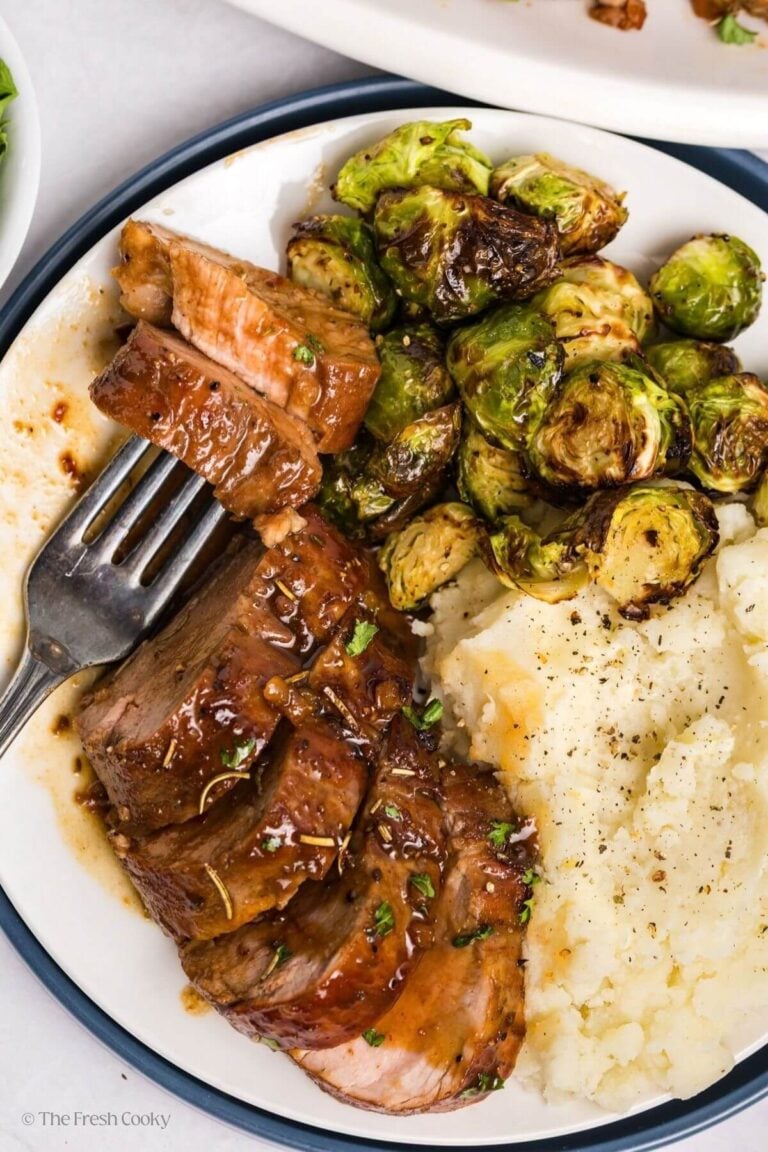
- Potatoes: My Creamy Roasted Garlic Mashed Potatoes are the top pick. They soak up every last drop. Au Gratin Potatoes are great for company, and Roasted Potatoes and Onions keep it easy.
- Sweet potatoes: Go with my Sweet Potato Casserole with Pecan Streusel for a holiday spread, or Roasted Sweet Potatoes and Broccoli on a weeknight.
- Roasted vegetables: Roasted Root Veggies can share the oven with the pork. Just get them in about 20 minutes before the tenderloins, since they take longer. Brussels Sprouts with Honey Balsamic Glaze add a nice tangy contrast.
- German red cabbage: My Sweet and Sour Red Cabbage (Rotkohl) is what I served with this tenderloin, and it’s the side you’ll see in my video. Pork, apples, and red cabbage? A classic for a reason.
- More veggie sides: Southern-Style Green Beans or Slow Cooker Glazed Carrots.
- Salads: My Wild Rice Harvest Salad has a maple Dijon vinaigrette that echoes the glaze. For something lighter, try the Sweet Maple Apple Pecan Salad.
- Dessert: Keep the apple theme going with Apple Spice Cake or German Apple Strudel.
How to Store Pork Tenderloin
- Refrigerate: Get leftovers in the fridge within 2 hours. Store the pork and any extra glaze in an airtight container for 3 to 4 days. If you can, leave the tenderloin whole or in big pieces. It stays juicier than pre-sliced medallions.
- Freeze: Wrap the cooled tenderloin tightly and freeze for up to 3 months. Freeze the glaze separately in a small container. Thaw both overnight in the fridge.
- Reheat: Warm slices in a covered skillet over low heat with a spoonful of glaze and a splash of cider or water, until heated through to 165°F. The microwave works too. Use 50% power in short bursts. High heat dries out lean pork fast.
- Cold glaze tip: The glaze sets up thick in the fridge. Warm it in a small pan with a splash of cider and it’ll loosen right back up.
- Leftover love: Honestly? Cold, thinly sliced leftovers are amazing on a sandwich or over a salad. No reheating needed.
Maple Dijon Pork Tenderloin FAQs
Cook to 145°F, then rest for 3 minutes. I pull mine at 140°F, since carryover cooking takes it the rest of the way. Like it a little more done? Check the doneness chart above.
After a good sear, 1-pound tenderloins usually take 15 to 20 minutes to hit 140°F. Thickness varies a lot from package to package, so start checking at 12 minutes and go by temperature, not the clock. If you’re still learning how to cook pork tenderloin, an instant-read thermometer is the one tool worth buying.
Nope! Roast it uncovered so that seared crust stays nice and browned. Covering traps steam and softens the outside. Save the foil for resting, when a loose tent keeps it warm without making it soggy.
Partly. Rub the pork up to a day ahead and keep it in the fridge. For the juiciest slices, roast and glaze it the day you serve it.
Give it time. It stays thin for most of the simmer, then thickens fast at the end. If it’s going much longer than 15 minutes, nudge the heat up a little so it’s bubbling steadily. At high altitude, plan on closer to 20 minutes. It also thickens more as it cools.
Plan on about ⅓ pound of raw tenderloin per person. Two 1-pound tenderloins feed about 6, or 4 with leftovers for lunch.
I don’t. Maple and brown sugar scorch fast at 400°F, and a burnt glaze tastes bitter. Rolling the pork in the glaze at the end keeps it glossy and sweet without charring.
More Pork Recipes to Try
Like this recipe?
Don’t forget to give it a ⭐️⭐️⭐️⭐️⭐️ star rating and leave a comment below the recipe!
Equipment
Ingredients
For the pork:
- 2 tablespoons brown sugar
- 1 teaspoon kosher salt
- ½ teaspoon black pepper
- 1 teaspoon dried rosemary or thyme
- ½ teaspoon garlic powder
- ½ teaspoon smoked paprika
- 2 pounds pork tenderloins (2 tenderloins, about 1 pound each, silver skin removed).
- 1 tablespoon olive oil
- 1 tablespoon butter
For the glaze:
- 1 tablespoon butter
- 2 cloves garlic minced
- 2 cups apple cider or apple juice
- 3 tablespoons apple cider vinegar
- ¼ cup pure maple syrup
- 2 tablespoons Dijon mustard
- ¼ teaspoon kosher salt
- ⅛ teaspoon red pepper flakes
For garnish:
- 1 tablespoon fresh parsley minced
Instructions
- Season the pork. Trim off any silver skin, then pat the tenderloins very dry with paper towels. Combine the brown sugar, salt, pepper, rosemary, garlic powder, and smoked paprika, and rub it over both tenderloins on all sides. This can be done up to a day ahead; refrigerate loosely covered on a plate.2 tablespoons brown sugar, 1 teaspoon kosher salt, ½ teaspoon black pepper, 1 teaspoon dried rosemary, ½ teaspoon garlic powder, ½ teaspoon smoked paprika, 2 pounds pork tenderloins

- Sear the pork. Preheat the oven to 400°F (205°C). Heat the olive oil and butter in a large skillet over medium-high heat until the butter melts and the foaming settles. Add the pork and sear, turning every couple of minutes, until deep golden on all sides, about 5 minutes total. Don’t go longer; the brown sugar burns fast.1 tablespoon olive oil, 1 tablespoon butter
- Transfer to a baking dish. Move the pork to a shallow baking dish or sheet pan brushed with oil or butter. But don’t you dare wash that skillet! That’s where the flavor is, and it’s where we’ll build the glaze.
- Roast. Roast until a thermometer in the thickest part reads 140°F, 15 to 20 minutes. Start checking at 12 minutes; tenderloins cook faster than you’d expect.

Make the Glaze
- Make the glaze while the pork roasts. Set the same skillet over medium heat. If any browned bits look black and burnt, wipe them out. Melt the butter and sauté the garlic for 1 minute; don’t let it burn. Pour in the cider and scrape up all those browned bits. Add the vinegar, maple syrup, Dijon, salt, and red pepper flakes. Bring to a boil, then lower to a steady simmer (visibly bubbling, but not violently). Cook, stirring occasionally, until reduced by more than half and syrupy enough to coat the back of a spoon, about 15 minutes. It stays thin for a long time, then thickens fast in the last few minutes, so stay close. At high altitude (above 4,000 feet), plan on closer to 20 minutes.1 tablespoon butter, 2 cloves garlic, 2 cups apple cider, 3 tablespoons apple cider vinegar, ¼ cup pure maple syrup, 2 tablespoons Dijon mustard, ¼ teaspoon kosher salt, ⅛ teaspoon red pepper flakes

Finish and Serve
- Rest the pork. Transfer the pork to a cutting board, tent loosely with foil, and rest 5 to 10 minutes.
- Glaze the pork. Turn the glaze heat down to low. Return the rested tenderloins, whole, to the skillet, along with any juices from the board. Turn to coat for 1 to 2 minutes, just until glossy and warmed through. Move back to the cutting board.
- Slice and serve. Slice crosswise (against the grain) into ½-inch medallions. Spoon the remaining glaze over the top and sprinkle with parsley.1 tablespoon fresh parsley
Notes
- Go by temperature: Pull the pork at 140°F; it climbs to about 145°F as it rests. Prefer it more done? See the doneness chart in the post.
- Convection oven: Roast at 375°F and start checking at 10 minutes.
- One-skillet option: Sear in an oven-safe skillet, like cast iron, and roast in the same pan. Make the glaze after the pork comes out. It adds about 15 minutes, and that handle will be screaming hot.
- Altitude tested: Tested at Mile High and at sea level.
- Gluten-free: Naturally gluten-free; double-check your labels, especially the Dijon.
- Dairy-free: Use plant-based butter, or all olive oil.
- Storage: Refrigerate within 2 hours in an airtight container for 3 to 4 days. Freeze the pork and glaze separately for up to 3 months; thaw overnight in the fridge.
- Reheating: Warm slices in a covered skillet over low heat with a spoonful of glaze and a splash of cider until heated through to 165°F.
- Cooking for two? This recipe halves easily. Use the slider on the recipe card to halve the pork and rub, but make the glaze at the full amount. At least, that’s what I do! Extra glaze never goes to waste. One tenderloin serves 2 people with a little left over.
Nutrition








Rate & Comment