


I took a cooking class from a Viennese chef and learned how to master making authentic Apfelstrudel. Maybe it’s my German heritage, but I’ve become a bit utterly obsessed with Apple Strudel! With its paper-thin layers of crust and perfectly spiced apples, this recipe feels like something straight from a café – kind of like apple pie, but not!
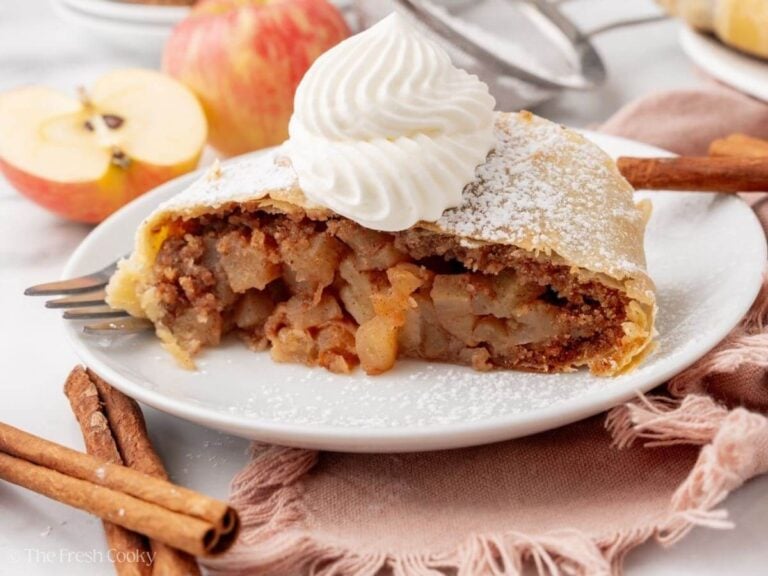
Everyone needs a good Recipe for Apple Strudel…this one is the best!
There are almost as many different versions of Apfelstrudel out in the world as there are variations on chocolate chip cookies – basically endless! Some are old standbys that have been passed down from generation to generation, while others are a bit more modern. Every last one of them is delicious in its own unique way.
I learned my recipe for this strudel while I was taking a schnitzel and strudel making class in Vienna, Austria this year & was lucky enough to get to practice making the dough with my own two hands. Once I got back home, though, I was determined to give it a go on my own. The dough takes a bit of practice, but if you can stretch it out nice & thin, it really does come together beautifully – and honestly, it’s a lot easier to make than you might think.
I tested and tweaked this Apfelstrudel so you don’t have to
But there was a bit of a snag when I tried to convert the recipe to make just one strudel. The original recipe made two big ones & all the measurements were in metric, so I had to do some mental math to get it right. It wasn’t easy, but once I finally got the conversions sorted, it turned out perfectly every time (and now I can confidently say that it doubles like a dream – so it’s perfect for a big party!)
Of course, being me, I just had to try tweaking the recipe a bit. I thought maybe using pastry flour would make the crust even lighter & flakier and more similar to the lighter Austrian all-purpose flour. Not so much, it ended up being way too stretchy. In the end, good old all-purpose flour turned out to be the way to go; just make sure to sift it before you start mixing.
I even had a few of my girlfriends over (see picture by recipe card) from my European trip to help make one; it was a real hit. We did have a bit of a heated debate, though – raisins or no raisins? The verdict was pretty much unanimous – no raisins – but hey, if you’re a raisin fan, I’ve got you covered too.
As it happens, neither of my Omas ever made strudel, despite having German roots on both sides of the family. My love of it actually came later, from visiting German & Austrian bakeries – and eating way too much strudel while I lived in Berlin as an Au Pair. Okay, maybe “way too much” is an understatement.😜
This recipe lets you bring that same authentic taste & flaky, golden texture into your own kitchen – no need for a passport! If you’ve ever dreamed of pulling a warm, fragrant apple strudel from the oven & feeling like you’re sitting in a cozy Viennese café, well, I promise you – you can do this. I’ll walk you through every step, and cheer you on all the way.
What is Apple Strudel?
Apple strudel, or apfelstrudel, is a beloved Austrian dessert that’s also loved and made in Germany and throughout Central Europe. It’s made by wrapping thin, stretchy dough around a sweet, spiced apple filling and baking it until golden, crisp, and flaky! Kinda like a rolled up apple pie!

German Apple Strudel ingredients
For the Dough
- Flour: All-purpose flour works great here. I always use unbleached, organic all-purpose flour!
- Sea Salt: For added flavor in the dough.
- Avocado Oil: This adds tenderness to the dough. Make sure that is’a neutral tasting vegetable oil.
- Egg: An egg helps to give the dough structure. Make sure it’s room temperature. I use large eggs in all of my baking.
- Lukewarm Water: To bind all the ingredients together!
Breadcrumb Layer
- Bread crumbs: Plain breadcrumbs will help absorb some of the moisture from the apples, preventing the crust from getting soggy.
- Butter: To make the breadcrumbs buttery and toasted.
Apple Filling
- Apples: Choose a sturdy apple like Honeycrisp, Granny Smith, Braeburn, or Golden Delicious. Sweet-tart apples work best. My friend and I who took the class thought it wasn’t quite sweet enough, so I’ve giving options to increase the sugar based on your preference.
- Sugar: I use all-natural cane sugar to sweeten up the filling.
- Cinnamon: Cinnamon is all you need to add a warm, cozy flavor.
- Butter: Adds richness to the filling!
- Rum: This is optional, for a slightly deeper flavor in the filling.
- Raisins & Walnuts: Also optional, if you want some add-ins for the filling! If adding raisins, try rum-soaked raisins!
Get the full recipe in the recipe card below.

How to make Apfelstrudel
Step 1 – Make the Dough
In a mixer bowl, combine flour, salt, oil, and egg. Slowly add water until a soft, slightly sticky dough forms. Knead for 10 minutes (by hand or mixer) until a smooth and elastic dough ball forms. Throw it down on the counter a few times, which helps the gluten development, giving you a very stretchy dough; it’s so satisfying! Shape into a disc, cover, and let the dough rest for 30–90 minutes.


Step 2 – Toast the Breadcrumbs
Melt butter in a skillet over medium heat. Add breadcrumbs and stir constantly until golden brown. Cool completely.


Step 3 – Prep the Apple Filling
Peel, core, and finely dice the apples into a big bowl. Combine apples with cinnamon sugar, rum, raisins*, and nuts (if using).

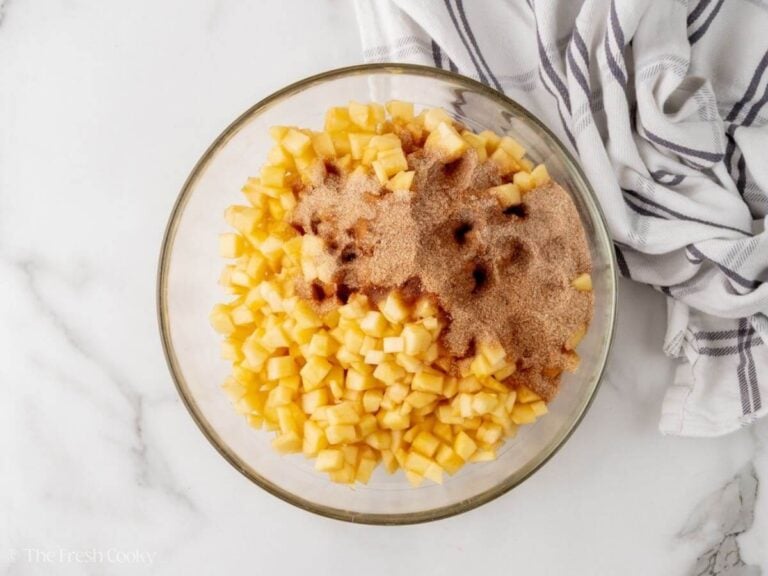

Team Raisin? If you love raisins, instead of placing the rum in the apple mixture, soak your raisins in a few tablespoons of rum while preparing the rest of the ingredients.
Step 4 – Stretch the Dough
Cover your work surface with a large, clean cloth (such as a large kitchen towel or a clean, lightly floured tablecloth) and dust lightly with flour. Using a rolling pin, roll dough into a rectangular shape, then stretch it gently with the back of your hands until it is paper-thin. It’s a very elastic dough, and you should be able to read through it! It’s a super flaky crust. Be sure to remove any rings, and if you have any rough nails, trim them!
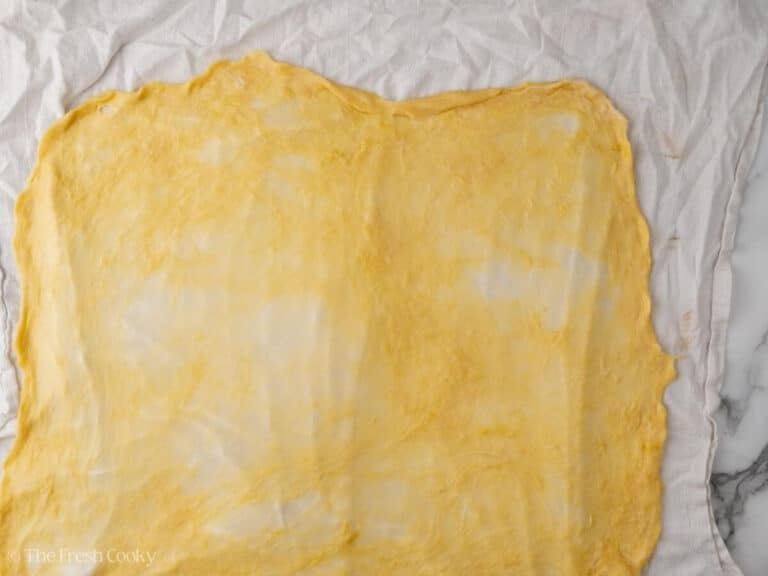
Step 5 – How to Assemble & Roll Strudel
Spread the cooled breadcrumbs about 3–4 inches from one shorter edge of the stretched dough, leaving space on the sides. Spoon the apple mixture evenly over the top. Brush the remaining dough lightly with melted butter. Using the cloth to help, start from the apple-topped end and roll the dough up tightly like a jelly roll, tucking in the sides as you go.


Step 6 – Bake & Enjoy
Transfer to a sheet of parchment paper to a baking sheet, seam side down. Brush with melted butter and bake in the middle of the preheated oven at 375°F (190°C) for 35–45 minutes, until golden and crisp. Cool 15–30 minutes before slicing.
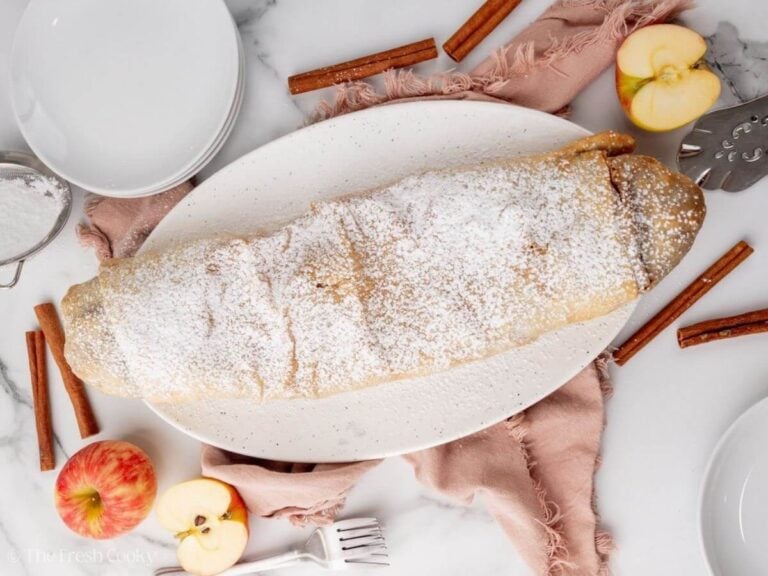
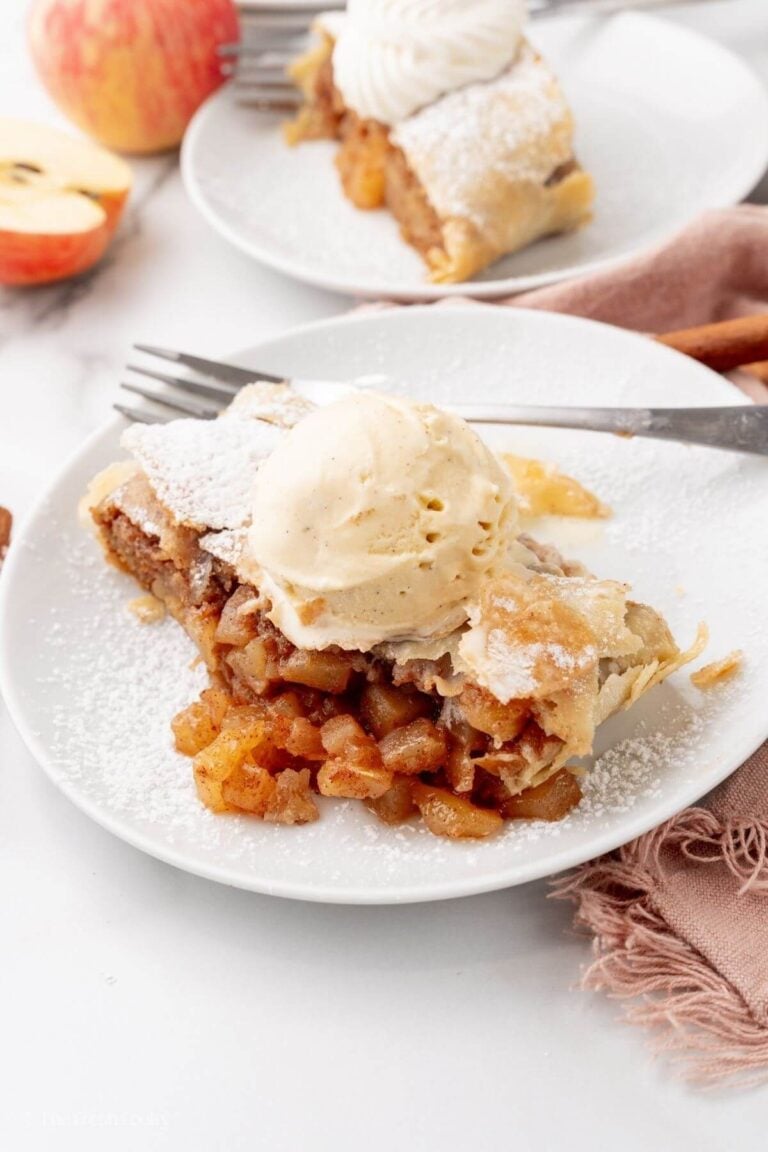
Dust with powdered sugar and serve warm with whipped cream, vanilla sauce, or a scoop of ice cream.

Best Apple Strudel Recipe tips
- Rest your dough! Giving the dough time to rest helps relax the gluten, making it easier to stretch without tearing. If your dough is stretching back a lot after you roll it out, give it some more time to rest.
- Stretch slowly. Don’t rush the process! Use the backs of your hands, not fingertips (unless just the palms of your hands), to gently pull the dough outward. Fingertips are more likely to poke holes! But don’t worry about the tiny holes or a tear, don’t try to patch it, it’ll get wrapped up!
- Breadcrumbs are key to the right texture! It might seem like a random addition to the strudel, but they are important to keeping the strudel crust nice and crisp as they absorb the juices from the apples.
How to serve this Apfelstrudel Recipe
Apple strudel is best served warm, dusted generously with powdered sugar. Add one of the following to the top of the strudel: a dusting of powdered sugar, and/or softly whipped cream, vanilla sauce, crème anglaise (similar to German Vanilla Sauce), or a scoop of vanilla ice cream for an extra indulgent dessert! I also highly recommend serving it with a cup of coffee, just as you would enjoy it in Europe!

German Apple Strudel Recipe storage
- Storage: Keep cooled strudel loosely covered at room temperature for 1–2 days. For longer storage, refrigerate up to 4 days.
- Recrisping: Strudel softens as it sits. To revive the flaky, crisp layers, place the slices on a baking sheet and warm in a 350°F (175°C) oven for 10–15 minutes. Avoid microwaving, as this makes it soggy.
- Freezing (Unbaked): Prepare the strudel up to the point of baking. Wrap tightly in plastic wrap, then foil. Freeze up to 3 months. Bake straight from frozen at 375°F (190°C) for 40–50 minutes, brushing with a little extra butter halfway through.
- Freezing (Baked): Let strudel cool completely. Wrap well in plastic wrap and foil, then freeze up to 2 months. Reheat in a 350°F (175°C) oven for 20–25 minutes until hot and crisp.
German Apple Strudel FAQs
While both are German-inspired, they’re completely different! Strudel is a thinly rolled pastry filled with apples and baked into a log, while streusel refers to a crumbly topping made of butter, sugar, and flour that’s sprinkled over cakes or muffins.
Apple strudel (Apfelstrudel) is widely considered Austria’s national dessert, with its origins tracing back to the Austro-Hungarian Empire (Habsburgs) in the 17th century.
Today, apple strudel is beloved across Austria, southern Germany (especially Bavaria), Hungary, the Czech Republic, Slovakia, and parts of northern Italy (particularly South Tyrol). Each region adds its own twist, different apples, nuts, or dough styles, but the heart of the dessert remains the same: simple ingredients, lovingly prepared and stretched thin.
Here’s the deal: to stretch the dough paper-thin, you actually need gluten. So my best recommendation is to find a gluten-free phyllo dough or puff pastry, roll it as thin as you can, and then roll it as described above. Swap out the breadcrumbs for gluten-free breadcrumbs or coarse almond flour.
Apfelstrudel Variations & Substitutions
Strudel has its strongest roots in Austria, Germany (especially Bavaria), and Hungary, where bakers have been stretching out tissue-thin dough for centuries. It was once considered a showpiece dessert, proving the baker’s skill by how thinly they could stretch the dough. Try a few of these traditional seasonal twists:
- Swabian Apple Strudel – from Southern Germany, sometimes enriched with cream or sour cream for a richer filling. I made one with a little lightly sweetened sour cream, and it was yummy!
- Cheese Strudel – filled with sweetened quark or farmer’s cheese, often dotted with raisins.
- Plum Strudel – made with tart Italian plums, especially in late summer.
- Cherry Strudel – bursting with juicy cherries, often paired with vanilla sauce.
- Rhubarb Strudel – tangy and bright, sometimes softened with strawberries.
- Almond Variation – In some recipes, finely ground almonds are used instead of breadcrumbs to soak up apple juices, adding a nutty, delicate flavor.
- Peach, apricot, nectarine, pear; use your creative “juices” and get things going!
A few of our favorite international recipes
Our popular recipes from The Fresh Cooky
And there you have it, I hope you now feel the confidence to make this homemade apple strudel on your own! Have a strudel-making party like I did! Here’s the promised picture of me and my friends who came over to help make the strudel!

Like this recipe?
Don’t forget to give it a ⭐️⭐️⭐️⭐️⭐️ star rating and leave a comment below the recipe!

Ingredients
Strudel Dough
- 1 ⅔ cups all-purpose flour unbleached, spooned and leveled and sifted
- ¼ teaspoon sea salt
- 2 ½ tablespoons vegetable oil I used avocado oil, but any neutral oil will work
- 1 large egg room temperature, beaten if mixing by hand
- ⅓ – ½ cup lukewarm water
Breadcrumb Layer (see notes)
- ⅔ cup plain breadcrumbs see notes, fine bread crumbs 87g
- 3 tablespoons salted butter
Apple Filling
- 2 pounds apples peeled, cored, diced thin ⅛-¼ inch dices (about 6-8 cups, see notes)
- ½ – ¾ cup granulated sugar I use all-natural cane sugar, add more or less based on how sweet you like your desserts, it's still not overly sweet!
- 2 teaspoons ground cinnamon
- 3 tablespoons salted butter melted
- ½ tablespoon rum optional, but traidtional
- ½ cup raisins dark or golden, optional (if adding increase rum to ¼ cup and soak raisins for 30 minutes (up to overnight) to speed the process, heat 15-30 seconds in the microwave, discard rum and just use raisins.
- ½ cup walnuts or hazelnuts finely chopped (optional)
Instructions
Make the Dough
- Sift flour into the bowl of a stand mixer. Add salt, oil, and beaten egg. If making in mixing bowl, using a wooden spoon, mix until all ingredients are combined.

- With the mixer on low, slowly add water until a soft, slightly sticky dough forms. Knead one of two ways:⅓ – ½ cup lukewarm water
- By hand: Knead on the counter for 10–15 minutes until smooth and elastic, picking it up now and then and throwing it down on the counter (this helps relax the gluten and develop it so it becomes stretchy).In mixer: Switch to a dough hook and knead 10 minutes on medium-low speed. Then knead the dough on the counter for 2–3 minutes, lifting and smacking it against the counter until it is smooth and elastic.
- Shape into a disc, cover with plastic wrap, and rest for 30-90 minutes. May be made up to 2 days ahead of time, keep in fridge and bring to room temperature before trying to stretch the dough.


Toast the Breadcrumbs
- Melt butter in a skillet over medium heat. Add breadcrumbs and stir constantly until the mixture is dark golden brown. Set aside to cool.⅔ cup plain breadcrumbs, 3 tablespoons salted butter

Prepare the Apples
- Peel, core, and thinly dice apples (about ¼-⅛ inch dices). Place in a large bowl. Mix sugar and cinnamon in a small bowl. Add to apples along with rum (if using), raisins, and nuts. Toss well to coat. If waiting to use the apples, toss a few teaspoons of lemon juice to prevent browning.2 pounds apples, ½ – ¾ cup granulated sugar, 2 teaspoons ground cinnamon, 3 tablespoons salted butter, ½ tablespoon rum, ½ cup raisins

Stretch the Dough
- Cover a table or counter with a large pastry cloth, clean sheet, or tablecloth. Sprinkle with flour.
- Place the dough in the center, pat it into a square, and using a rolling pin, roll it into a rectangle.
- Remove all jewelry. With lightly floured hands, slide your closed fists under the dough and gently stretch it from the center outward using the backs of your hands (not fingertips). You can do this by lifting it up at first, rotating around, and allowing the weight of the dough to stretch it naturally. Then lie flat on the table. If needed, oil hands lightly.
- Move around the table as you stretch. The dough should eventually be as thin as tissue paper, allowing you to read something when placed underneath it.Trim any thick edges with kitchen scissors. If dry spots appear, lightly brush with oil.

Finish the strudel
- About 3–4 inches in from the short edge, spread the cooled breadcrumbs at the end of the studel. Leaving about 1-2 inches on the sides.
- Spoon the apple mixture evenly over the breadcrumbs. If using nuts, sprinkle on top. Some of the juices from the apples is okay, but not too much.½ cup walnuts or hazelnuts
- Sprinkle or lightly brush the remaining dough lightly with some of the melted butter, you'll use the rest to brush the top after rolling.
- Using the tablecloth, starting at the apple side, fold the dough excess over the apples, then fold in the sides. Then using the cloth, lift up and using the natural weight to roll the pastry (like a jelly roll) until the seam side is down.
- Carefully transfer strudel (seam side down) to a parchment-lined or greased baking sheet (18×13 inch). If too long, place diagonally or shape into a horseshoe or “L." Brush with melted butter 2–3 times.


Bake
- Preheat oven to 375°F (190°C) or 350°F Convection (175°C convection).
- Bake on the upper middle rack for 25–45 minutes, until golden brown and crisp. Rotate the pan halfway if needed. (Mine was done around 40 minutes) Cool 15–30 minutes before slicing. If you want firmer apples, bake a little shorter; softer apples bake longer.
- Serving: Dust with powdered sugar and serve with whipped cream, vanilla sauce, or vanilla ice cream (especially good on warm strudel)!


Notes
- Make dough up to 2 days ahead, place wrapped or in an airtight container in the fridge. Bring to room temperature before stretching.
- Dough not stretching: If you try stretching it and it keeps bouncing back, cover it with a damp cloth and let it rest for 5 minutes before trying again. If it’s being resistant or isn’t stretching as far as you want, allow it to rest longer before stretching again.
- Apples: Honeycrisp, Granny Smith, Braeburn, Golden Delicious, or other baking apples work well. Adjust the sugar based on the sweetness of the apples (½ cup for a more tart, ¾ cup for sweeter strudel). Slice apples thinly and evenly.
- Rum: Traditional in Viennese strudel; substitute vanilla extract or omit altogether.
- Breadcrumbs: They prevent a soggy bottom by soaking up the apple juices.
- Raisins: For plumper raisins, soak them in warm water or rum for 30 minutes to overnight, or speed it up by microwaving 15-30 seconds. Drain before using. I’m not a fan of using raisins in my baked goods, but if I had to have some I would use golden raisins; those are my husband’s faves.
- Nuts: About ½ cup finely chopped walnuts or hazelnuts is traditional.
- Store: Loosely cover cooled strudel and keep at room temp 1–2 days, or refrigerate up to 4 days.
- Recrisp: Warm slices on a baking sheet at 350°F (175°C) for 10–15 minutes to restore that flaky crunch. (Skip the microwave — it’ll turn soggy!)
- Freeze Unbaked: Assemble, wrap tightly in plastic and foil, and freeze up to 3 months. Bake straight from frozen at 375°F (190°C) for 40–50 minutes, brushing with butter halfway through.
- Freeze Baked: Cool completely, wrap well, and freeze up to 2 months. Reheat at 350°F (175°C) for 20–25 minutes until hot and crisp.
Nutrition





Rate & Comment