

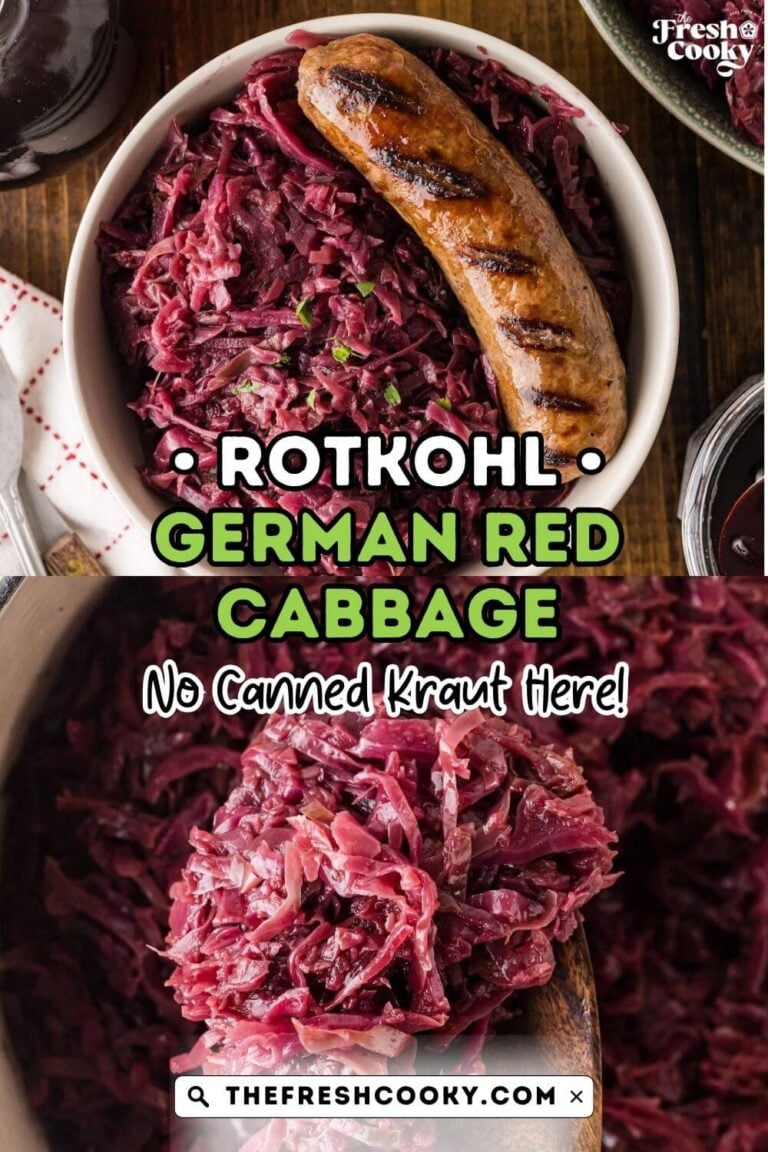
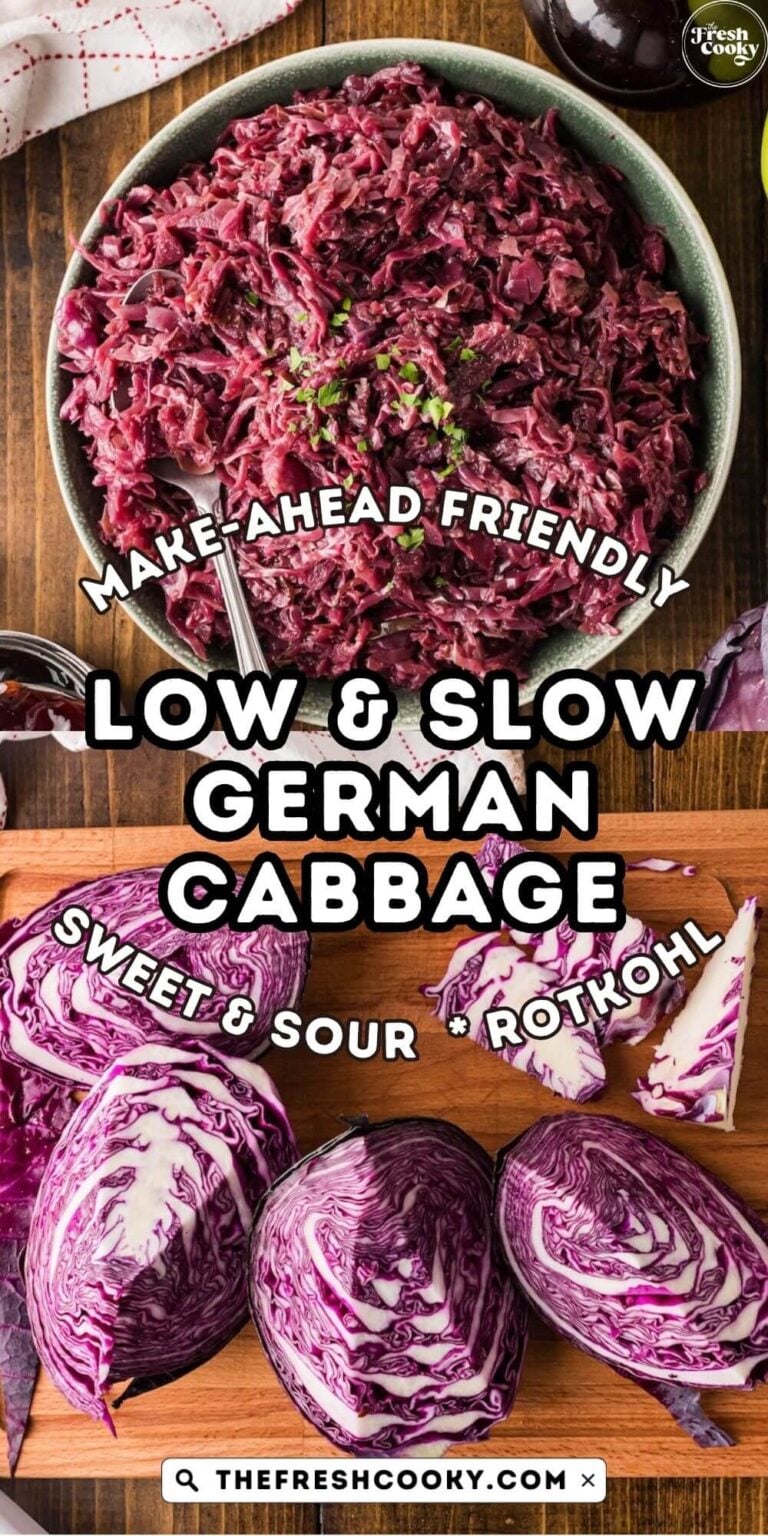
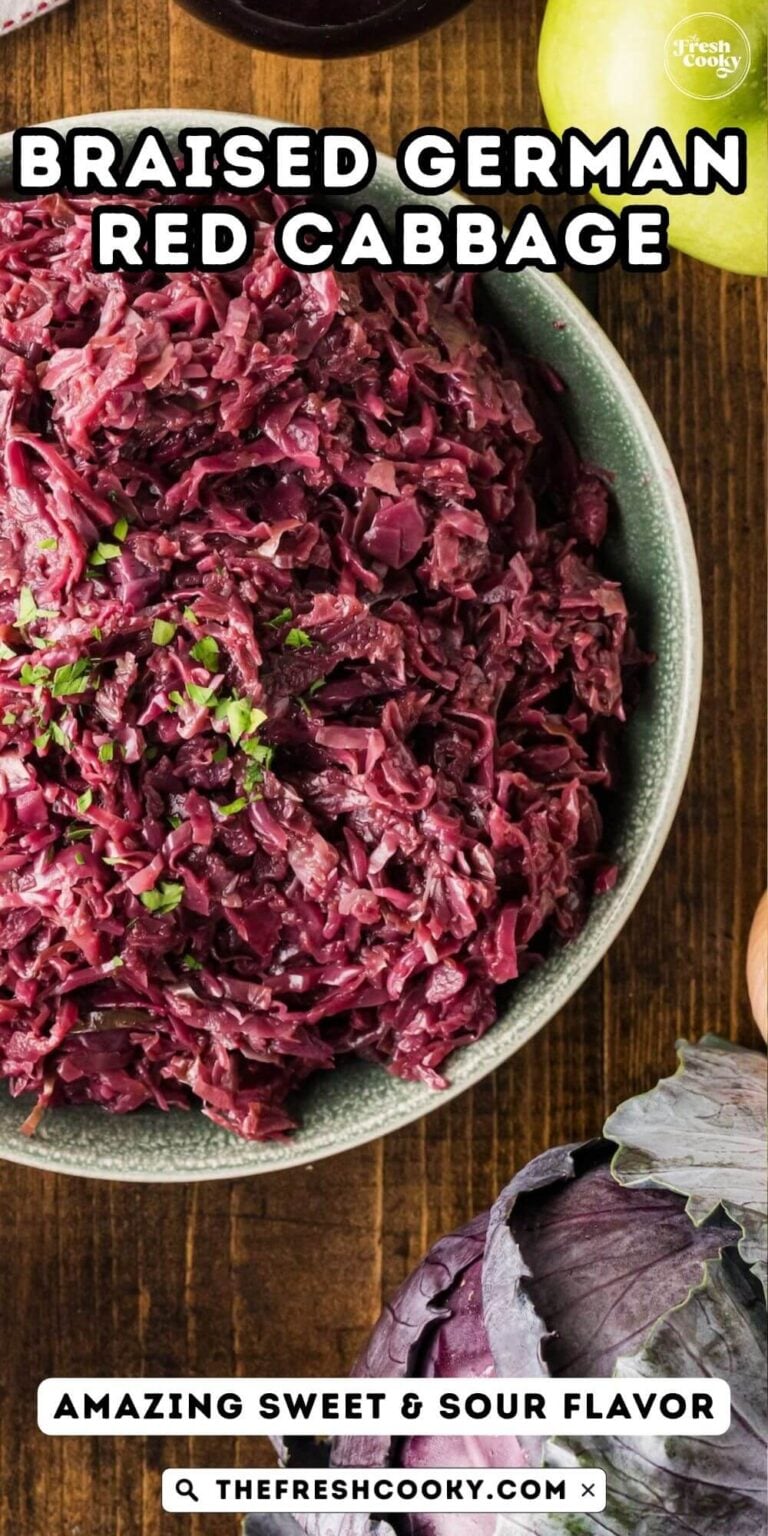

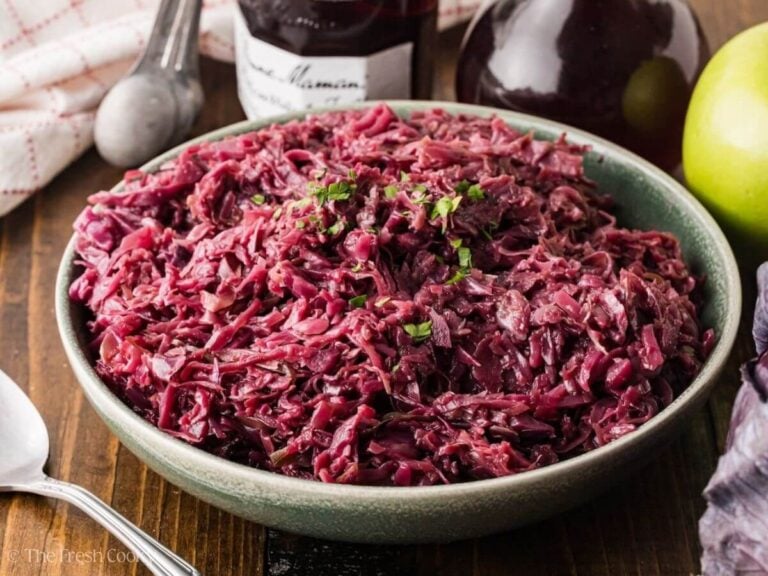
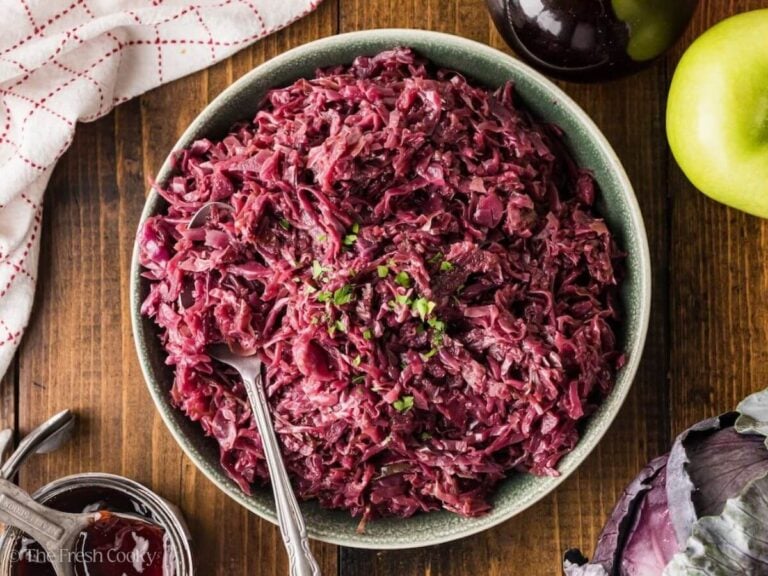
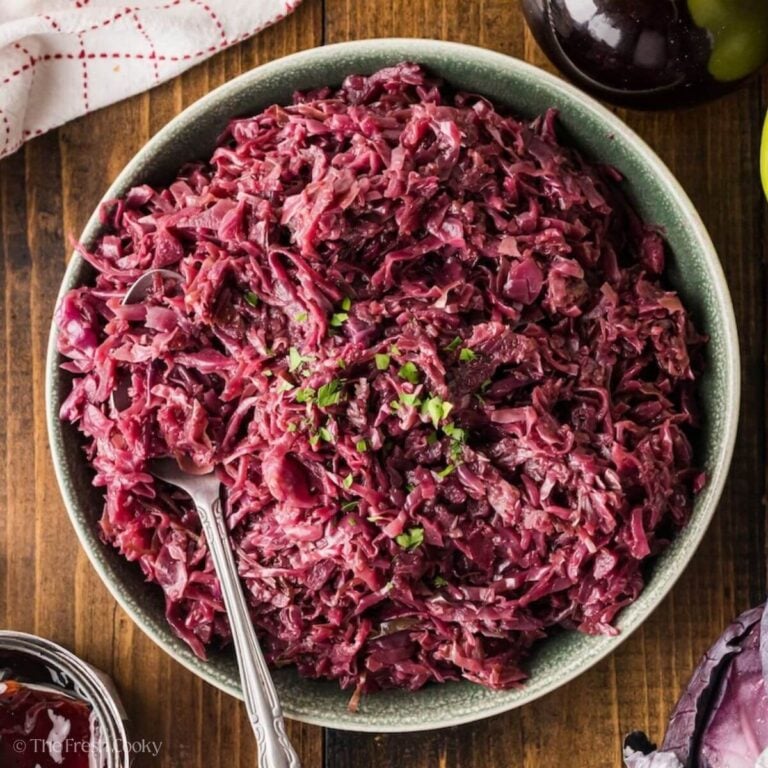
This Rotkohl is a classic German red cabbage recipe, braised low and slow with tart Granny Smith apple, red currant jelly, and a trio of whole spices. Learned from a real German family and made countless times since, this sweet and sour cabbage is the authentic, old-world side dish your Sunday roast has been missing!
I Braced for the Worst. I Got the Best Cabbage of My Life.
I was 22, freshly moved in with a family in West Berlin as an au pair, when a bowl of deep purple cabbage landed on the dinner table in 1987. And I braced myself. I come from a strong German heritage, but my only frame of reference for German-style cabbage was my dad’s canned sauerkraut, which my mom refused to let him eat in our house (long before home fermentation was a thing, so we’re talking the nasty-smelling, gas-station-shelf kind). I told myself to be a big girl, took a bite of what my host family called Rotkraut (directly translated, red cabbage), and braced for the worst. Boy, was I surprised!

It wasn’t even close to what I expected. Sweet, tangy, and glossy with butter, this braised red cabbage had none of the sharp, puckering bite I’d dreaded. It was comforting in a way I didn’t know cabbage could be, with the perfect balance of flavors. That one dinner rewired how I thought about German food entirely, and years later, when my husband and I took our boys through Bavaria and Austria, Rotkohl was still the dish I ordered first at every stop, sauerkraut included (though I’ll admit, sauerkraut made in Germany itself has since won me over too).
Below is the exact recipe I picked up in that Berlin kitchen, and I’ve made it countless times since. My host family never bothered with a flour-and-water slurry to thicken things at the end, so neither do I, and I’ve never once missed it. That’s one less step and one less ingredient! Keeping it naturally gluten-free too!

You Will Love This Rotkohl Recipe
- It’s the real deal. This isn’t a shortcut or Americanized version. It’s the recipe I learned firsthand from a German family while living in West Berlin (yeah, before the wall came down), so you’re getting an authentic taste, not a guess.
- Sweet-tart flavor, no sugar required. Between the Granny Smith apple and a couple of spoonfuls of red currant jelly, this cabbage gets all the sweetness it needs balanced against red wine vinegar. I don’t add sugar because I like it more on the tart side, but you can stir a teaspoon or two in at the end if you prefer it sweeter.
- It’s a make-ahead dream. Rotkohl actually tastes better the next day, once the flavors have had time to mingle, which makes it one of the easiest things to check off your list before a big holiday meal.
- Freezer-friendly. I make a full batch, portion it into freezer containers, and pull one out anytime we want a taste of Germany with dinner.
- Naturally gluten-free. No flour or cornstarch slurry here. The cabbage thickens just enough on its own as it braises.
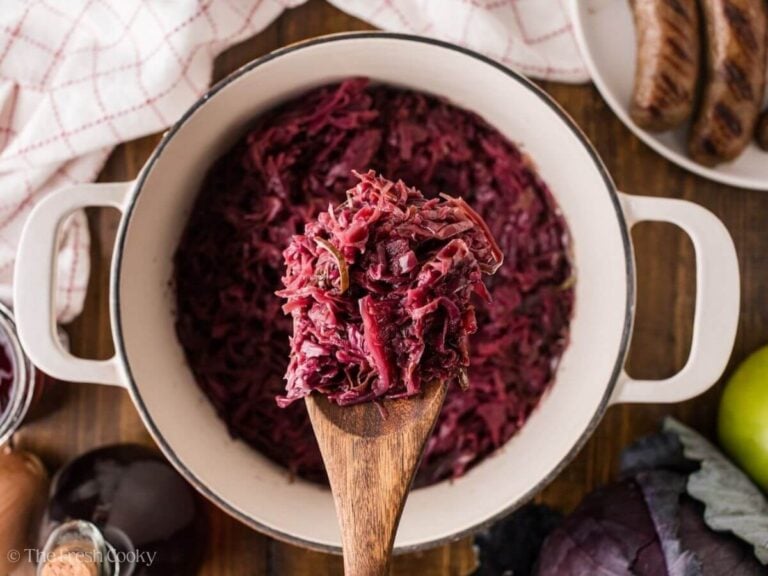
Rotkohl vs Rotkraut vs Apfelrotkohl
If you’ve seen this dish under a few different names, you’re not imagining things. It’s genuinely regional. Rotkohl (“red cabbage”) is the most common name, especially in northern and western Germany, while in Bavaria and parts of Austria you’ll often hear it called Blaukraut (“blue cabbage”) instead.
Rotkraut is simply another regional variant of the same word. None of these are different recipes; they’re the same braised cabbage dish, just named differently depending on where you are.
Apfelrotkohl is a little more specific: it calls out the apple (Apfel) in the name, emphasizing a version where apple plays a starring role in the sweetness, as it does in this recipe.
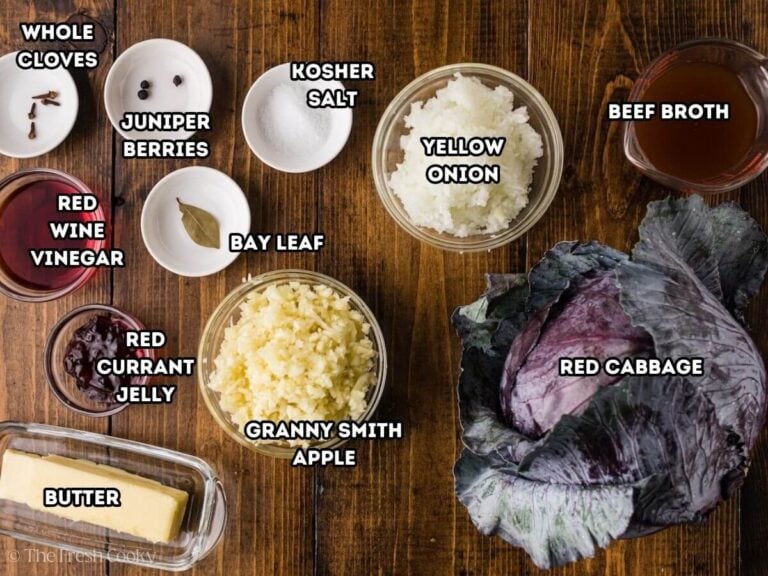
German Red Cabbage Ingredients
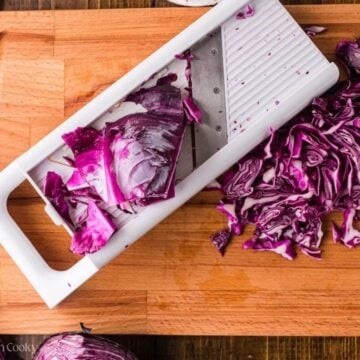
- Red Cabbage: Buy about a 2-pound head to allow for trimming the core and outer leaves, since you’ll need 1 ½ pounds shredded. A mandoline makes quick work of shredding it thin and even.
- Yellow Onion: Minced fine so it melts into the background rather than standing out in bites.
- Granny Smith Apple: Or another tart apple you have on hand. The tartness balances the sweetness from the jelly, so avoid a naturally sweet variety here.
- Butter: I use salted butter for flavor. It’s what sautés the onion and apple before the cabbage goes in. Swap in olive oil or a dairy-free butter for a vegan version.
- Red Currant Jelly or Jam: This is where a lot of the sweetness and depth comes from. I’ve also used cherry and lingonberry jam with great results if currant isn’t available.
- Red Wine Vinegar: Adds the “sour” side of sweet-and-sour and helps keep that classic reddish color. Apple cider vinegar is a good substitute, but skip balsamic or flavored vinegars.
- Broth: Beef, chicken, or vegetable broth all work. Use whatever you have. Keep a little extra nearby in case the cabbage needs more liquid while it braises.
- Bay Leaf, Whole Cloves, and Juniper Berries: The classic aromatics. Juniper berries can be swapped for whole allspice if you can’t find them. Fish out all three before serving, or make it a game when serving.
- Kosher Salt: Season to taste at the end, along with more vinegar if you like it tangier.
Get the full recipe in the recipe card below.
Watch how simple this is to make!
How to Make Braised Red Cabbage
Step 1 | Prep the Ingredients
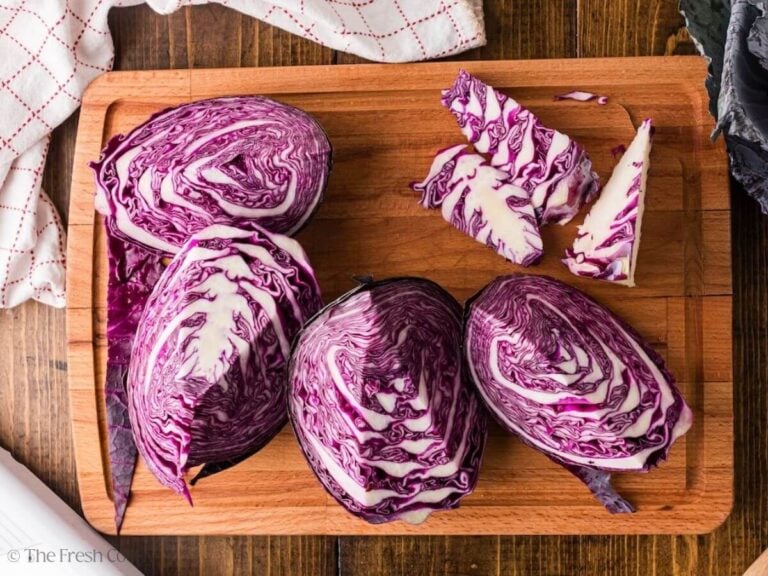
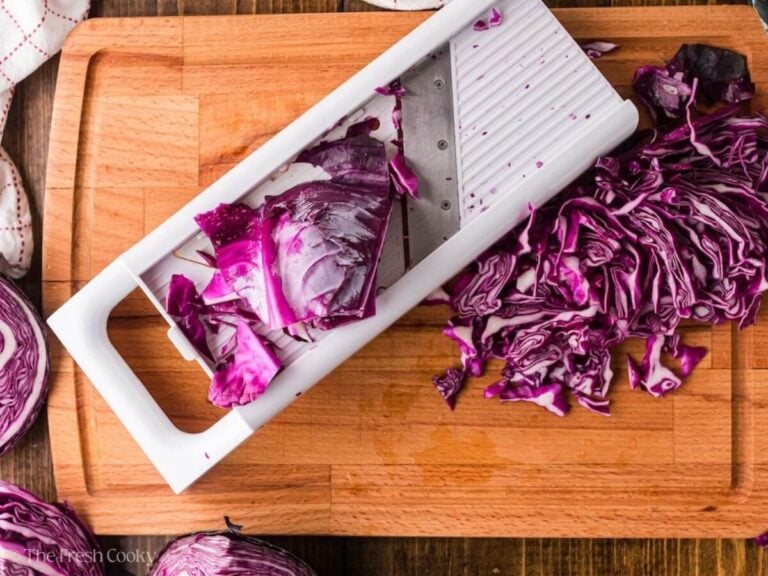
Mince the onion and shred the cabbage. A handheld mandoline is the fastest route. Trim the two outer leaves, cut the cabbage into quarters, and trim away some of the core before shredding.
Step 2 | Sauté the Onion and Apples
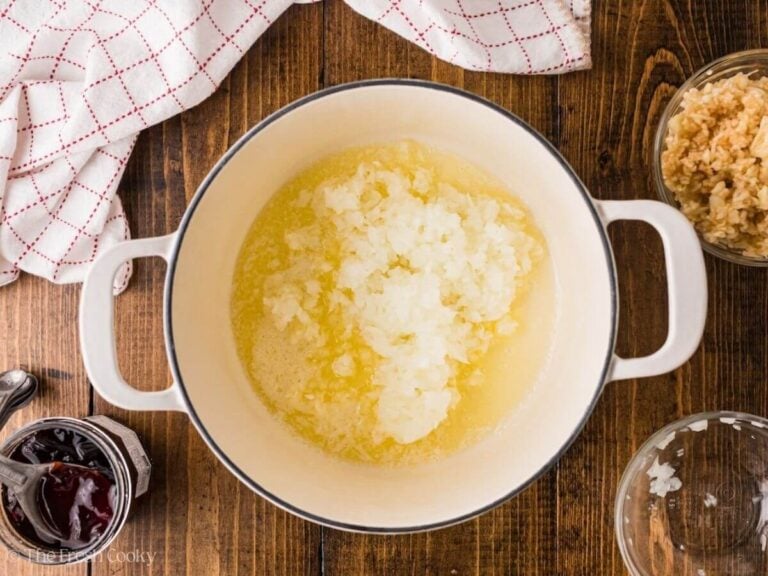
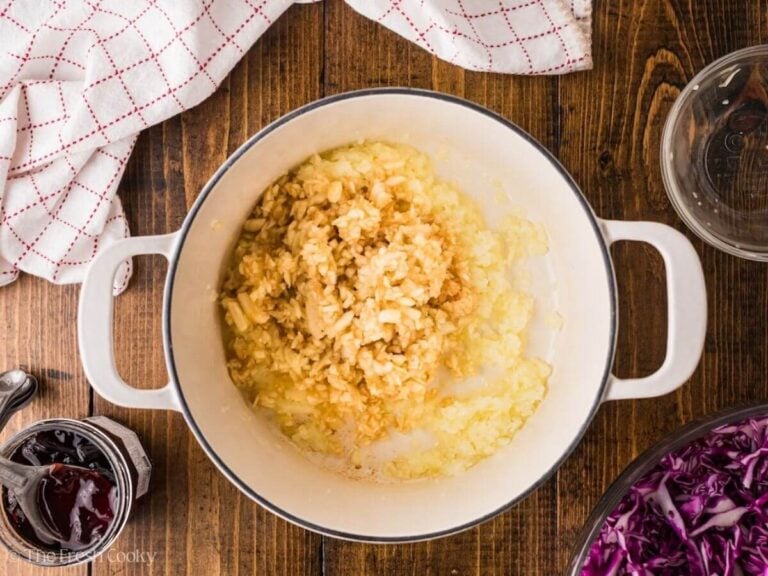
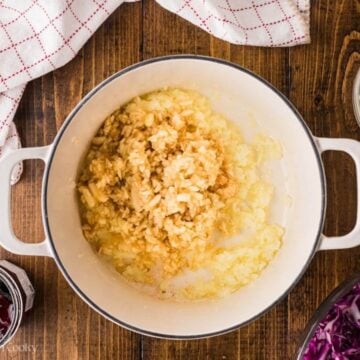
In a large Dutch oven or large heavy-bottomed pot (4 quarts or more), melt the butter over medium heat and sauté the chopped onion until just turning brown, about 7–10 minutes.
Stir in the diced apple during the last 4–5 minutes of the onion cooking, stirring occasionally.
Step 3 | Add Cabbage and Additional Ingredients
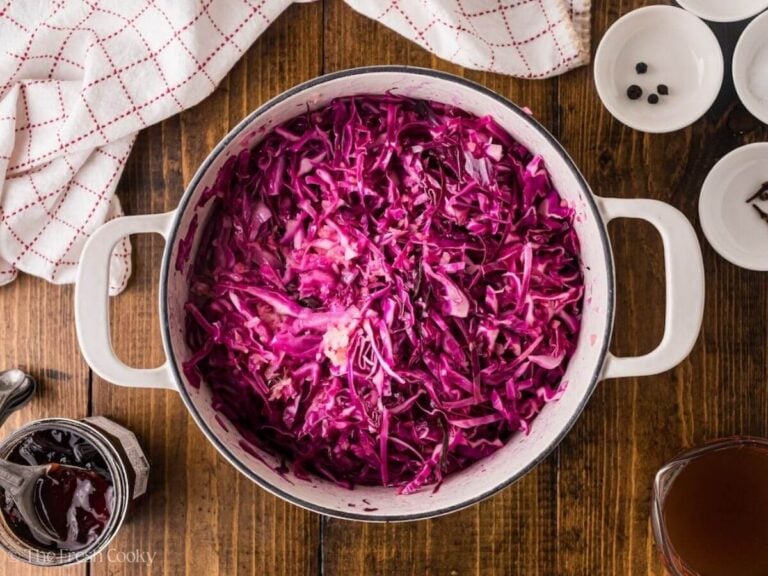
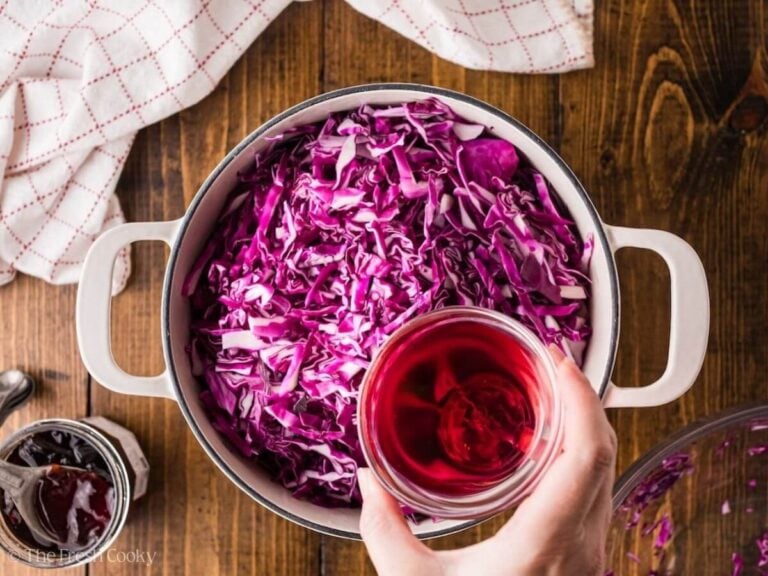
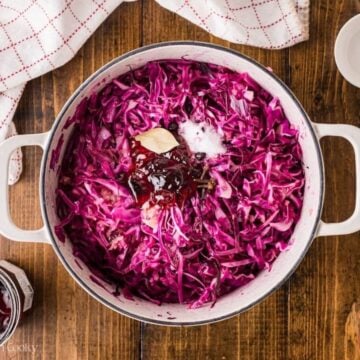
Stir in the sliced cabbage and red wine vinegar, and cook, stirring occasionally, for about 5 minutes.
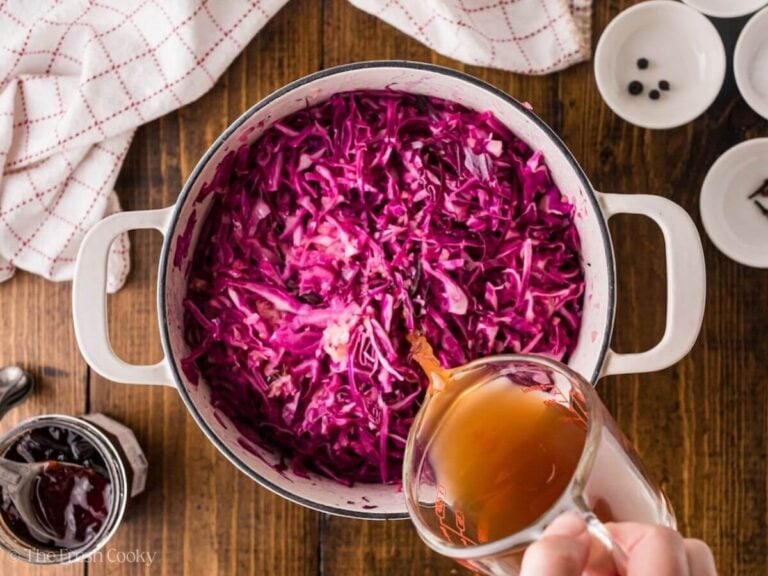
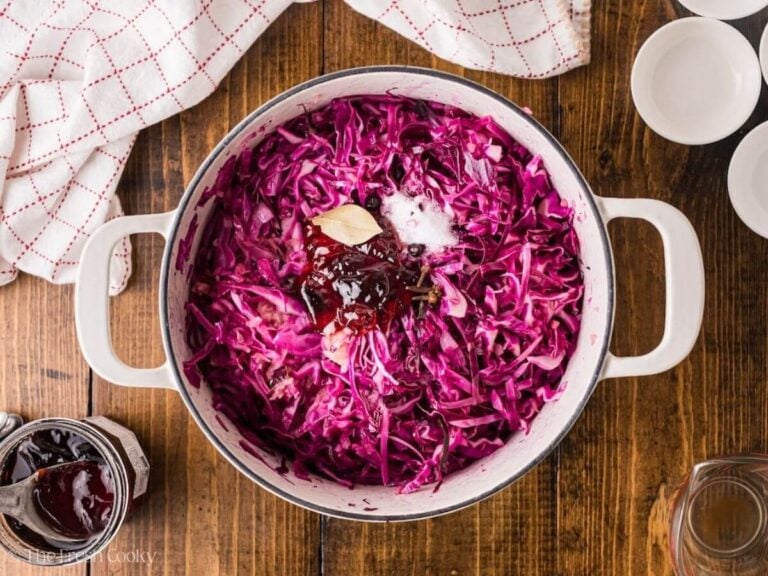
Add the broth, bay leaf, cloves, juniper berries, red currant jelly, and salt. Stir well to combine everything.
Step 4 | Simmer
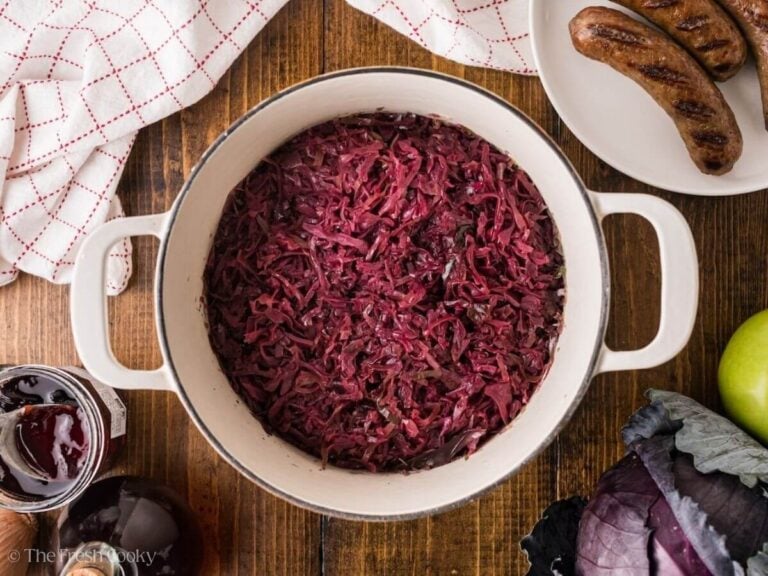
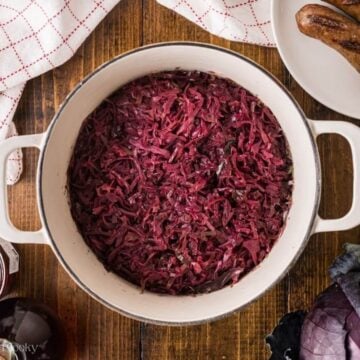
Bring to a low boil, then reduce the heat to low, cover, and simmer for 2 hours, stirring every 30 minutes and checking liquid levels — add a splash more broth if it dries out.
Before serving, taste and adjust the salt and vinegar, adding a teaspoon or two of sugar if you’d like it sweeter. Fish out the bay leaf, cloves, and juniper berries before serving (or turn it into a game to see who finds one!). They get an extra pfeffernusse for dessert!
How to Serve Sweet and Sour Cabbage
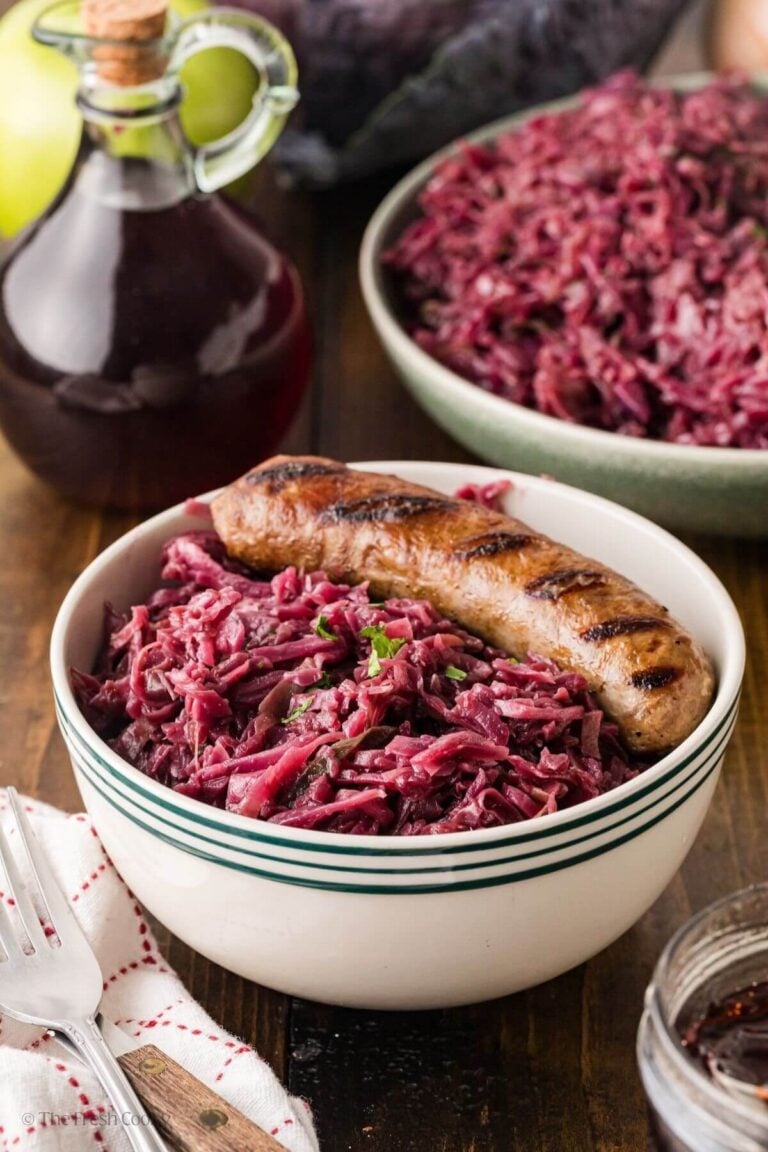
Rotkohl is a classic side dish that’s traditionally served alongside Sauerbraten and Rouladen, but I love it just as much with Schnitzel, bratwurst, or really any pork or sausage.
It’s also a wonderful match for a Pot Roast or a Hearty Beef Stew, since the sweet-sour flavor cuts right through rich, hearty meat. If you’re building a full German-inspired spread, pair it with warm German Potato Salad or spätzle, and check out my full Oktoberfest recipe roundup for more pairing ideas, including sauerbraten and rouladen.
Storing Rotkohl
This rotkohl recipe makes enough for a large family, though you can halve it for a smaller crowd. Since it takes some time to make, I usually cook the full batch even when it’s just my husband and me, then freeze it in serving-sized containers for later.
- Refrigerator: Store cooled rotkohl in an airtight container for up to 5 days.
- Freezer: Freeze in freezer bags or containers for up to 3 months.
- Reheating: Defrost in the refrigerator overnight, then rewarm gently on the stovetop over low heat, adding a splash of water or broth if needed.
Rotkohl FAQs
No. While both have a sour edge, sauerkraut is raw cabbage massaged with salt and fermented in jars, never cooked. Rotkohl is a cooked dish, made sour with vinegar instead of fermentation.
You can, but the dish changes character since you lose the deeper, earthier flavor that red cabbage brings. A version made with white cabbage is actually its own dish, called Schmorkohl.
Red cabbage contains natural pigments that react to pH like a built-in indicator: acidic ingredients like vinegar keep it red, while cooking without enough acid lets it shift toward purple or blue. If your batch looks more purple than red, a little extra vinegar will bring the color (and tang) right back.
Yes, just swap out the butter for oil, and use vegetable broth and you are golden!
More German Favorites to Try
Related Recipes You Might Like



Like this recipe?
Don’t forget to give it a ⭐️⭐️⭐️⭐️⭐️ star rating and leave a comment below the recipe!
Video
Equipment
- Oxo Mandoline Slicer
Ingredients
- 1 ½ pounds red cabbage shredded (I typically buy about a 2-pound cabbage, allowing for trimming the core and excess leaves)
- 1 large yellow onion minced (finely)
- 1 large Granny Smith apple peeled, cored, and diced small (or other tart apple)
- ¼ cup butter I used salted butter
- 2 heaping tablespoons red currant jelly or jam I've also used cherry and lingonberry
- 4 tablespoons red wine vinegar
- ¾ cup broth use beef, chicken, or vegetarian + a little extra if needed during braising
- 1 bay leaf
- 4 whole cloves
- 4 juniper berries or substitute with whole allspice
- 1 teaspoon kosher salt
Instructions
- Prep your ingredients by mincing your onions and shredding your cabbage; the fastest way to shred cabbage is using a mandoline. You don't have to spend a lot either. Purchase a simple handheld version, trim the cabbage of the two main outer leaves, then cut the cabbage into quarters, and trim some of the excess core before shredding.1 ½ pounds red cabbage
- In a large Dutch oven or soup pot (4 or more quarts), melt the butter over medium heat, then add the onions and sauté until just turning brown, about 7-10 minutes. Add the apples during the last 4-5 minutes of cooking, stirring occasionally.1 large yellow onion, ¼ cup butter , 1 large Granny Smith apple
- Stir in the cabbage and red wine vinegar; stir occasionally for 5 minutes. Add in the broth, bay leaf, cloves, juniper berries (whole and removed before serving), red currant jam, and salt.2 heaping tablespoons red currant jelly or jam , 4 tablespoons red wine vinegar, ¾ cup broth, 1 bay leaf, 4 whole cloves, 4 juniper berries, 1 teaspoon kosher salt
- Stir well to incorporate all ingredients and bring to a low boil; reduce the heat to low, cover, and simmer for 2 hours, stirring every 30 minutes and checking the liquid levels, adding a little more broth if it dries out too much.
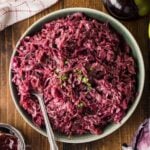
- Before serving, taste and adjust salt and vinegar, and if needed, add a teaspoon or two of sugar. I like mine more tart, so I typically don't add sugar. Before you serve it, fish out the bay leaf, cloves, and juniper berries, if you can find them. Or at the very least, make it a game with your family give them a little prize if they find one!
Notes
- Storage: Refrigerate in an airtight container up to 5 days, or freeze up to 3 months. Defrost overnight in the fridge and rewarm gently on the stovetop, adding a splash of broth or water if needed.
- No sugar needed: The apple and red currant jelly provide plenty of sweetness; add sugar only if you prefer it less tart.
- Skip the slurry: Some recipes call for a flour and water slurry stirred in at the end to thicken things up. I’ve never done that and love this version just the way it is. Plus, it keeps it gluten-free.
- Fish out the spices: Remove the bay leaf, cloves, and juniper berries before serving.
- Vegetarian/Vegan Rotkohl: Easily adapt this recipe to be vegan or vegetarian. Use olive oil (or swap in dairy-free butter) in place of butter, and use vegetable broth or stock in place of beef or chicken broth. For a purely vegetarian version, keep the butter (it adds a lot of flavor).
Nutrition








Rate & Comment