


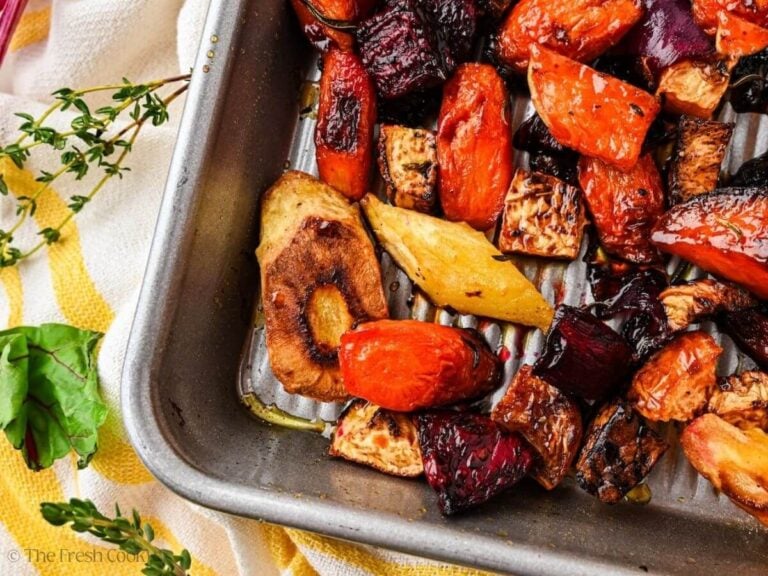
This Roasted Root Vegetables recipe turns humble carrots, parsnips, and beets into a caramelized, sheet-pan side dish worthy of your holiday table. A quick honey-vinegar glaze brings out their sweetness, no butter or cream required. I’ve roasted these colorful veggies every fall since discovering parsnips and rutabaga during my years living in Germany, and I just know you’re going to love them!
Parsnips and Rutabaga Weren’t On My Radar Until I Lived in Germany
I have been roasting vegetables for as long as I’ve had an oven, but this particular combination of carrots, parsnips, sweet potato, beets, and rutabaga, all tossed in a sweet-tart honey vinegar glaze is the one I make on repeat from October through the New Year.

The vegetables caramelize into deeply golden, tender bites, and that glaze, just honey and apple cider vinegar simmered down until glossy, ties the whole pan together without a stick of butter! Crispy fried sage leaves on top are optional, but trust me, they’re worth the extra five minutes.
When I lived in Germany, that’s honestly when I fell in love with roasted vegetables, but roasted root vegetables?! Be still my heart. We’d grab fresh veggies from the market (pretty sure they came straight from a local farm), and that’s also where I learned that parsnips and rutabagas are actually delicious! Since then, I try to incorporate them into my fall vegetable side dish rotation, and this one is definitely one of my favorites.

You Will Love These Roasted Fall Vegetables
- One sheet pan, five vegetables. Carrots, parsnips, sweet potato, beets, and rutabaga all roast together on the same pans, so you get a jewel-toned side dish without juggling multiple recipes. Cut everything to the sizes noted below and they’ll finish cooking at close to the same time.
- The honey vinegar glaze is the whole point. Most roasted vegetable recipes stop at olive oil, salt, and pepper. This one simmers honey and apple cider vinegar into a glossy glaze that gets tossed back in during the last few minutes of roasting, adding a depth of flavor that plain roasted veggies just don’t have!
- Naturally gluten-free and dairy-free. As written, this recipe fits right into a holiday table with all kinds of dietary needs, no substitutions required. If you want a richer version, I’ve included a butter variation in the notes below.
- Endlessly customizable. Swap in turnips or celery root for the rutabaga, use maple syrup instead of honey, add Brussels sprouts, or swap the vinegar for balsamic. I’ve included several of my favorite variations so you can make this dish your own.
- Great for a crowd, and a make-ahead champion. This recipe roasts on two sheet pans, so it’s built for holiday-sized gatherings, and it reheats beautifully the next day, which makes it one less thing to worry about on Thanksgiving morning.

Roasted Root Vegetables Recipe Ingredients
- Carrots: Cut on the diagonal into 1- to 2-inch pieces so you get those pretty long ovals instead of plain rounds; it’s a small touch that makes the whole pan look more special.
- Parsnips: If you’ve never cooked with parsnips, think of them as a milder, nuttier cousin of the carrot. They peel and cut like carrots, so there’s no learning curve.
- Sweet potato: Cut this one a bit larger than the rest of your vegetables since it softens faster. You want it to finish at the same time as the denser roots, not shrivel and turn to mush before they’re done.
- Beets: Red, golden, or a mix, whatever you can find. A quick heads up, red beets will bleed a rosy color onto everything else in the pan as they roast; totally normal, and kind of pretty. Cut into bite-sized cubes, about 1 inch.
- Rutabaga: My other favorite discovery from my days in Germany. Can’t find one? Celery root or a turnip both make a fine substitute; peel and cube into about 1 inch bite-sized pieces.
- Red onion: Cut into wedges rather than diced, so it holds together and roasts into soft, jammy layers instead of scattering across the pan.
- Extra virgin olive oil: Divided between the vegetable toss and misting the hot pans right before roasting; that second hit of oil helps everything caramelize instead of sticking.
- Garlic cloves: Left whole in their skins while roasting, then squeezed out soft and sweet at the end; no mincing required up front.
- Fresh thyme, rosemary, and sage: Keep the sprigs whole going into the oven. Chopped herbs are much more likely to char and turn bitter over a long roast; you can pull the stems before serving.
- Honey: The base of that glaze I keep talking about. Maple syrup swaps in perfectly if you want to keep this fully vegan.
- Apple cider vinegar: Balances all that honey sweetness with a little tang. Balsamic works too if that’s what you have on hand.
Get the full recipe in the recipe card below.

How to Make Roasted Root Vegetables
Step 1 | Preheat and Prep
Preheat the oven to 425°F (220 ° C) and set two large rimmed baking sheets inside while it heats. Starting the vegetables on hot pans jump-starts the caramelizing, so don’t skip this step.
Step 2 | Cut & Season the Veggies
Peel and cut the carrots, parsnips, beets, and rutabaga into roughly 1-inch pieces so they cook evenly. Cut the red onion into wedges. Heads up: the beets will stain a light cutting board, so use a dark one or a sheet of parchment.
In a large bowl, toss the carrots, parsnips, beets, rutabaga, sweet potato, red onion, and garlic with the olive oil, kosher salt, and pepper. Add the torn sage along with the whole rosemary and thyme sprigs, keeping the herbs whole so they don’t char.


Step 3 | Roast
Carefully pull the hot pans from the oven, mist or brush lightly with a high-heat oil, then spread the vegetables between the two pans in a single layer without crowding. Roast 45 to 60 minutes, rotating the pans and tossing halfway through, until everything caramelizes and is fork-tender.


Step 4 | Make the Glaze
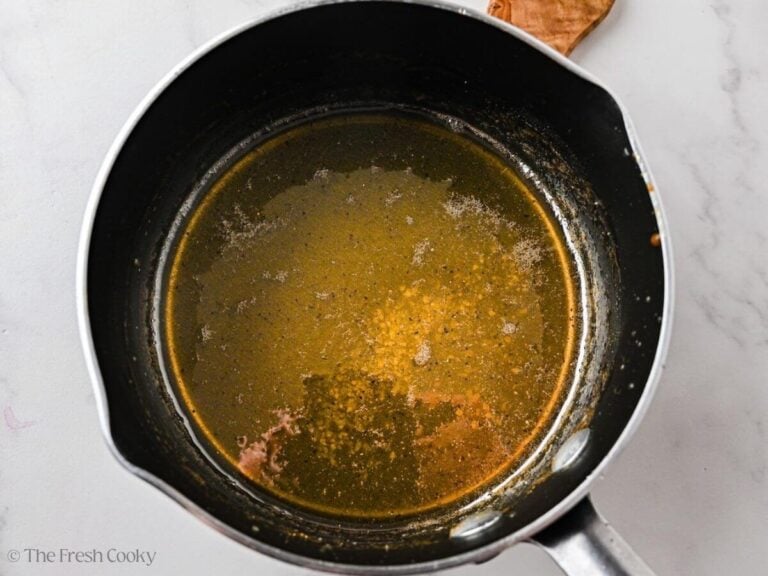
About 15 minutes before the vegetables are done, gently heat the honey in a small saucepan until it thins and turns a deep golden brown, about 3 minutes. Slowly whisk in the vinegar and simmer until it’s the consistency of maple syrup, about 10 minutes, then season with a pinch of salt and pepper.
Step 5 | Glaze & Serve
Pull the pan, squeeze the roasted garlic out of its skins, (careful, it’ll be hot, I use a paper towel) roughly chop it (it should be mushy), and toss it back in with the vegetables and the warm glaze. Return to the oven for 5 minutes to set the glaze, watching closely since honey can go from glazed to burnt fast.
Meanwhile if you would like to fry some sage leaves, and I sincerely hope you do, becuase they are amazing. In a small skillet add oil over medium heat, once oil is hot, quickly fry the sage leaves 15-30 seconds per side, then drain on paper towels and sprinkle with flaky sea salt, gently break apart and garnish the roasted veggies.

Scatter on toasted pecans or walnuts and crumbled goat cheese or feta, if using, and top with the crispy sage leaves right before serving.

Variations
- Make it richer. Melt 2 tablespoons of butter into the honey while it warms for a rounder, more indulgent glaze; it’s a small swap, but it makes the whole dish taste a little more special for a holiday table.
- Keep it fully vegan. Swap the honey for maple syrup, and you’ve got the same glossy glaze with the same deep maple flavor, no honey required.
- Swap the vinegar. Apple cider vinegar is my go-to, but balsamic leans richer and more savory if that’s the flavor profile you’re after. Really, any vinegar you have open in the pantry will work in a pinch.
- Turn up the heat. Simmer a whole habanero pepper in with the honey and vinegar while it cooks down, then fish it out before tossing the glaze with the vegetables. You get all the warmth without any of the seeds or heat overload.
- Go low-carb. Replace the sweet potato with turnip, radish, or more celery root, and cut the honey back to just 1 tablespoon. You’ll still get that same colorful, caramelized pan, just with less sugar overall.
- Bulk it up. Trim and toss in a handful of small Brussels sprouts right along with the other vegetables; they roast beautifully alongside the root vegetables and add another layer of texture.
- Change up the onion. Not a red onion fan? A couple of shallots, peeled and halved, roast just as sweetly and add a slightly milder flavor to the mix.
- Choose your beets carefully. Red beets will tint everything in the pan a rosy pink as they roast, which I think looks gorgeous, but it’s not for everyone. If you’d rather keep your carrots orange and parsnips white, use golden beets instead and skip the color bleed entirely.
- Skip the oven altogether. Toss the vegetables with oil and seasoning as directed, then air fry in batches at 380°F for 15 to 18 minutes, shaking the basket halfway through so nothing overcrowds. Toss with the warm glaze and air fry 2 to 3 minutes more to set it before serving.
Tips for Roasted Fall Vegetables
- Cut everything the same size. Except for the sweet potatoes, since they cook fastest. Otherwise, uniform pieces are the single biggest factor in even roasting; a mix of tiny and huge chunks means some vegetables will burn while others are still hard in the middle.
- Start with hot pans. Preheating the baking sheets along with the oven gives the vegetables a head start on browning the moment they hit the pan, which makes a real difference in getting caramelized edges.
- Don’t crowd the pan. Spread the vegetables in a single layer with a little breathing room between pieces. Overcrowding traps steam, and steamed vegetables won’t caramelize no matter how long they’re in the oven.
- Keep herb sprigs whole. Whole rosemary and thyme sprigs flavor the oil as everything roasts without burning; chopped herbs are more likely to scorch and turn bitter over a long roast.

What to Serve with Roasted Root Veggies
These oven-roasted root vegetables are right at home next to a big holiday main course or a simple weeknight dinner. A few of my favorites to pair it with:
- Herbed Butter Turkey — a classic, no-brine roast turkey that lets these glazed veggies shine as the colorful side.
- Easy Dutch Oven Pot Roast — since this pot roast already includes root vegetables in the braise, serve this recipe alongside for extra color and a sweeter contrast.
- Skillet Shepherd’s Pie — a cozy, comforting pairing for a cold-weather dinner.
- Balsamic Chicken Thighs — a quick weeknight protein that pairs nicely with the tang of the honey vinegar glaze.
- Salmon pairs beautifully with roasted veggies; try my raspberry salmon, sous vide or air fryer salmon recipes.
- Browse more ideas in my full Thanksgiving Side Dishes roundup for building out the rest of your holiday table.
Storing Roasted Root Vegetables
Let the vegetables cool completely, then store them in an airtight container in the fridge for 3 to 4 days. To reheat, spread them on a sheet pan and warm in a 400°F oven for 8 to 10 minutes to bring back the crispy edges. Skip the microwave, since it steams the vegetables, and you’ll lose that caramelization.
These also freeze well for up to 2 months, though the texture softens a bit after thawing. For the best results, reheat straight from frozen in the oven rather than thawing first.

Frequently Asked Questions
Carrots, parsnips, sweet potatoes, beets, and rutabaga are the classic mix, but turnips, celery root, and Jerusalem artichokes all roast beautifully too. Group vegetables with similar density and cut size so everything finishes cooking at the same time.
425°F is the sweet spot for this recipe. It’s hot enough to caramelize the vegetables’ natural sugars without burning the outside before the inside is tender.
No, you don’t need to boil root vegetables before roasting them! A raw toss in oil straight into a hot oven is all this recipe needs. Parboiling can help if you’re working with very dense, large chunks and want a faster overall cook time, but for 1-inch pieces at 425°F, roasting from raw gives you better caramelization and a less mushy texture.
More Vegetable Recipes to Try
Main Dishes to Serve with Roasted Root Veggies

Like this recipe?
Don’t forget to give it a ⭐️⭐️⭐️⭐️⭐️ star rating and leave a comment below the recipe!

Ingredients
- 2 – 3 large carrots peeled and cut into 1- to 2-inch pieces on the diagonal
- 2 parsnips peeled and cut into 1-inch chunks
- 1 large sweet potatoes peeled and cut into 1½-inch chunks
- 2 medium beets red, golden, or a mix, peeled and cut into ¾ to 1-inch chunks
- 1 medium rutabaga peeled and cut into 1-inch chunks (or try celery root or a turnip)
- 1 large red onion cut into wedges
- 4 tablespoons extra virgin olive oil divided
- 3 cloves garlic unpeeled (skins left on)
- 3 sprigs fresh thyme
- 2 sprigs fresh rosemary
- 1 package fresh sage 2 sprigs, leaves roughly torn, go into the vegetables; reserve 8 to 10 whole leaves for the optional crispy sage garnish
- 3 tablespoons honey or maple syrup
- ¼ cup apple cider vinegar
- ¾ teaspoon Kosher salt
- Fresh ground black pepper to taste
- Pinch of flaky sea salt
- Optional toppings: Toasted pecans or walnuts, crumbled goat cheese or feta
For the optional crispy sage garnish:
- 2 tablespoons extra virgin olive oil
- reserved sage leaves
- flaky sea salt
Instructions
- Preheat and prep: Preheat the oven to 425°F (220°C) and set two large rimmed baking sheets in the oven while it preheats; starting the vegetables on hot pans jump-starts the caramelizing. Baking at high altitude? You may need to add 5 to 10 minutes to your roasting time; the dry mountain air pulls moisture out of vegetables faster than it does at sea level, so they can look done on the outside before they're tender in the middle. Test starting at the 45-minute time.
- Cut the vegetables: Peel and cut the carrots, parsnips, beets, and rutabaga into 1-inch pieces, keeping everything roughly the same size so it cooks at the same rate. Cut the sweet potato slightly larger (about 1 ½-inches) since it softens faster than the others. Cut the red onion into wedges, halving and halving again so each half yields about 4 wedges, for a total of 8 wedges. Heads up: red beets will stain a light-colored cutting board; work on a dark one or a sheet of parchment if that bothers you.2 – 3 large carrots, 2 parsnips, 1 large sweet potatoes, 2 medium beets, 1 medium rutabaga, 1 large red onion

- Toss: In a large bowl, toss the carrots, parsnips, beets, rutabaga, sweet potato, red onion, and garlic cloves with the olive oil, a good pinch of kosher salt, and black pepper. Add the torn sage along with the whole rosemary and thyme sprigs; keep them whole so they flavor everything as it roasts; you can pull the stems before serving. If you chop them, they may char and burn before the dish is finished.4 tablespoons extra virgin olive oil, 3 cloves garlic , 3 sprigs fresh thyme, 2 sprigs fresh rosemary, ¾ teaspoon Kosher salt, Fresh ground black pepper, 1 package fresh sage
- Roast: Carefully pull the hot pans from the oven, mist or brush lightly with oil (use a high heat oil such as Avocado oil, not Pam), then spread the vegetables between the two pans in a single layer without crowding. Return to the oven and roast 45 to 60 minutes, rotating the pans and tossing the vegetables halfway through, until everything is caramelized and soft when pierced with a fork.


15 minutes before veggies are done, make the glaze
- Gently heat the honey in a small saucepan, untouched, over medium-low heat until it thins and turns a deep golden brown, about 3 minutes. Slowly add the vinegar, occasionally swirling until combined and about the consistency of maple syrup, about 10 minutes; stir in a little extra salt and pepper, just a pinch.
- Glaze and set: Pull the pan. While everything's still warm, squeeze the roasted garlic cloves out of their skins, discard the skins, roughly chop the garlic, and toss it back in with the vegetables along with the warm honey vinegar glaze. Return to the oven for 5 minutes to set the glaze; watch it closely, honey goes from glazed to burnt fast.
- See notes on how to make crispy, salty sage for garnish.
- Finish and serve: If you're using them, scatter on the toasted pecans or walnuts and crumbled goat cheese or feta right before serving. Top with the crispy sage leaves if you made them.Optional toppings: Toasted pecans or walnuts, crumbled goat cheese or feta, 2 tablespoons extra virgin olive oil, reserved sage leaves, flaky sea salt


Notes
- Crispy sage garnish: Heat olive oil in a small skillet over medium heat. Once hot, carefully add the reserved sage leaves to the hot oil, in batches if needed. Fry for 15 to 30 seconds per side, until dark and crisp. Drain on paper towels and sprinkle immediately with flaky salt.
- Dairy-free & gluten-free as written.
- Storage: Refrigerate in an airtight container for 3 to 4 days; reheat in a 400°F oven for 8 to 10 minutes. Freeze up to 2 months; reheat from frozen for the best texture.
Nutrition








Rate & Comment