

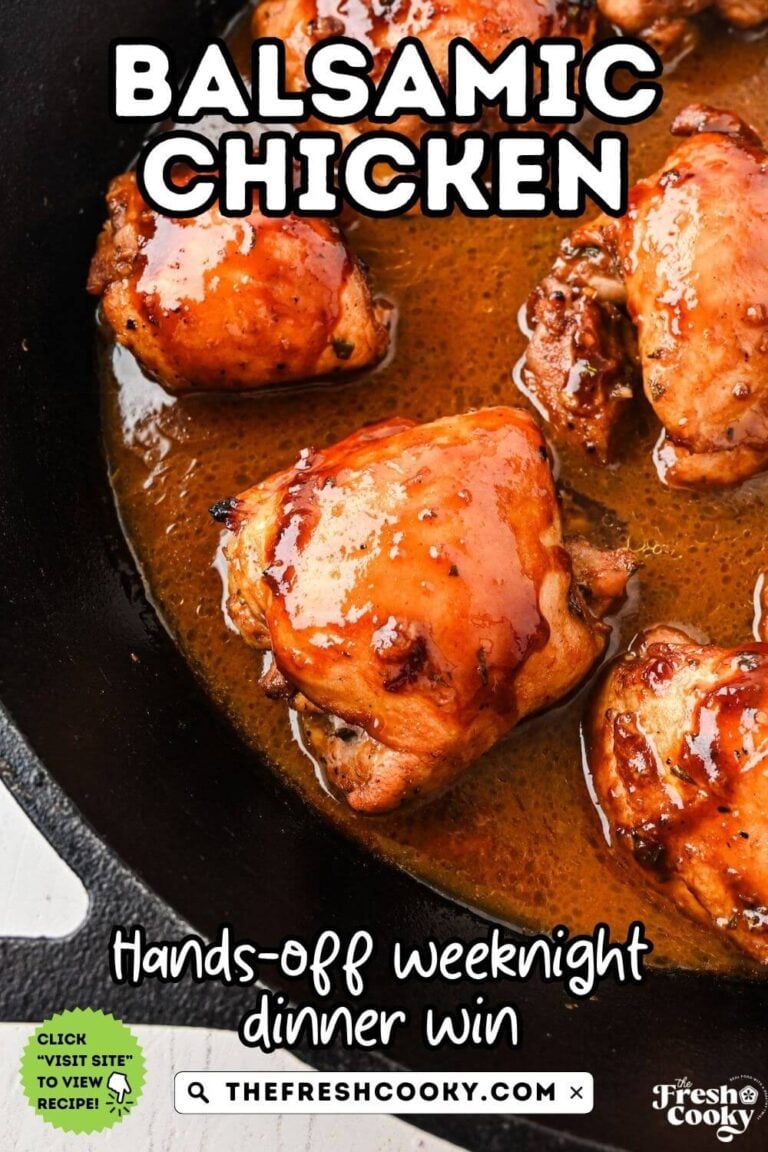
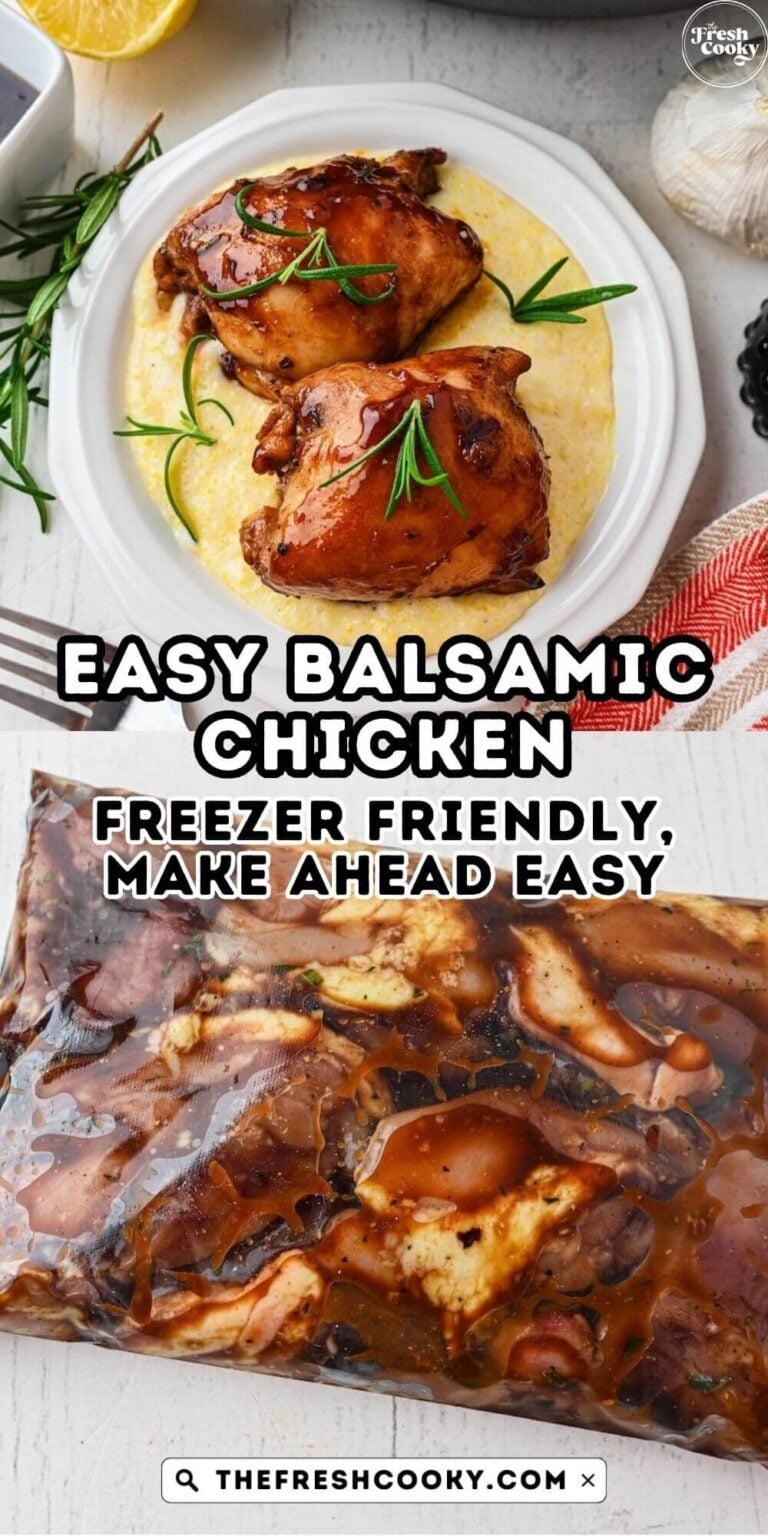
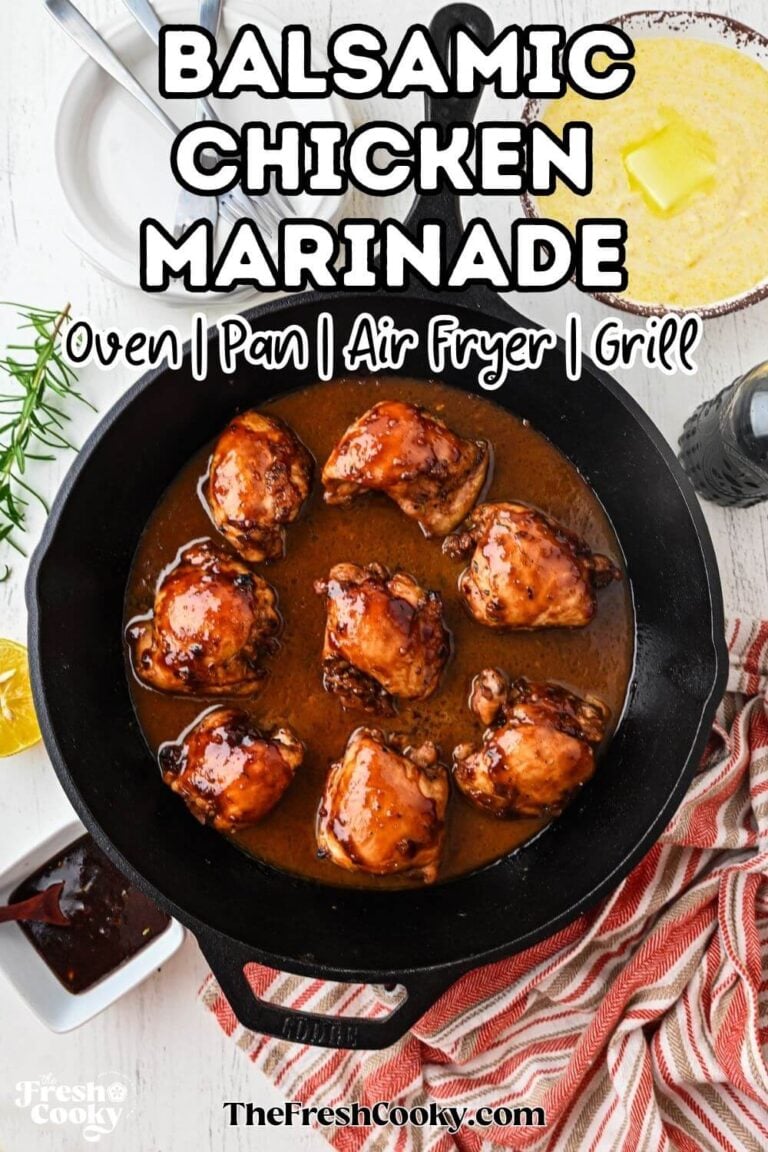
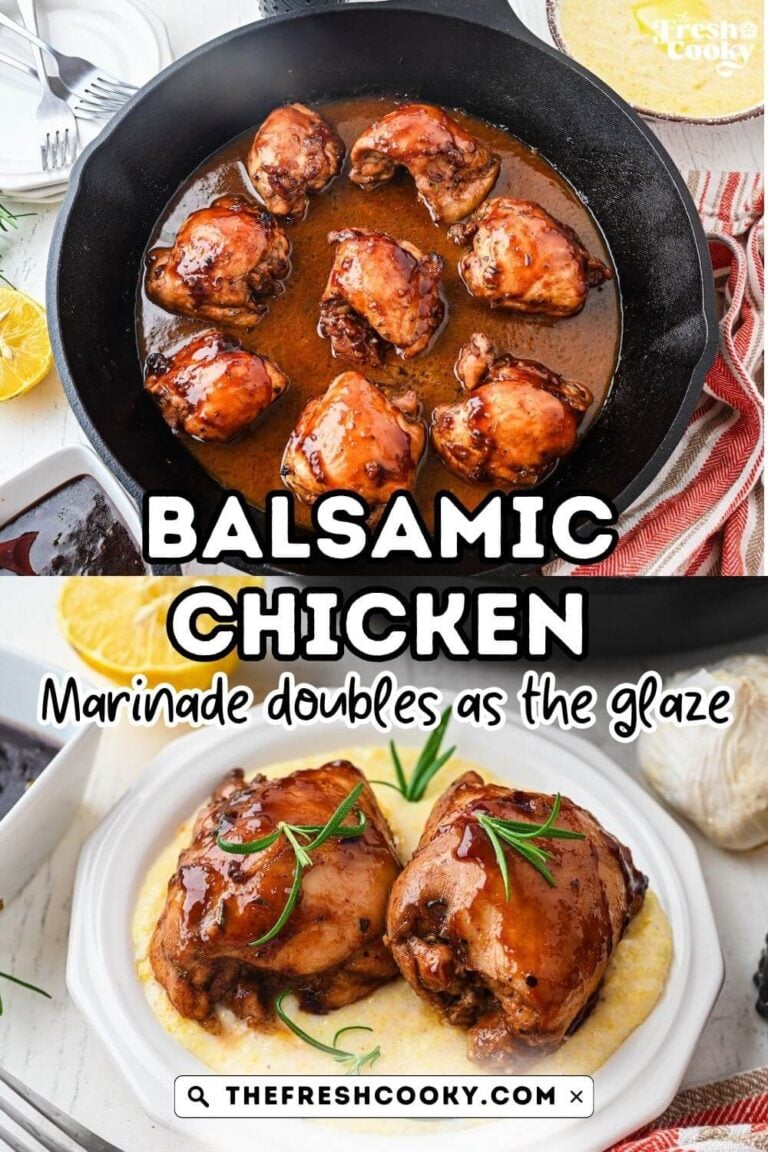
If “mostly hands-off” is your criteria for a great weeknight dinner, this Honey Balsamic Chicken recipe qualifies easily. Just season, marinate, and cook, whatever way works best for you. Bake it and the oven does all the heavy lifting while you pull together some creamy polenta or mashed potatoes to go underneath. Grill it for a smoky, caramelized char. Pan-fry or air fry it on a busy Tuesday when you need dinner on the table fast. Four methods, one marinade, and the hardest part either way is the waiting.
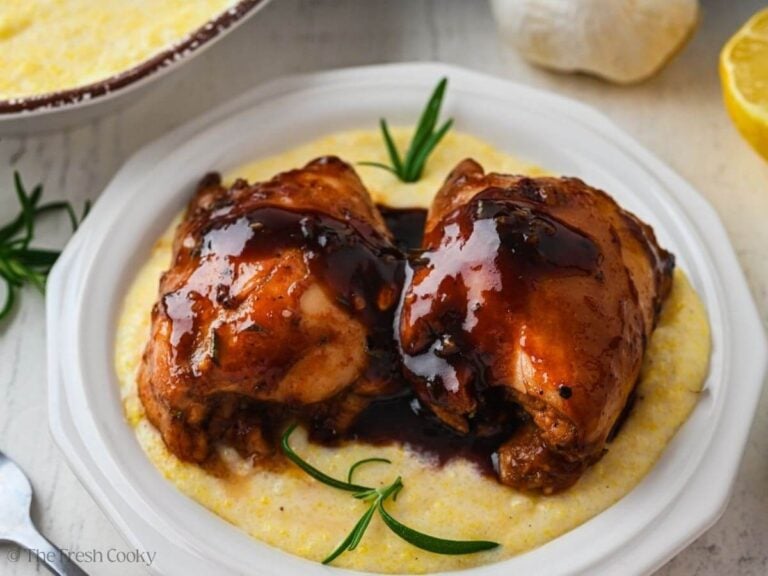
My Favorite Balsamic Honey Chicken Recipe
I’ve made plenty of balsamic chicken over the years, including my Maple Balsamic Sheet Pan Chicken and Veggies, which I adore. But this version is different. This time I used both balsamic vinegar and balsamic glaze (yes, both, and yes it matters), added a bit of tomato paste, honey, and a squeeze of lemon, and the combination creates a marinade that is deeply flavorful and genuinely hard to stop spooning over things.

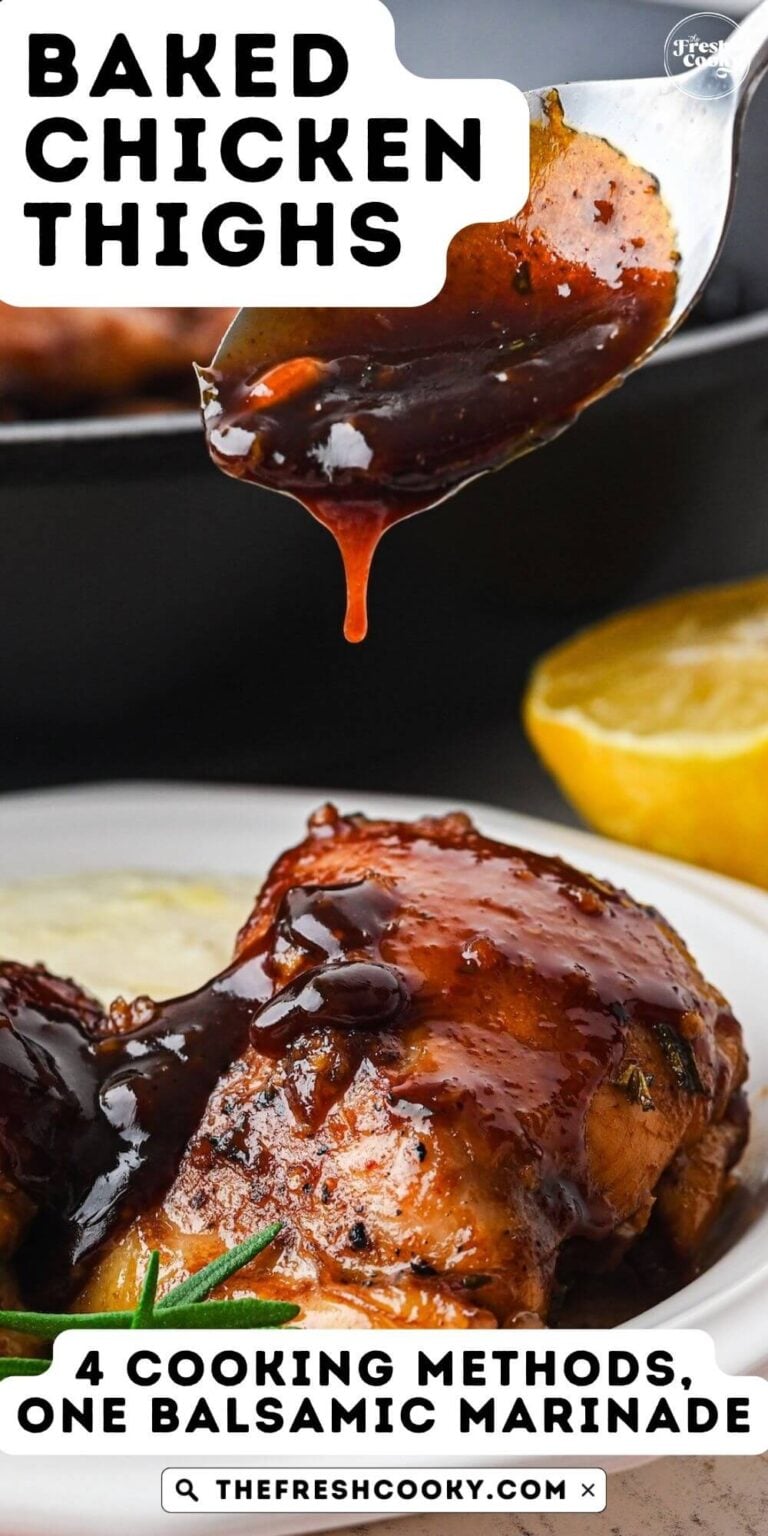
After round two of testing, I started reserving a portion of the marinade before the chicken touched it so I could reduce it into a sauce for serving. It was the BEST idea ever. The reserved glaze drizzled over the finished chicken is the kind of thing that makes people ask you for the recipe before they’ve even finished eating.
After the fourth round of testing I figured it was time to put it in front of real people. I made it for friends one night, and before we’d even finished eating, everyone wanted to know when it was going on the blog. Safe to say it passed the test!
Whether you bake it in a cast-iron skillet, pan-fry it, air fry it, or grill it, this chicken delivers every time, for guests or just a busy weeknight. The key is a quality balsamic vinegar, and please don’t skip reducing that reserved marinade into a glaze for the top. Looking for more ideas like this one? Browse all my easy weeknight dinners and you’ll find plenty to love.
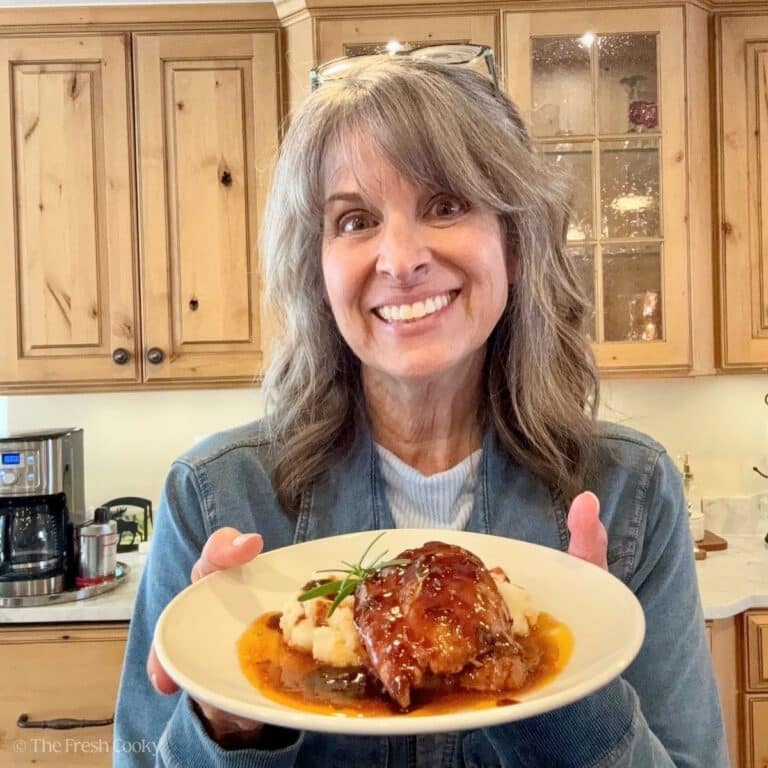

What is Balsamic Chicken?
Balsamic chicken is any chicken dish where balsamic vinegar plays the starring role, typically in a marinade or sauce. The vinegar’s acidity tenderizes the meat, the fat (olive oil) keeps it moist during cooking, and the honey helps caramelize those gorgeous sticky edges you’re going for. In this recipe we build on that base with Dijon mustard, tomato paste, fresh rosemary, and lemon, and because we’re using both balsamic vinegar and balsamic glaze, the marinade has serious body before it ever hits the pan. And the resulting pan sauce? We need to talk about that pan sauce.
Why You’ll Love This Recipe for Balsamic Chicken Thighs
- Almost entirely hands-off. Outside of the marinating time, the oven does all the heavy lifting. Pour yourself a glass of wine, you’ve earned it.
- Four cooking methods, one marinade. Oven, skillet, air fryer, or grill. This recipe works with whatever you’ve got going on that night.
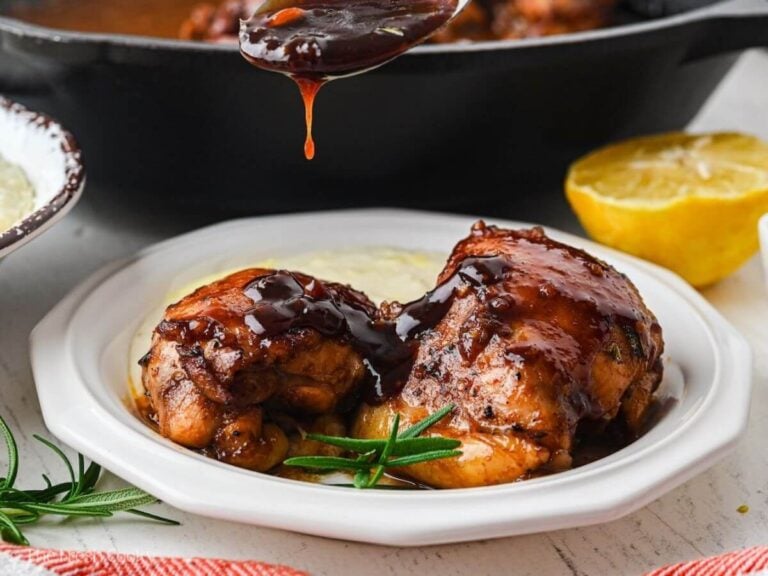
- That pan sauce though. The reserved marinade reduces into a silky, sticky glaze you’ll want to spoon over everything on the plate. Chicken, potatoes, polenta, and vegetables. It goes with all of it.
- Tested four times and friend-approved. Every ratio has been dialed in. The balance of balsamic vinegar, balsamic glaze, honey, and lemon is exactly where it needs to be.
- Feeds a crowd without the math. The same marinade easily covers 10 thighs or a mix of thighs and breasts. No scaling needed.
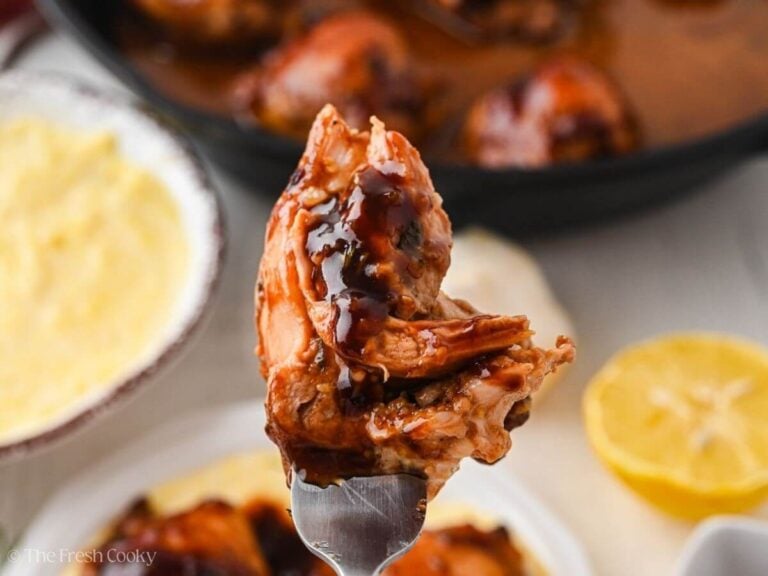
Balsamic Chicken Recipe Ingredients
- Extra Virgin Olive Oil: Every good marinade needs fat to carry flavor into the meat and keep the chicken moist during cooking = juicy chicken!
- Honey: Raw, unfiltered honey gives the best flavor and helps those edges caramelize into something really beautiful. Regular honey works too, just use what you have. Want to make it vegan, use agave instead.
- Balsamic Vinegar: Use a quality balsamic that’s slightly thick and sweet on its own. A mid-range bottle from the grocery store works perfectly; save the expensive aged stuff for drizzling.
- Balsamic Glaze: This is what takes the marinade to another level. It adds body and a rich, syrupy depth that straight vinegar alone can’t touch. No glaze on hand? See my note below on making your own in about 10 minutes.
- Dijon Mustard: Adds a subtle bite, a little creaminess, and helps emulsify the marinade so everything stays cohesive. Whole grain mustard works beautifully here too.
- Tomato Paste: Just a small amount adds savory richness and helps the marinade cling to the chicken rather than sliding right off.
- Garlic Cloves: Grated or pressed so they fully incorporate into the marinade rather than sitting in chunks. This matters more than you’d think.
- Fresh Rosemary: Finely chopped. It’s earthy and slightly piney and it pairs really well with the sweet balsamic. Fresh thyme works too, or a combination of both. In a pinch, dried herbs or Italian seasoning with a little garlic powder will do the job.
- Smoked Paprika: Just enough to add a subtle smokiness and a little warmth without taking over.
- Lemon Zest and Juice: The zest adds a bright, floral note and the juice cuts through the richness of the marinade. Together they make everything taste more alive.
- Crushed Red Pepper Flakes: Optional but worth it. It adds a quiet background heat that balances the honey nicely.
- Kosher Salt and Black Pepper: Season the chicken generously before it goes into the marinade. Don’t be shy here.
- Boneless Skinless Chicken Thighs: I’ll be honest, I was a breast person for most of my cooking life. Thighs didn’t really win me over until the last decade or so, and now I can’t imagine going back for a recipe like this. They stay juicy even if you go a few minutes over, the edges caramelize in a way breasts just don’t, and they are genuinely harder to overcook. That said, I tested this with breasts too and they’re delicious. See the notes section for timing adjustments.
Get the full recipe in the recipe card below.
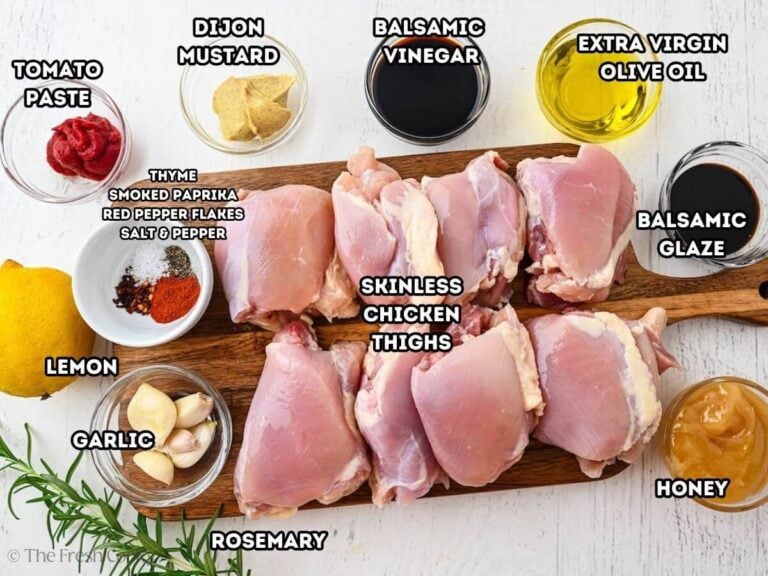
Balsamic Glaze vs. Balsamic Vinegar
Balsamic vinegar and balsamic glaze are related, but they are not the same thing, and in this recipe, that distinction matters. Balsamic vinegar is thin, tangy, and acidic. Balsamic glaze (also called balsamic reduction) is the same vinegar simmered down until it’s thick, syrupy, and just a little sweet.
This marinade uses both on purpose. The vinegar brings brightness and acidity; the glaze brings body, richness, and that sticky caramelized finish you see on the outside of the chicken.
No balsamic glaze on hand? No problem. Pour ½ cup of balsamic vinegar into a small saucepan and simmer over low heat until it’s reduced by half and coats the back of a spoon, about 10 minutes. Store any leftovers in a jar with a tight-fitting lid in the refrigerator. It keeps for weeks and you’ll find yourself putting it on everything. My husband does!
How to Make Balsamic Chicken Thighs
Step 1 | Make the Marinade
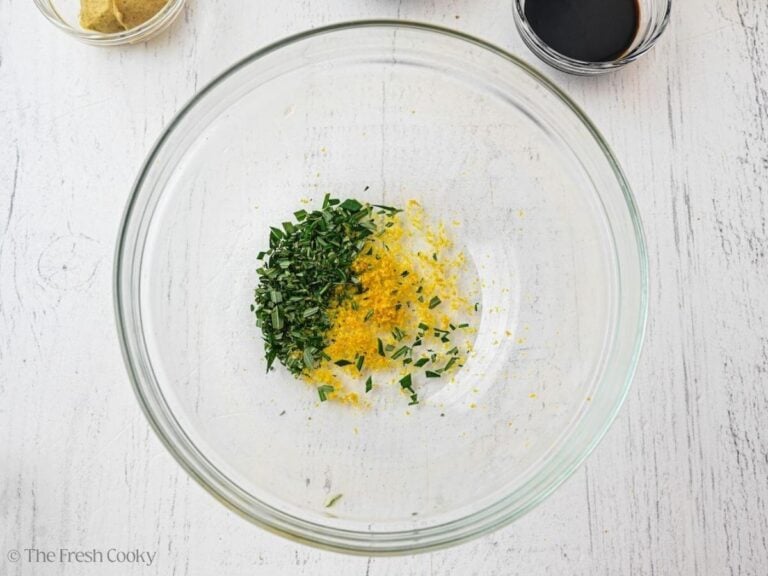
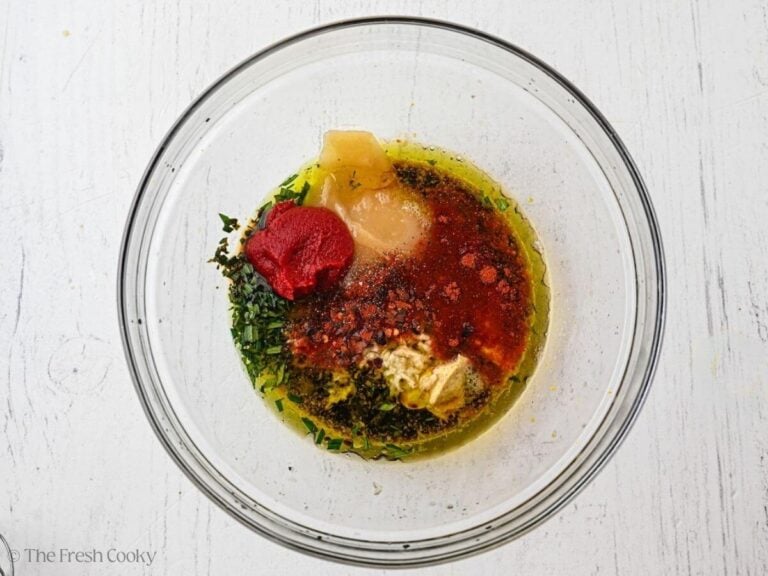
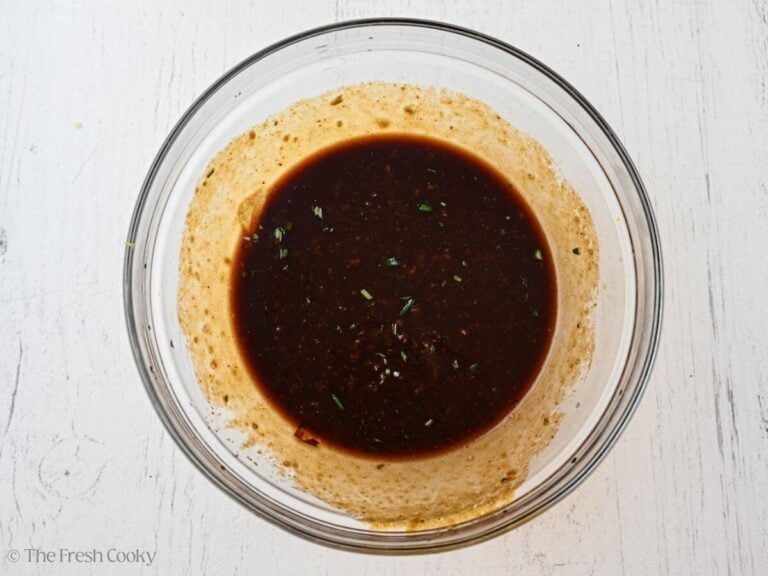
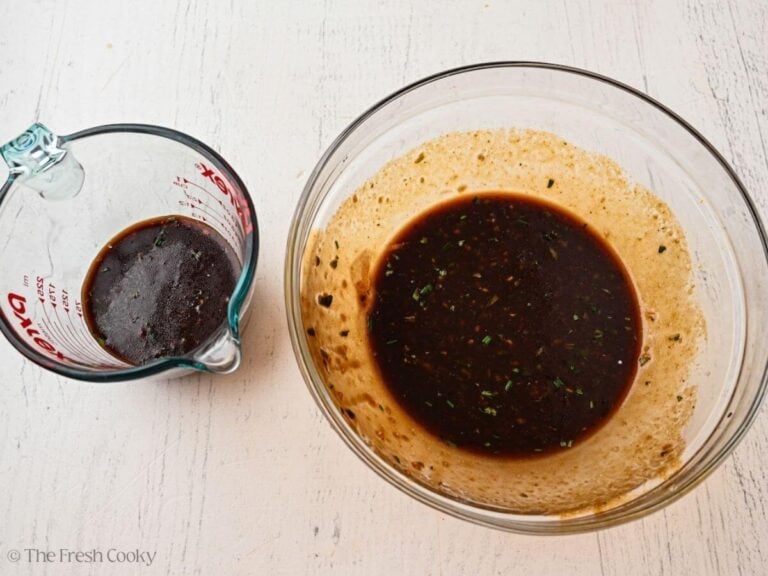
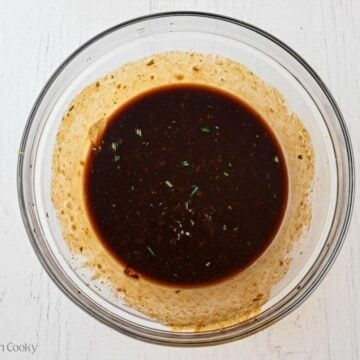
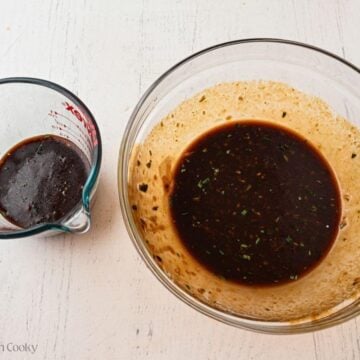
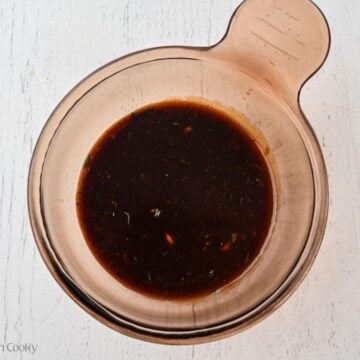
Whisk together the olive oil, balsamic vinegar, balsamic glaze, honey, Dijon, tomato paste, garlic, rosemary, smoked paprika, lemon zest, lemon juice, red pepper flakes, and a generous pinch of salt and pepper in a large bowl until combined and slightly thick.
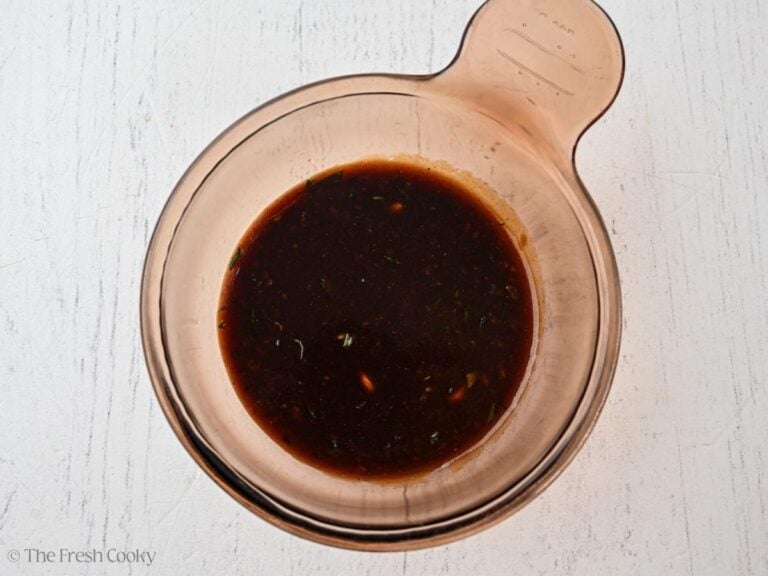
Pour ⅓ cup of the marinade into a separate small bowl and set it aside. This reserved portion never touches raw chicken, which means it’s safe to reduce and serve later. Don’t skip this step; it’s what gives you that gorgeous finishing glaze.
Pro tip: for extra caramelization, brush additional reserved glaze over the chicken once or twice during baking.
Step 2 | Marinate the Chicken
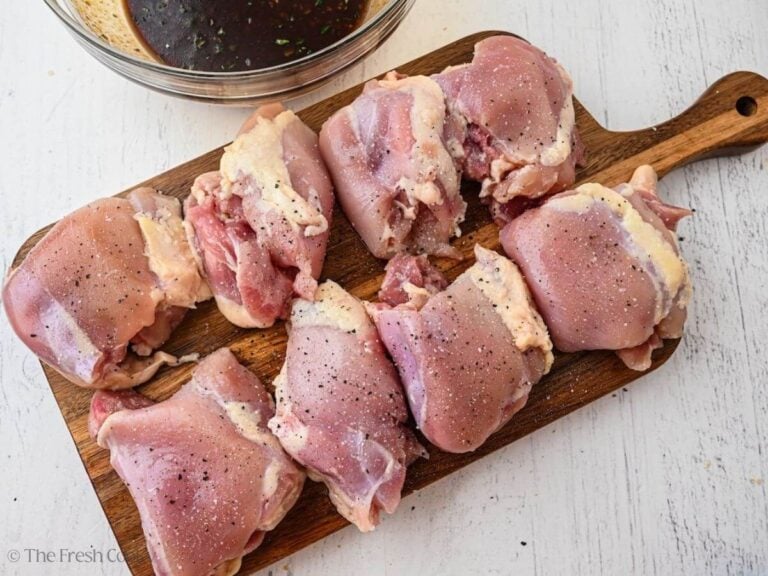
Season the chicken thighs generously with salt and pepper on both sides. If your thighs are folded or uneven, open them flat by gently unfolding the meat so each piece lays out in a single, even layer. This helps the marinade coat every surface and ensures more even cooking.
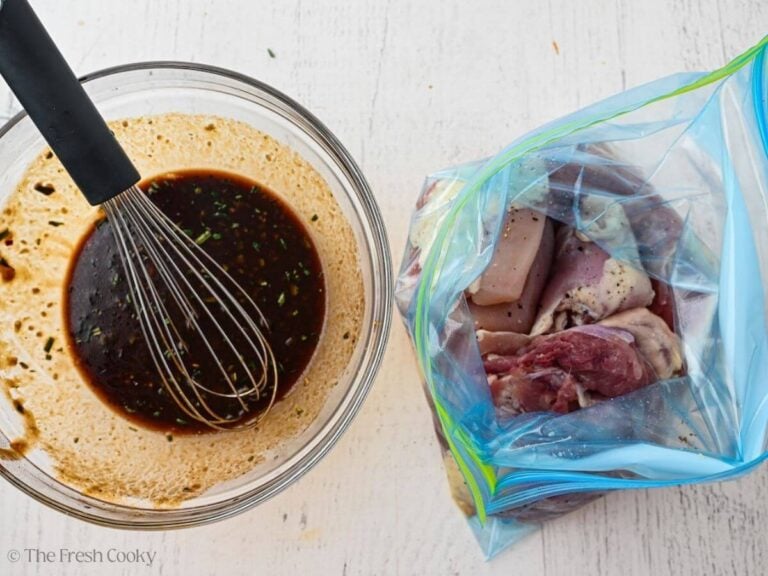
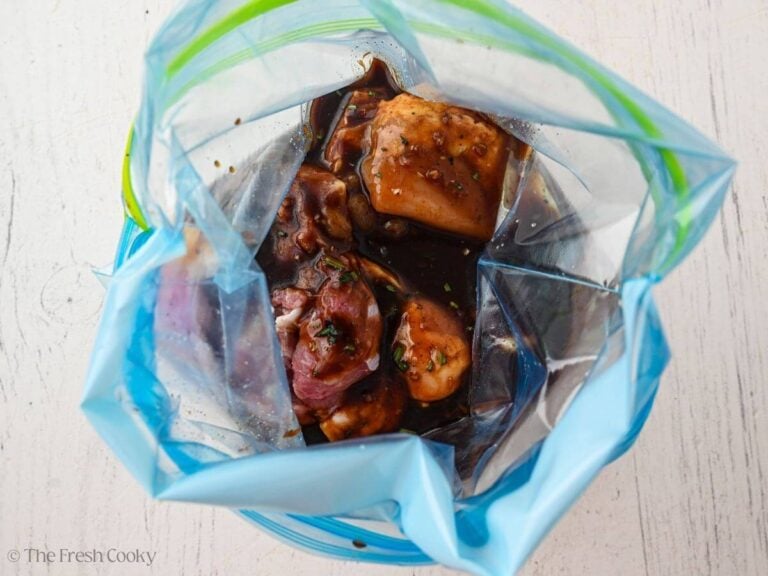
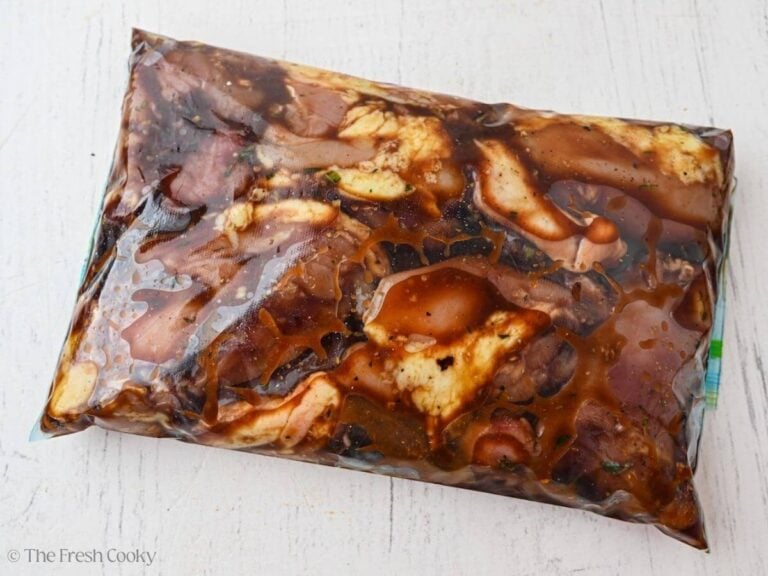
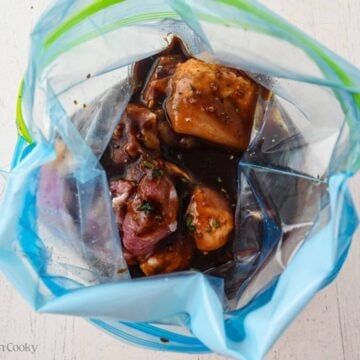
Add the chicken to the marinade and turn to coat completely. Marinate for 30 minutes at room temperature, or up to 8 hours in the refrigerator. If you have the time, 2 to 5 hours gives the best flavor. Pull the chicken out of the fridge about 30 minutes before cooking to take the chill off.
Step 3 | Bake
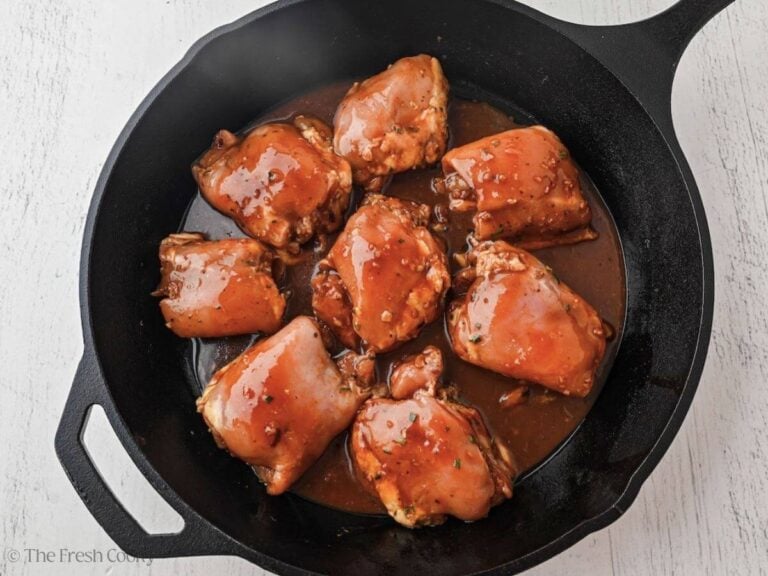
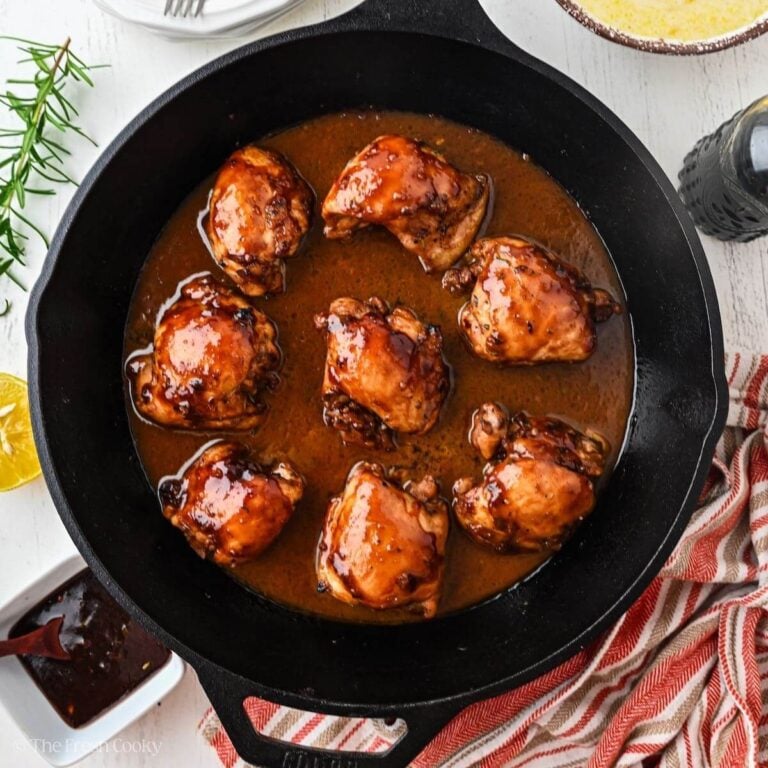
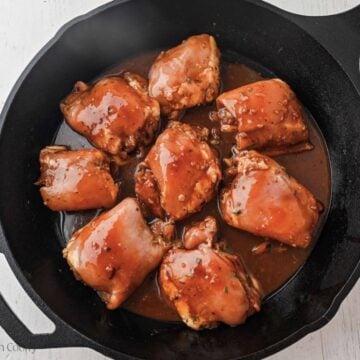
Preheat oven to 425°F (220°C). Roll the thighs back into their natural shape and arrange in a single layer in a cast iron skillet or baking dish. Cast iron is worth using here if you have it; it holds heat evenly and gives the edges of the chicken a better caramelized crust than a standard baking dish. Spoon any remaining marinade from the bag or bowl over the top.
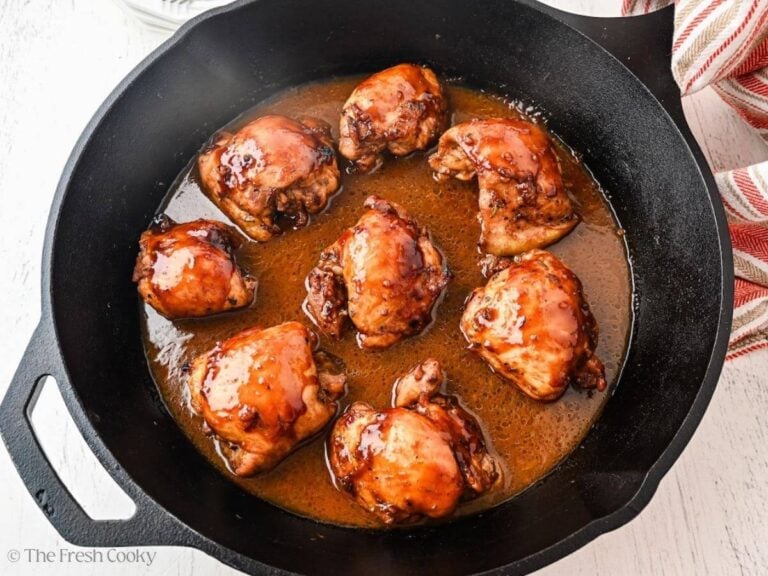
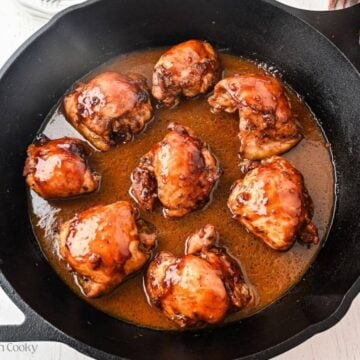
Bake for 20 to 25 minutes, spooning the pan juices over the chicken halfway through, until the edges are deeply caramelized, the juices run clear, and a thermometer inserted into the thickest part reads 165°F.
High-altitude bakers, add 3 to 5 minutes to the baking time and rely on your thermometer rather than the clock.
Step 4 | Rest the Chicken
Transfer the skillet or baking dish to a heatproof surface and let the chicken rest for 5 minutes before serving. This allows the juices to redistribute and the glaze to set slightly so it stays on the chicken rather than running onto the plate.
Step 5 | Reduce the Glaze and Serve
While the chicken rests, pour the reserved marinade into a small saucepan and bring to a gentle simmer over low heat. Cook for 4 to 5 minutes, stirring occasionally, until slightly thickened and glossy. It should coat the back of a spoon lightly.
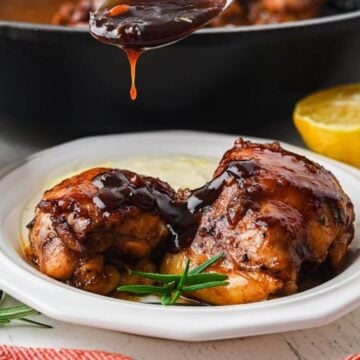
Drizzle generously over the chicken and serve immediately. Every last drop of that glaze is worth it.
Ingredient Swaps
- Swap the herb: Thyme works beautifully alongside or in place of rosemary. Fresh tarragon, oregano, or basil are all worth trying too depending on what you have on hand.
- Whole grain mustard: A great swap for Dijon if that’s what you have. It adds a little texture and a slightly more rustic flavor.
- No balsamic glaze: See the note above on making your own in about 10 minutes. It’s worth it.
Cooking Method Variations
My favorite way, because it’s so hands off, is making this baked balsamic chicken in the oven, but I also tested it several different ways for you as well!
- Bone-in, skin-on chicken thighs: Use these for extra richness and crispy skin. Add 10 to 15 minutes to the bake time and confirm the internal temperature reaches 165°F before pulling.
- Balsamic Grilled Chicken: Preheat to medium-high heat and oil the grates well. Grill 8-10 minutes per side (depending on thickness) until nicely charred and cooked through to 165°F. The honey in the marinade can cause flare-ups, so keep an eye on it and move the chicken to a cooler zone if needed. A grill pan works great too; get it nice and hot before the chicken goes in. Want to use the excess marinade as a sauce for grilling? Pour it into a small saucepan and bring to a full rolling boil, then reduce to a simmer for 3 to 5 minutes until slightly thickened. This kills any bacteria from the raw chicken and reduces it into a proper glaze. Discard any marinade that was not cooked; never use it directly from the bag as a sauce.
- Air fryer boneless skinless chicken thighs: Preheat to 380°F. Spray grate with a little spray oil. Cook for 14 to 18 minutes, flipping halfway through, until the internal temperature reaches 165°F. Times vary by air fryer model and the size of your thighs, so start checking at 14 minutes. Do the same as above with the extra balsamic marinade if desired.
- Pan fry: Heat a drizzle of olive oil in a skillet over medium heat. Cook presentation side down for 4 to 7 minutes per side until cooked through to 165°F.
- Boneless Skinless Chicken breasts: Pound to an even thickness (about ½ inch) before marinating so they cook evenly. Bake at 425°F for 20 to 25 minutes; pan fry for 4 to 5 minutes per side; air fry at 380°F for 14 to 16 minutes; or grill for 4 to 6 minutes per side. Pull at 165°F and watch closely; breasts dry out faster than thighs.
A Fall Variation Worth Trying
The very first time I tested this recipe I scattered a pound of cherry tomatoes into the baking dish alongside the chicken. They burst in the oven and melted into the balsamic glaze in the most incredible way. I ended up removing that for this recipe and will develop another recipe in time that includes the tomatoes.
What to Serve with Balsamic Chicken Thighs
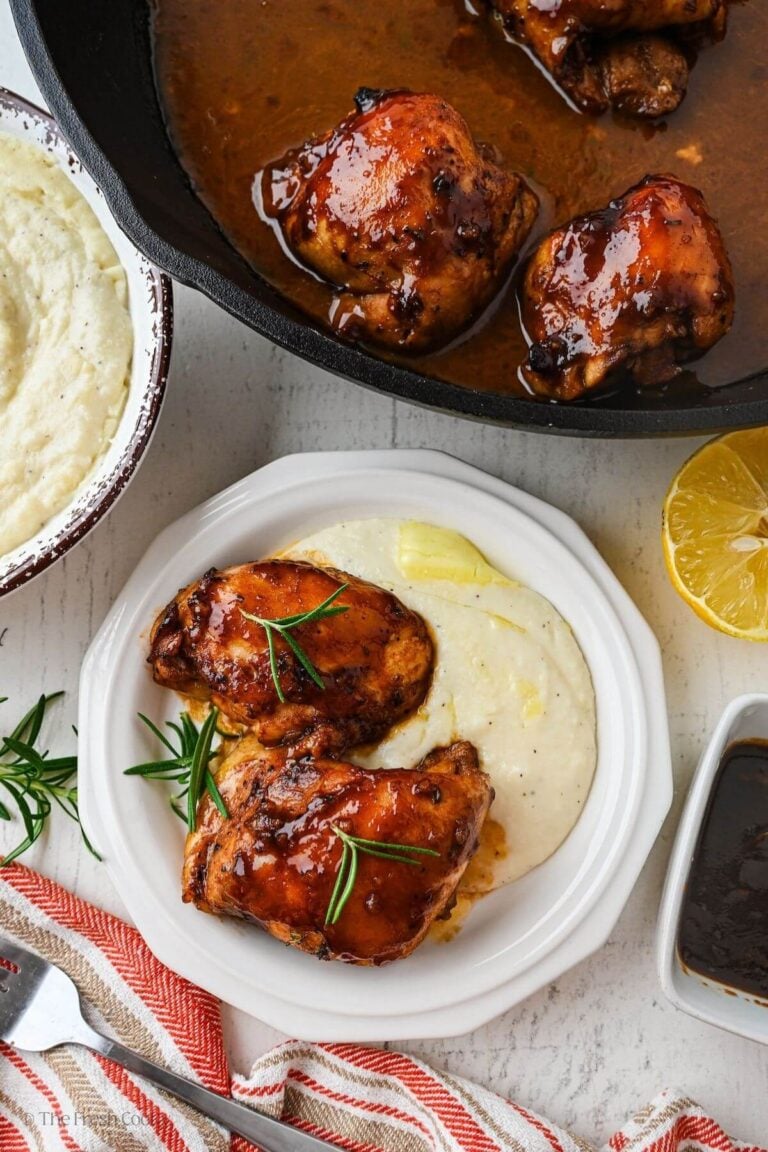
These balsamic chicken thighs were made for something creamy, because that balsamic sauce just makes the dish. Here are some of my favorite ways to serve them:
- Garlic Mashed Potatoes: The classic pairing. Spoon the pan sauce right over the top and try not to lick the plate.
- Instant Pot Rustic Mashed Potatoes: Great for busy nights since the IP does its thing while the chicken bakes. Two hands-off dishes at once, that’s a win.
- Creamy polenta: My absolute favorite way to serve this. Spoon the thighs right over a big bowl of Parmesan polenta with that glaze drizzled on top. It’s really something.
- Roasted Rosemary Red Potatoes: The rosemary in the potatoes echoes the rosemary in the marinade and it just works. Simple and really satisfying.
- Balsamic Brussels Sprouts: If you’re already working with balsamic tonight, lean into it. The caramelized, tangy flavor of these sprouts is a natural match for this chicken.
- Roasted Cabbage: Wedges or slabs roasted at high heat get beautifully caramelized edges that hold up really well against the sweet-tangy glaze.
- Roasted Carrots & Broccoli: Their natural sweetness plays nicely off the balsamic, and they can go right in the oven alongside the chicken. Easy.
- A Crisp Green Salad: Sometimes simple is right. Try a romaine wedge salad for a fresh, crunchy contrast.
- Vegetables – Try green beans or asparagus, for a complete, easy dinner that even kids will love!
How to Store, Freeze & Reheat Balsamic Chicken Thighs
Storage: Leftover balsamic chicken keeps well in an airtight container in the refrigerator for up to 4 days. Store it with any remaining pan sauce; it soaks into the chicken overnight and honestly tastes even better the next day.
Freezing: Cool completely before transferring to a freezer-safe container or zip-lock bag. Freeze for up to 3 months and thaw overnight in the refrigerator before reheating.
Reheating: Reheat gently on the stovetop over medium-low heat, spooning any sauce over the chicken as it warms. You can also reheat in the oven at 325°F, covered, for 15 to 20 minutes. Add a small splash of chicken stock or water if the glaze has thickened too much. Skip the microwave if you can; it tends to dry the chicken out. If you must, use a low power setting and cover loosely to trap the steam.
Freeze in the Marinade for Easy Meal Prep: This is one of my favorite tricks. When you make the marinade, double it and freeze the second batch of raw chicken right in the marinade in a labeled freezer bag. Thaw overnight in the refrigerator, and it’s ready to cook, no extra prep needed. Future you will be very grateful.
Balsamic Chicken Recipe FAQs
Yes! Pound the boneless chicken breasts to an even ½ inch thickness before marinating so they cook evenly. Breasts dry out faster than thighs, so keep a close eye on the time and pull them when your meat thermometer reads 160 to 162°F. The internal temperature will continue to rise as they rest, reaching the safe target of 165°F before eating. Let them rest 5 minutes before serving.
Yes, this balsamic chicken recipe is naturally gluten-free. Just double-check the labels on your Dijon mustard and balsamic vinegar if you’re cooking for someone with celiac disease or a serious sensitivity. Most brands are fine but it’s always worth a quick look.
Absolutely. The chicken can marinate for up to 8 hours in the fridge, making it perfect to prep in the morning and bake at dinnertime. You can also bake it ahead and reheat gently; the flavors actually deepen overnight. Just don’t marinate beyond 8 hours since the acid in the marinade will start to break down the texture of the meat.
Yes! Bone-in, skin-on thighs add extra richness and gorgeous crispy skin. Plan for 35 to 45 minutes in the oven at 425°F and confirm the internal temperature reaches 165°F before serving.
Thirty minutes gets the job done, but if you have the time, 2 to 3 hours in the fridge makes a noticeable difference in flavor. Don’t go beyond 8 hours since the acid in the marinade will start to break down the meat’s texture.
Yes! It’s easy to make your own. Pour ½ cup of balsamic vinegar into a small saucepan and simmer over low heat until reduced by half and syrupy, about 10 minutes. It should coat the back of a spoon lightly when it’s ready. Store any leftovers in a jar in the refrigerator; it keeps for weeks. Or you can leave it out, adding a little extra honey.
Yes! Add 3 to 5 minutes to the bake time and rely on your thermometer rather than the clock. Every oven runs a little differently at altitude, so 165°F is your signal to pull the chicken, not the timer.
Expert Tips
- Use cast iron if you have it. It holds heat evenly and gives the edges of the chicken a better caramelized crust than a standard baking dish. If you don’t have cast iron, a heavy rimmed baking dish or oven-safe skillet works fine.
- Don’t skip the reserved marinade step. Setting aside ⅓ cup before the chicken touches it takes about 10 extra seconds and completely transforms the finished dish. That clean, reduced glaze drizzled over the top at the end is what makes people ask for the recipe.
- Quality balsamic really does matter here. Since balsamic is a lead flavor in this recipe, use the best you can reasonably find. A good balsamic is slightly thick and sweet on its own. It doesn’t need to be expensive; a mid-range bottle from the grocery store works beautifully. Just avoid the thin, harsh stuff at the very bottom of the price range.
- Arrange the chicken in a single layer with a little space between pieces. Crowding the pan traps steam and prevents caramelization. Give each thigh a little room and the edges will get that gorgeous sticky, golden crust.
- Spoon those pan juices over the chicken halfway through baking. It takes 30 seconds and makes a real difference. That basting builds up layers of glaze on the outside of the chicken that you just can’t get any other way.
- Want extra crispy edges? Use your broiler. If your baking dish or skillet is broiler-safe, once the chicken is cooked through, crank the oven to broil and slide the pan in for 2 to 4 minutes. Watch it closely; that honey glaze goes from perfectly caramelized to burnt fast.
- Pull the chicken at 160 to 162°F, not 165°F. The temperature will continue to rise as it rests, hitting that safe 165°F target by the time it hits the table. Pulling it a few degrees early is the difference between juicy and dry.
- Let it rest before you cut into it. Five minutes is all it takes. Cut too soon and the juices run straight onto the cutting board instead of staying in the chicken where they belong.
- Making this with drumsticks? Place them skin side down in the pan and flip halfway through. At 425°F, plan for 35 to 45 minutes depending on size, and confirm with your thermometer before pulling.
More Chicken Recipes to Try
Like this recipe?
Don’t forget to give it a ⭐️⭐️⭐️⭐️⭐️ star rating and leave a comment below the recipe!
Video
Ingredients
- ¼ cup extra virgin olive oil
- ¼ cup honey I use raw, unfiltered honey
- 3 tablespoons balsamic vinegar good quality, it should be a little thick
- 1 heaping tablespoon balsamic glaze balsamic reduction
- 1 tablespoon Dijon whole grain or deli mustard
- 1 tablespoon tomato paste I use organic
- 4 cloves garlic grated or pressed, may replace with 1 teaspoon garlic powder
- 1 teaspoon fresh rosemary finely chopped or thyme or both, with a little extra for serving, replace with 1 teaspoon dried rosemary
- ½ teaspoon smoked paprika
- 1 zested lemon
- ½ lemon juiced
- 1 – 3 shakes Crushed red pepper flakes to taste
- Kosher salt and pepper
- 8 boneless skinless chicken thighs about 2½ pounds or breasts (see notes)
- Serve over polenta or mashed potatoes polenta is my favorite
Instructions
Make the Marinade (Glaze)
- Zest lemon and mince fresh rosemary. Salt and pepper chicken on both sides. Whisk together the olive oil, balsamic vinegar, balsamic glaze, honey, Dijon, tomato paste, garlic, rosemary, smoked paprika, lemon zest, lemon juice, red pepper flakes and a few grinds of kosher salt and black pepper in a large bowl until well combined.¼ cup extra virgin olive oil, ¼ cup honey, 3 tablespoons balsamic vinegar, 1 heaping tablespoon balsamic glaze, 1 tablespoon Dijon, 1 tablespoon tomato paste, 4 cloves garlic , 1 teaspoon fresh rosemary, ½ teaspoon smoked paprika, 1 zested lemon , ½ lemon, 1 – 3 shakes Crushed red pepper flakes

- Reserve ⅓ cup of the marinade in a separate small bowl and refrigerate for serving. This ensures you have plenty of clean glaze to spoon over the finished chicken.
Marinate
- Season the chicken thighs generously all over with kosher salt and pepper. Add the chicken (open up the chicken thighs) to the remaining glaze and turn to coat completely, making sure every piece is well covered. Marinate for 30 minutes at room temperature, or up to 8 hours in the refrigerator. When ready to bake, remove from the fridge 30 minutes before cooking and give it all a good toss (or squish if in a baggie). I marinated mine for 2 -3 hours each time. Great flavor.Kosher salt and pepper, 8 boneless skinless chicken thighs
Oven Baked Method (recommended – see notes for other methods)
- Preheat oven to 425°F. Arrange the marinated chicken thighs back in their little rolled up forms in a single layer in a cast iron skillet, baking dish or rimmed sheet pan. Spoon any remaining marinade from the bowl over the top.
- Bake for 20-25 minutes, spooning the pan juices over the chicken halfway through, until deeply caramelized and internal temperature reaches 160 to 162°F, it will continue rising to 165°F as it rests. Use an instant read thermometer to confirm.
- Let the chicken rest for 5 minutes. Bring the reserved glaze to a simmer in a small saucepan over low heat for 4-5 minutes, until reduced slightly and drizzle over the chicken before serving. If desired, brush a little glaze over the top and broil (watch closely) for 2-4 minutes.
- This is delicious served with roasted potatoes and onions, rosemary potatoes, mashed potatoes, creamy polenta. With pan juices and drizzled with reserved glaze, sprinkle with fresh rosemary or thyme, or basil.Serve over polenta or mashed potatoes
Notes
- Chicken breasts: Pound to an even ½ inch thickness before marinating so they cook evenly. Bake at 425°F for 20 to 25 minutes; pan fry for 4 to 5 minutes per side; air fry at 380°F for 14 to 16 minutes; or grill for 4 to 6 minutes per side. Pull at 160 to 162°F and let rest; breasts dry out faster than thighs so watch your time closely.
- Bone-in, skin-on chicken thighs: Place skin side down in the pan. Add 10 to 15 minutes to the bake time and confirm the internal temperature reaches 165°F before serving.
- Chicken drumsticks: Place skin side down and flip halfway through. Bake at 425°F for 35 to 45 minutes depending on size, confirming 165°F with your thermometer before pulling.
- Grilling: Preheat grill to medium-high and oil the grates well. Grill boneless thighs 5 to 6 minutes per side until cooked through to 165°F. Watch for flare-ups from the honey and move to a cooler zone if needed.
- Air fryer: Preheat to 380°F. Cook in a single layer for 14 to 18 minutes, flipping halfway through, until the internal temperature reaches 165°F. Work in batches if needed; don’t crowd the basket.
- Pan fry: Heat a drizzle of olive oil in a skillet (or grill pan) over medium heat. Cook presentation side down for 4 to 7 minutes per side until cooked through to 165°F.
- Make ahead: The chicken can marinate for up to 8 hours in the fridge, making it perfect to prep in the morning and bake at dinnertime. For the best flavor, aim for 2 to 3 hours. Don’t go beyond 8 hours; the acid in the marinade will start to break down the texture of the meat.
- Freeze in the marinade for meal prep: Double the marinade and freeze the second batch of raw chicken right in the marinade in a labeled freezer bag (don’t forget to remove ⅓ cup of the marinade and place in an airtight container labeled near the bag of chicken). Thaw overnight in the refrigerator and it’s ready to cook with no extra prep needed.
- Storage: Leftovers keep well in an airtight container in the refrigerator for up to 4 days. Store with any remaining pan sauce; it soaks into the chicken overnight and tastes even better the next day.
- Freezing: Cool completely before transferring to a freezer-safe container. Freeze for up to 3 months and thaw overnight in the refrigerator before reheating.
- Reheating: Reheat gently on the stovetop over medium-low heat, or in the oven at 325°F covered for 15 to 20 minutes. Add a small splash of chicken stock or water if the glaze has thickened too much. Skip the microwave if you can; it tends to dry the chicken out.
Nutrition





Rate & Comment