



This praline recipe took me batch after batch to get right. My neighbors happily ate the evidence. These Southern pecan pralines are made the old-fashioned way, with brown sugar, heavy cream, butter and toasted pecans. No corn syrup, no baking soda. I tested every batch in my own kitchen. Then my recipe testers made them in their kitchens across the country, in all kinds of weather.
⭐️⭐️⭐️⭐️⭐️ Callee, my recipe tester who grew up in southern Louisiana, said, “Kathleen, back home my friends would say, Miss Chef, that’s a good PRAH-leen, no?”
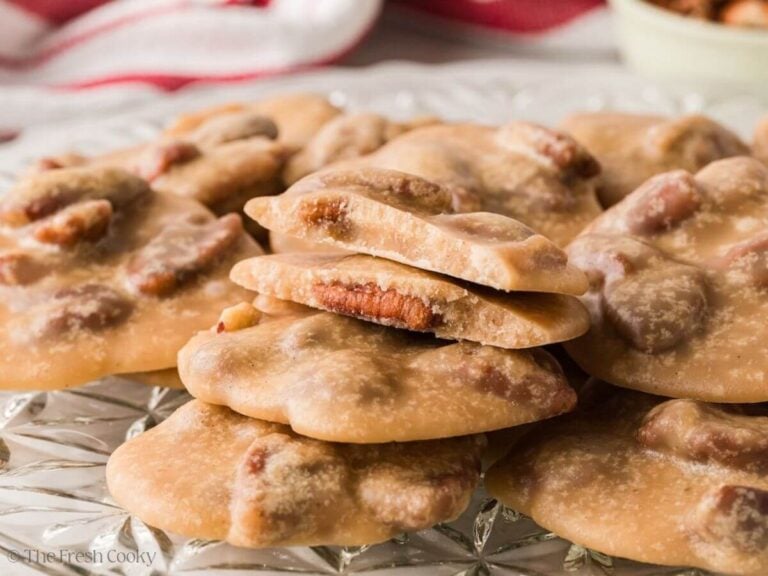
Why I Ditched Evaporated Milk in My Pralines
Years ago, we stopped at a popular candy shop in Savannah, and I had my first real praline. I still remember it. Soft, yet snappy. Toasted pecans, my favorite. And it melted in my mouth.
That’s the praline I was chasing. So I did a deep dive into recipe after recipe, looking for the best flavor, texture and taste. Then I started testing.

My first rounds used evaporated milk, like most praline recipes. I liked them. They weren’t bad at all. But I didn’t love them.
I overstirred one batch. Still tasty, but more granular than I wanted.
So I switched to heavy cream and slowed way down at the end. That’s the secret. I tested a little scoop as I stirred. If it puddled without mounding at all, I stirred a little longer. Just as the candy turned opaque, I scooped.
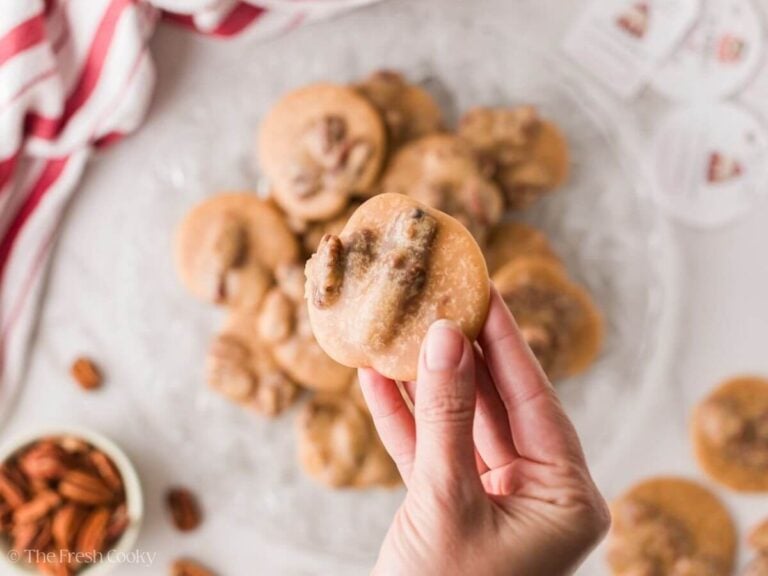
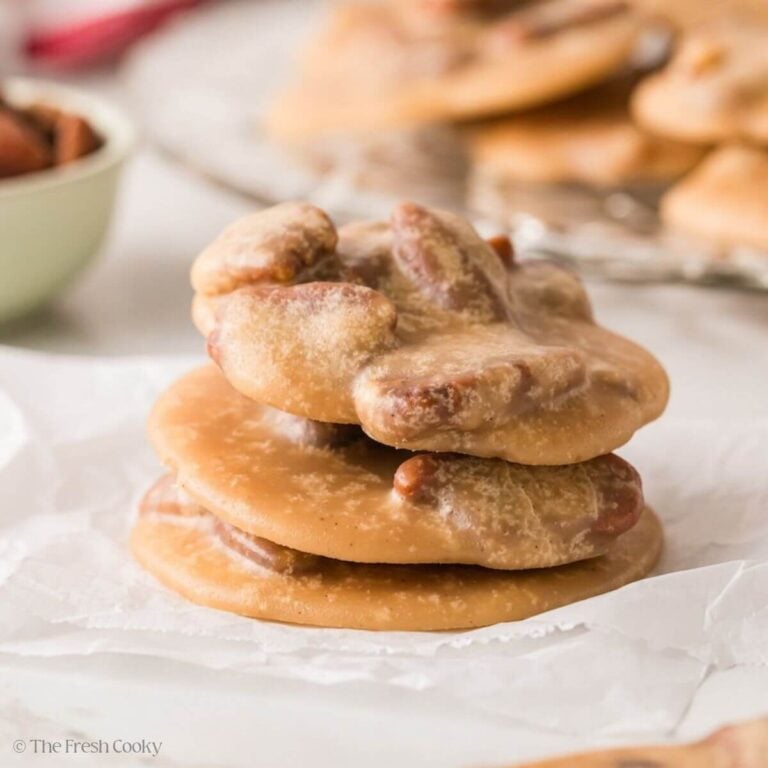
That was the batch. They mounded just right. They still had that crisp little snap, but they literally melted in your mouth. My hubby noticed the difference right away, declaring this one the best. Reminded us both of that delicious maple sugar candy. Best of both worlds, and no baking soda.
Still, I needed a real Southerner to weigh in. My recipe tester Callee lives in Alabama now, but she grew up in southern Louisiana. When she called them a good PRAH-leen, I knew I had it.
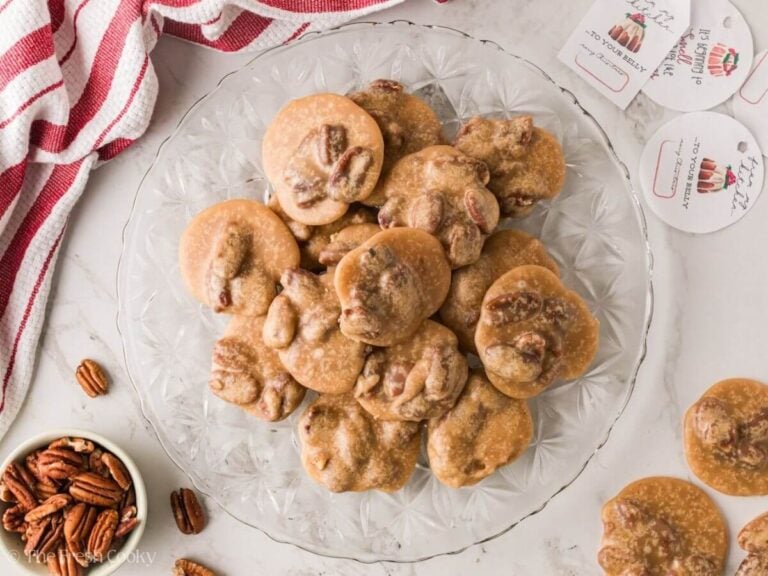
Pecans are one of my favorite holiday ingredients. But some years I just don’t need another pecan pie. (My Pecan Pie Bars cover that!) Pralines are a fun change, and they make the sweetest homemade gift. Stack them in a tin between sheets of parchment, add one of my free printable Christmas gift tags, and you’re done.

You’ll Love This Praline Recipe
- No corn syrup, no baking soda. Just brown sugar, white sugar, cream, butter, vanilla and pecans, made from scratch the old-fashioned way.
- Melt-in-your-mouth texture. Little bit cookie, little bit candy. A crisp little snap, then soft and creamy. No baking soda needed. Loaded with toasted pecans, and 100% dangerous to keep on the counter.
- Tested at sea level and high altitude. Testing your thermometer in boiling water takes the guesswork out, so your pralines set up whether you live at the beach or up in the mountains with me.
- No oven, no mixer, no candy-making degree. One heavy pot, a wooden spoon and a thermometer. That’s the whole equipment list.
- Ready in about 30 minutes. When I want a sweet treat, I need it fast. From measuring cup to cooling rack, these are ready in about half an hour! They firm up in another 20 to 30 minutes, if you can wait that long.
- Easy to rescue. A runny batch or a seized pan isn’t a lost cause. I’ll walk you through fixing both, step-by-step, because candy happens.
- The sweetest homemade gift. Pralines keep for weeks at room temperature and months in the freezer, so you can make them ahead, stack them in a tin and check a few names off your list. They might get a little more mottled as they sit, but those white spots won’t hurt you.
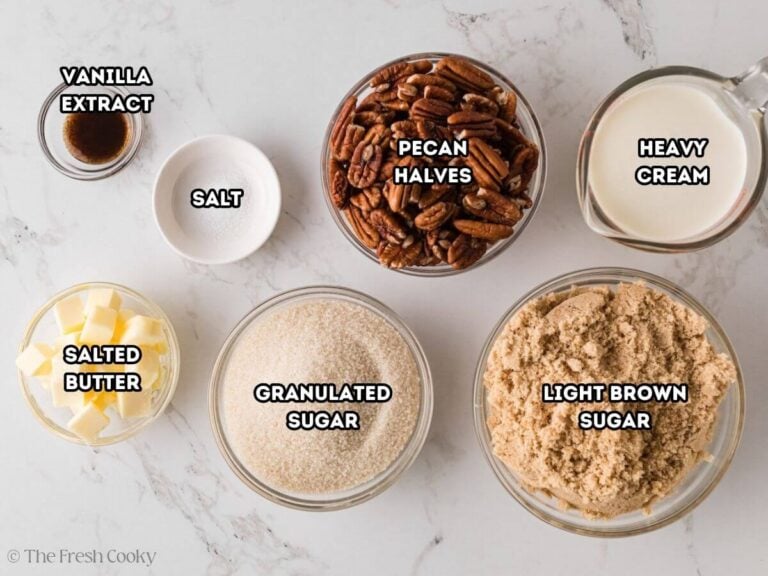
Pralines Recipe Ingredients
- Light brown sugar: Use fresh, soft brown sugar for the deepest caramel flavor. Hard, dried-out sugar can make the candy grainy.
- Granulated sugar: The combination of brown sugar and granulated sugar helps the pralines set up firm, not chewy. I use all natural cane sugar in my baking, but you can swap cup-for-cup white granulated sugar in place of it.
- Salt: Just a pinch to balance all that sweetness.
- Heavy cream: Heavy whipping cream is my favorite for that melt-in-your-mouth texture. My first batches used evaporated milk. They were good, just not as creamy. Whole milk is another common swap. It has less fat, so your pralines may turn out a bit thinner and not as rich. Half-and-half, buttermilk or a plant-based cream should work too, though I haven’t tested them.
- Salted butter: Adds richness and a little salty-sweet flavor. If you only have unsalted butter, add a big pinch more salt (about ¼ teaspoon per stick).
- Vanilla: Vanilla bean paste or pure vanilla extract. My Homemade Bourbon Vanilla Extract is amazing here!
- Pecan halves: Toast them for the best flavor, then let them cool completely. Room temperature pecans help the candy set evenly. Cold or frozen pecans can make it seize, so if you keep your pecans in the freezer like I do, make sure to bring them to room temperature before making these.
Get the full recipe in the recipe card below.
How to Make Pralines
Step 1 | Prep and Toast Pecans
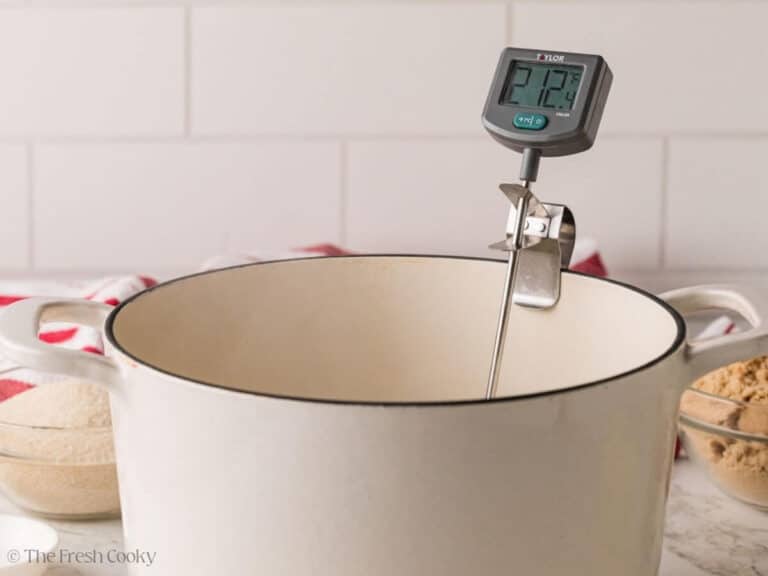
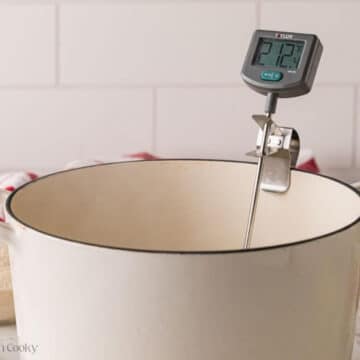
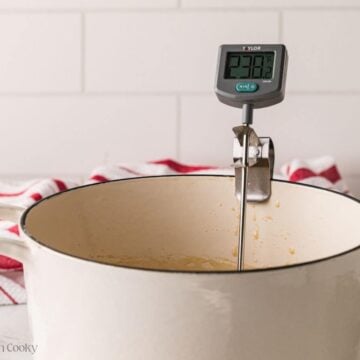
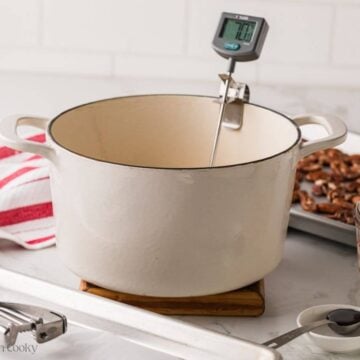
Clip your thermometer in a pot of boiling water and note the reading. Water boils at about 212°F at sea level and about 202°F in Denver, so use that number to adjust your target temperature.
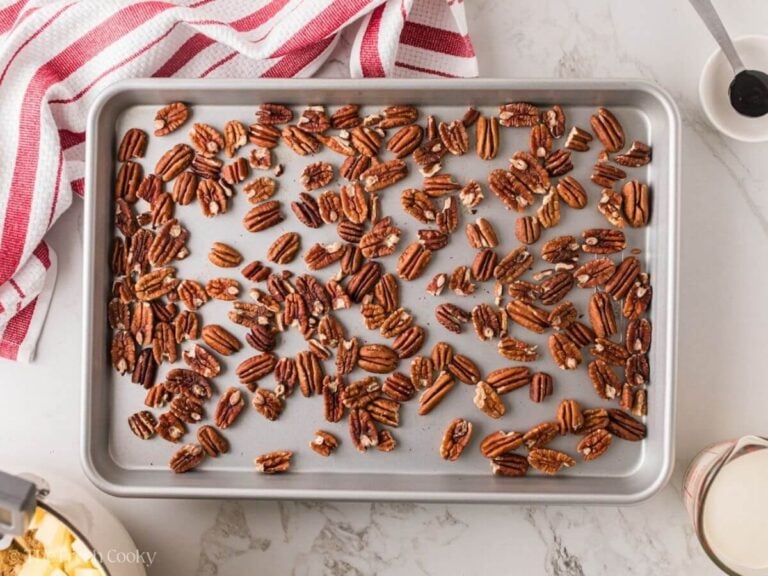
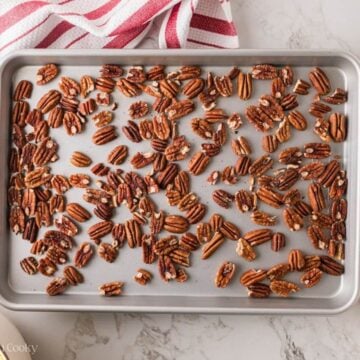
Toast the pecans at 350°F for 6 to 8 minutes, until fragrant, then cool them completely. Line two baking sheets with parchment or silicone mats, measure the vanilla, and set your scoop by the stove. Once the candy starts moving, it moves fast!
Step 2 | Melt the Candy Mixture
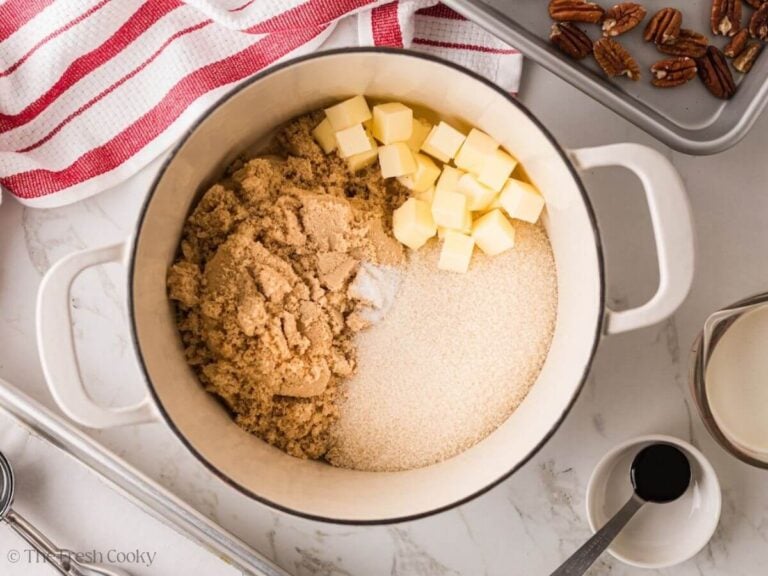
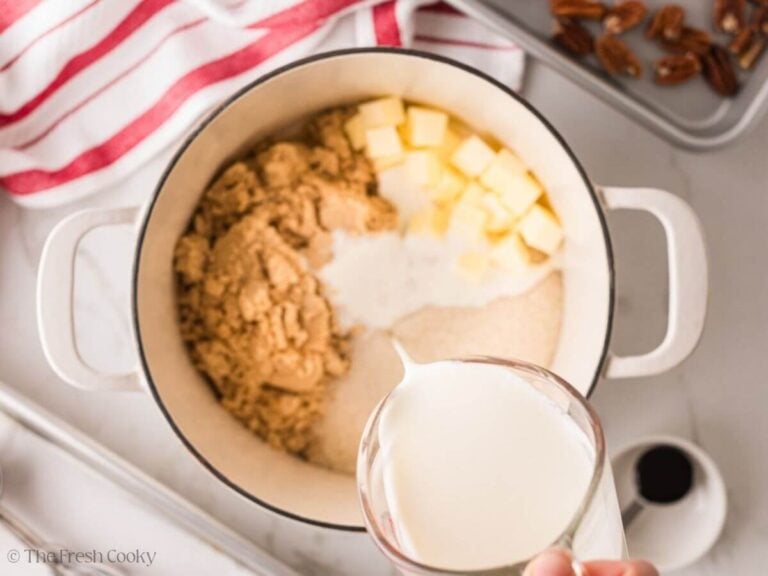
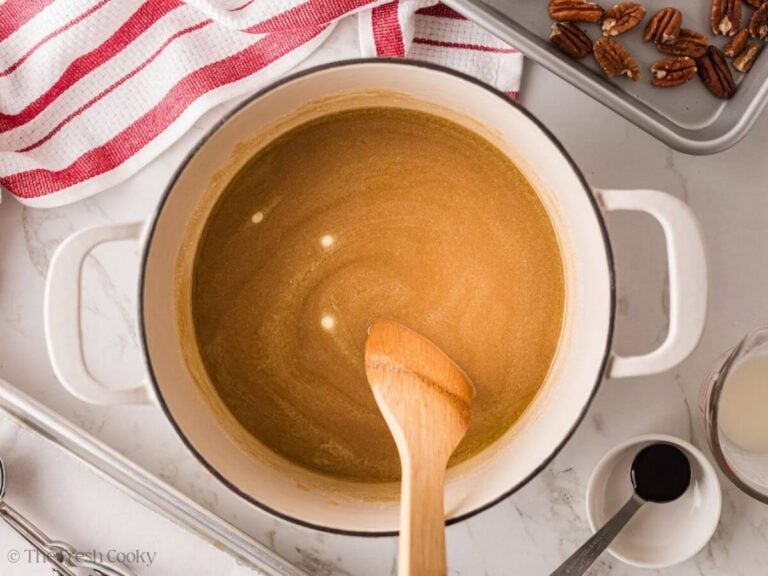
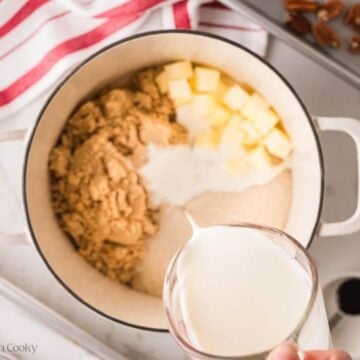
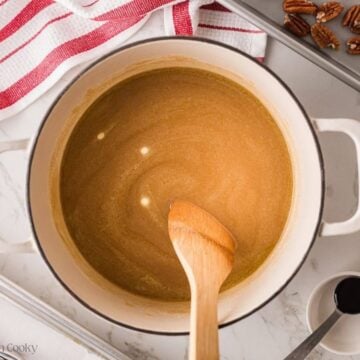
Add the brown sugar, granulated sugar, salt, cream and butter to a heavy-bottomed 3 to 4-quart saucepan. Cook over medium heat, stirring gently, until the butter melts and the sugar dissolves completely, about 5 minutes.
Step 3 | Boil to Temperature
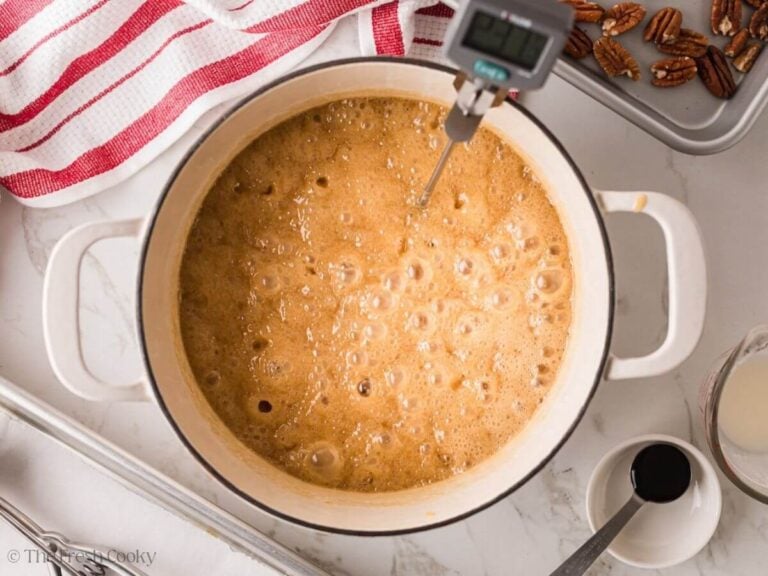
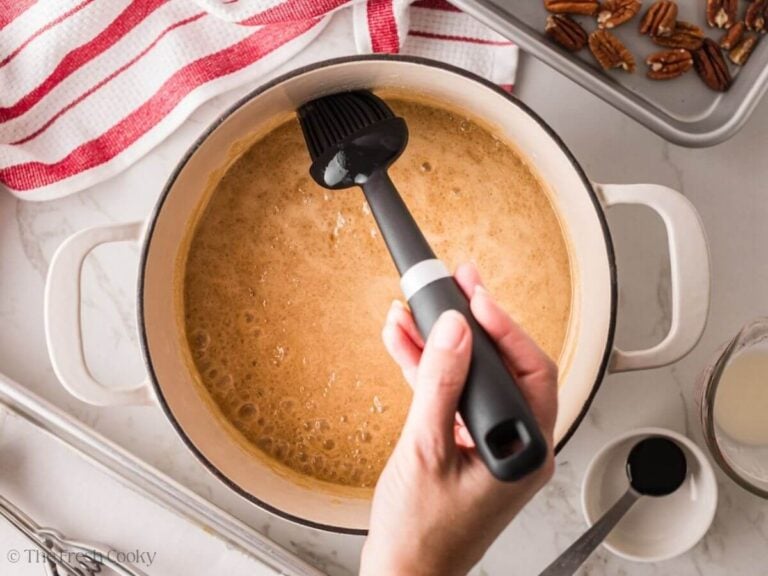
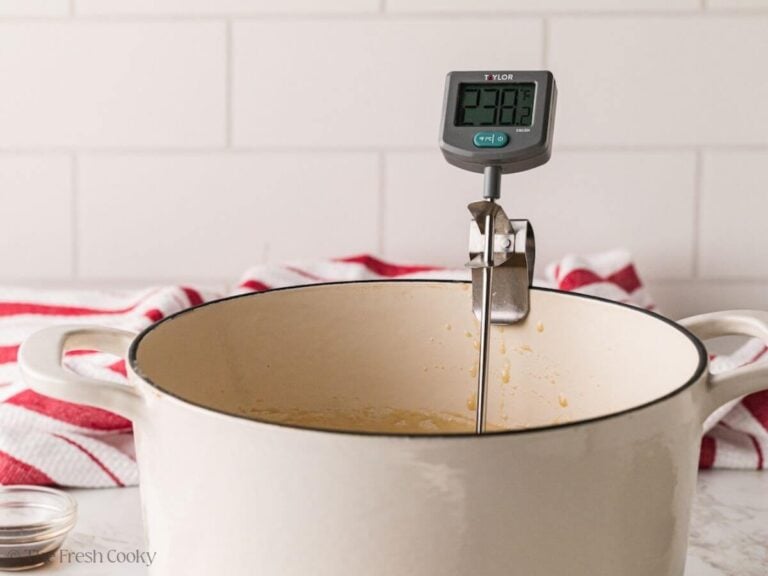
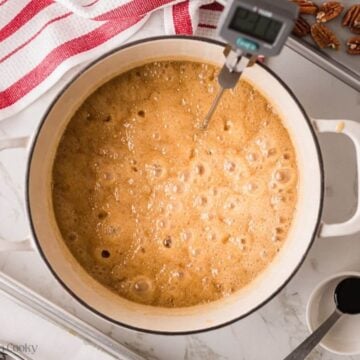
As it starts to boil at the edges, brush down the sides of the pot once with a wet silicone brush to wash away stray sugar crystals. Clip on the candy thermometer so the tip doesn’t touch the bottom. I use this digital clip-on candy thermometer, and I love it.
Keep cooking to the soft-ball stage, stirring gently and often so the cream doesn’t scorch, until it reaches 236°F to 238°F at sea level, or 225°F to 227°F at 5,280 feet. Sometimes this happens fast, so keep an eye on that candy thermometer. (Rule of thumb: subtract 2°F for every 1,000 feet, or subtract the difference from your thermometer test.)
Step 4 | Rest, then Stir Until it Turns
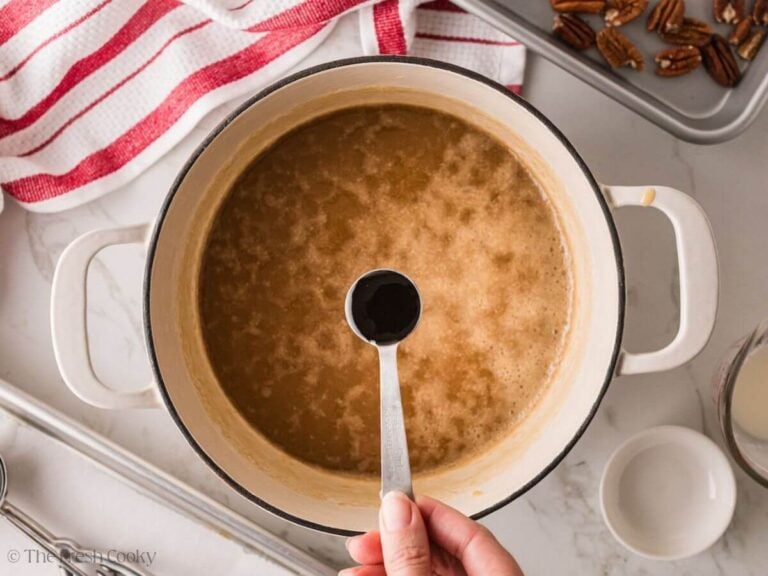
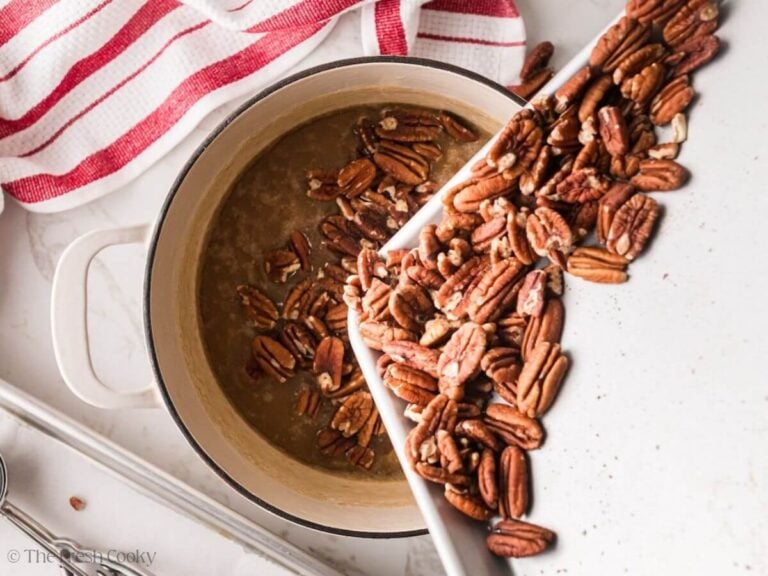
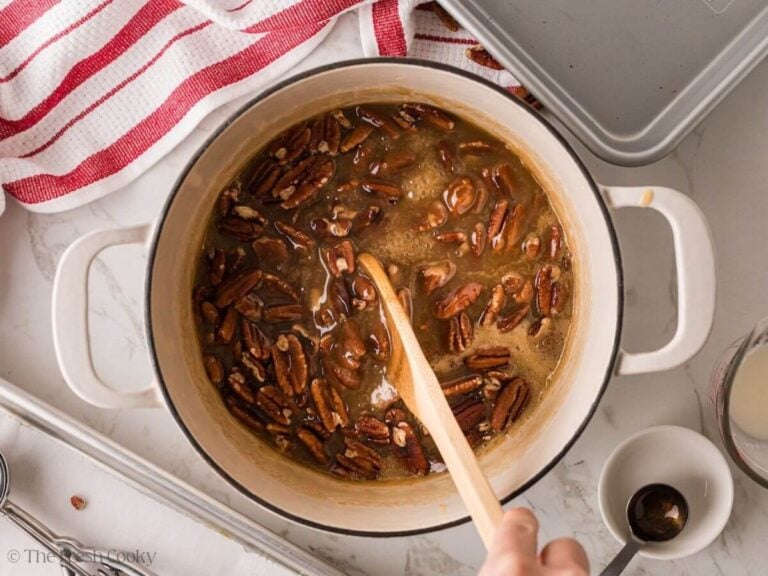
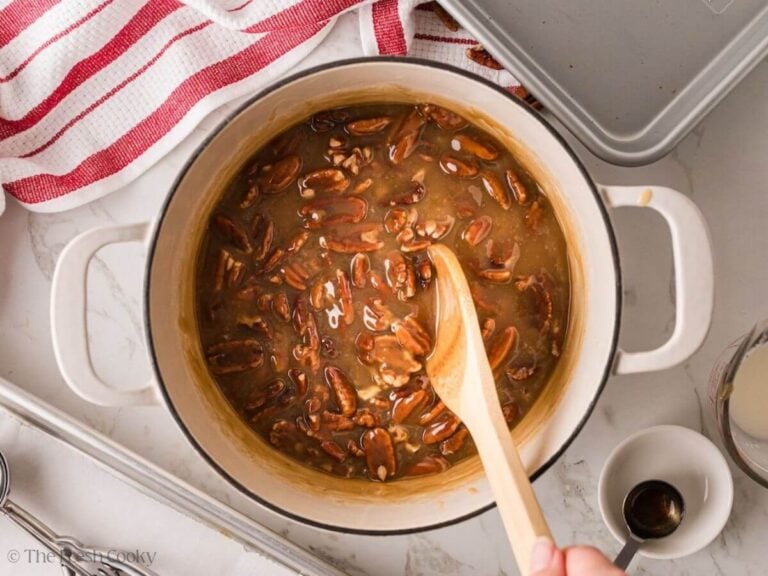
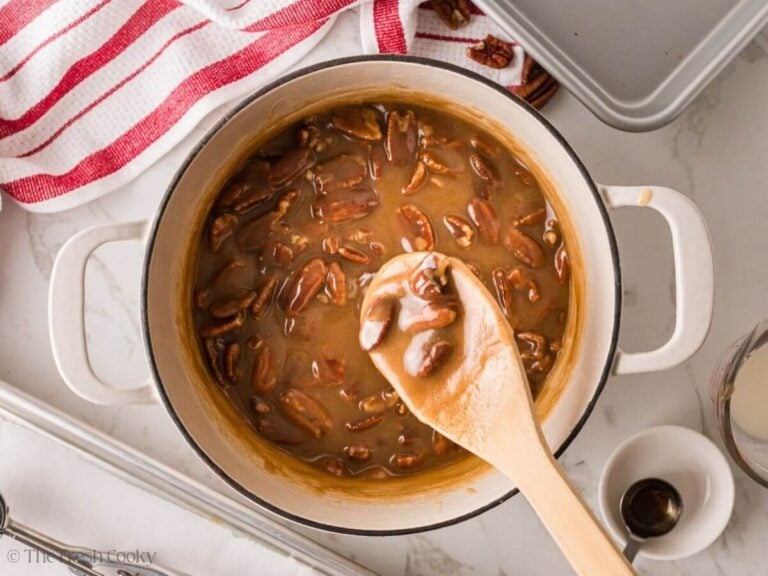
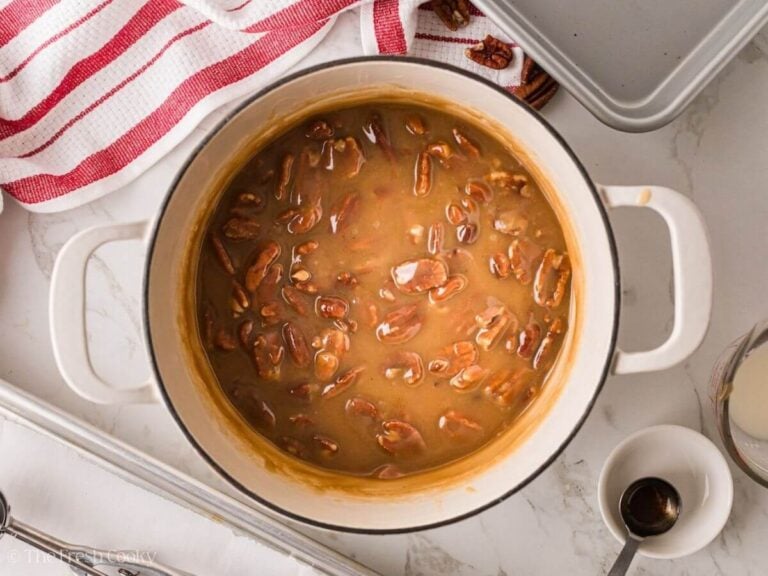
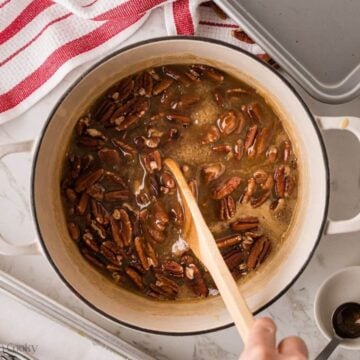
Remove from the heat, stir in the vanilla and pecans, and let the pan rest for 5 minutes. (Don’t skip the rest!) Then stir gently and steadily with a wooden spoon, a lot like making old-fashioned fudge, until the candy thickens, loses its shine and turns opaque, about 2 minutes. Do a test scoop or two. If it puddles without mounding at all, stir a few seconds longer and test again.
Step 5 | Scoop and Set
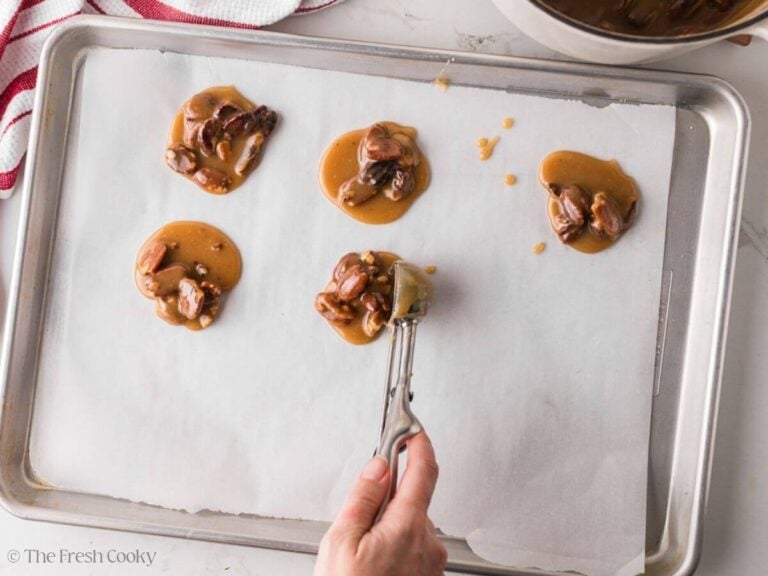
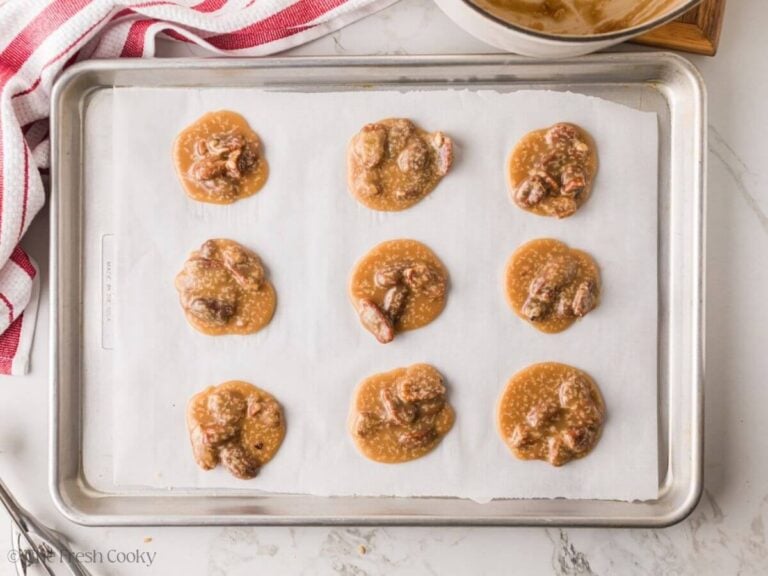
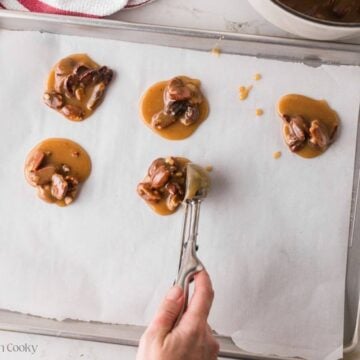
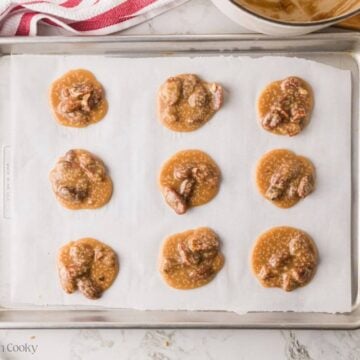
Working quickly, use a #40 cookie scoop (or two spoons) to drop pralines onto the lined pans, making sure each gets a few pecans. If the praline mixture seizes before you finish, stir in hot water a teaspoon at a time. Cool at room temperature for 20 to 30 minutes, until firm. (They’re delicious warm, too!)
Pecan Praline Recipe Tips
- Calibrate every time. Thermometers drift. A 3-degree error means you miss the right temperature, and your pralines turn out runny or rock-hard.
- Pick a dry day. Homemade candy hates humidity. Rainy days can keep pralines from setting, so try to make them on a dry day if possible.
- Use room-temperature pecans. Cold nuts cool the candy too fast in spots and can make it seize.
- Stir, don’t beat. Beating too long after the turn makes thick, grainy pralines. I overstirred one test batch, and it came out more granular than I wanted.
- Test early. Scoop one before you think it’s ready to see how it reacts. A test praline is never wasted. Even a crumbly one is amazing on ice cream!
- Keep hot water handy. Stir a teaspoon of hot water into the pan of praline mixture if it gets too thick to scoop.
- Make two batches instead of doubling. A double batch takes longer to cook and turns faster than you can scoop it. Two back-to-back batches are easier.
- No thermometer? Drop a little syrup into a cup of cold water. At the soft-ball stage it forms a soft ball you can flatten between your fingers. A thermometer is much more reliable, but this works in a pinch.
- Too runny? Scrape the mixture back into the pan, add 1 to 2 tablespoons of cream (or milk or water), reheat over medium-low until smooth, then bring back to a boil, rest, and stir again. Don’t skip the liquid, or the sugar can scorch or turn to hard caramel.
Pecan Praline Variations
After you’ve nailed this homemade pecan praline recipe, try one of these easy twists.
- Chocolate drizzle. Once the pralines set, drizzle a little melted chocolate over the tops. Let it firm up before you stack them. Or dip them half way in chocolate.
- Flaky sea salt. Sprinkle a pinch over each praline right after scooping, while it’s still warm, so it sticks. Salty and sweet!
- Dairy-free. Swap in a plant-based butter and a plant-based heavy cream. I haven’t tested this one yet, so if you try it, let me know in the comments how it turned out.
- Gluten-free. These pralines are naturally gluten-free as written. Just double-check the label on your vanilla.
How to Store Southern Pecan Pralines
Store homemade pralines in an airtight container at room temperature, layered between sheets of parchment paper, for 2-3 weeks. Skip refrigeration; moisture makes them sticky.
To freeze, pack them in an airtight, freezer-safe container with parchment between layers for up to 3 months. Thaw on the counter in the closed container so condensation doesn’t form on the candy.
Over time, you may see a dull, whitish film or spots on the surface. That’s just part of the crystallization process. They’re still delicious!
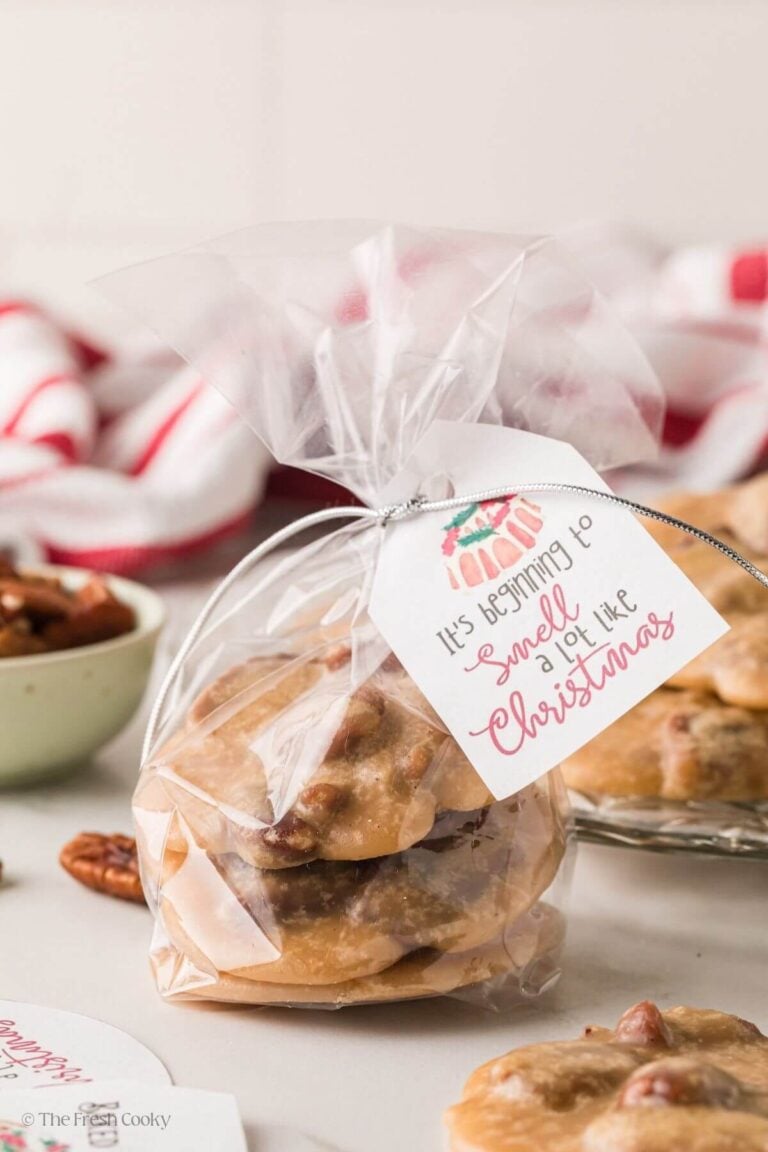
Gifting or shipping? Wrap pralines individually in cellophane, wax paper or plastic wrap and pack them snugly in a tin or box so they don’t slide around.
Pralines Recipe FAQs
People use the term two ways. Some mean individual pecans coated in a crunchy, sugary praline coating. Others use it for classic Southern pralines: cookie-sized clusters of pecans held together with creamy brown sugar candy, like this recipe.
Candied pecans are individual nuts tossed in a sweet coating (often maple, sugar or egg white) and baked until crisp, like my Maple Bourbon Candied Pecans recipe. Pecan pralines are a cooked candy: sugar, butter and cream boiled to the soft-ball stage, then stirred with pecans until creamy and scooped into rounds.
The big ones: not calibrating the thermometer, using cold pecans, skipping the 5-minute rest, beating too long after the candy turns, and making them on a humid day. Each one is easy to avoid once you know about it.
Trick question: a praline isn’t a nut at all! It’s a candy made with nuts. Southern pralines, like these, are made with pecans, which grow all over the South. The original French version used almonds, and in Europe you’ll still find praline made with almonds or hazelnuts, often ground into a paste for chocolate candies.
In New Orleans it’s usually PRAH-leen. In much of the rest of the South you’ll hear PRAY-leen. My tester Callee grew up in southern Louisiana, and she says PRAH-leen, so I’m going with her. Either way, they disappear fast!
The candy most likely didn’t get hot enough, or you scooped before it turned opaque and thick. Humidity can also keep them soft. The good news: you can re-cook a runny batch (see the tips above).
Sugar crystals. They come from undissolved sugar on the sides of the pan or from stirring too long after the candy turns. Brush down the sides once it boils, and scoop as soon as it loses its shine.
Never toss them! Even dry, crumbly or grainy pralines are amazing. Crumble them over vanilla ice cream, fold them into cookie or brownie dough, or sprinkle them over the top of a cake. I’m looking at you, Pear Bundt Cake with Vanilla Sauce!
More Holiday Sweets to Try
These sit right next to pralines in my holiday cookie tins.
- Caramel Peanut Clusters: Caramel and nuts, the closest cousin to a praline.
- Crockpot Chocolate Peanut Clusters: Big-batch candy, no thermometer needed.
- Christmas Cookie Fudge: Creamy, festive and easy to cut into squares for gifting.
- Easy Champagne Chocolate Truffles: They dress up any gift box.
- Christmas Muddy Buddies: Comes with free printable gift tags!
- Brown Sugar Shortbread: Deep caramel flavor for your cookie tray.
Like this recipe?
Don’t forget to give it a ⭐️⭐️⭐️⭐️⭐️ star rating and leave a comment below the recipe!
Equipment
Ingredients
- 1 ¾ cups packed light brown sugar fresh and soft (if old and dried you will get grainy, gritty candy)
- 1 ¼ cups granulated sugar I used all natural cane sugar, white granulated sugar may be used.
- ¼ teaspoon kosher salt
- 1 cup heavy cream or evaporated milk, or other milks (see notes)
- 6 tablespoons salted butter cut into cubes, if using unsalted butter, add additional pinch of salt
- 1 teaspoon vanilla extract vanilla bean paste, or try my bourbon vanilla extract, amazing!
- 2 cups pecan halves toasted and cooled to room temperature (or raw, at room temperature; if frozen, let them come to room temperature first)
Instructions
Test the thermometer and toast the pecans
- Step 1: Test your thermometer. Clip it in a pot of boiling water. Note the reading. Water boils at about 212°F at sea level and about 202°F in Denver. Use that number to adjust your target temperature below.

- Step 2: Toast the pecans. Spread on a sheet pan and bake at 350°F for 6 to 8 minutes, until fragrant. Toast them first, then let them cool completely to room temperature before adding. Using frozen pecans? Let them come to room temperature first, too.2 cups pecan halves
- Step 3: Prep everything first. Line the pans. Measure the vanilla. Have the pecans and scooping spoons ready.
Cook the candy
- Step 4: Add the brown sugar, granulated sugar, salt, heavy cream and butter to the saucepan.1 ¾ cups packed light brown sugar, 1 ¼ cups granulated sugar, ¼ teaspoon kosher salt, 1 cup heavy cream, 6 tablespoons salted butter
- Step 5: Cook over medium heat, stirring gently (no need to go crazy), until the butter melts and the sugar dissolves completely, about 5 minutes.
- Step 6: Bring to a boil. Just as it starts to boil at the edges, dip a silicone basting brush in hot water (wet, not soaking) and brush down the sides of the pan to wash off any sugar granules. Those granules can make your candy grainy or cause it to seize. You only need to do this once.
- Step 7: Cook to soft ball. Clip on the thermometer. Keep cooking, stirring gently and often so the cream does not scorch, until it reaches 236°F to 238°F at sea level, or 225°F to 227°F at high altitude (5,280 feet). Sometimes this happens fast, so keep an eye on that candy thermometer. (Rule of thumb: subtract 2°F for every 1,000 feet, or subtract the difference from your thermometer test.)
Add pecans, rest, and stir until it turns
- Step 8: Remove from the heat and stir in the vanilla and room-temperature pecans. Let the candy rest off the heat for 5 minutes. Don't skip this rest.1 teaspoon vanilla extract, 2 cups pecan halves
- Step 9: Stir (don't beat) gently and steadily with the wooden spoon until it thickens, loses its glossy shine and looks more opaque. Set your timer for 2 minutes; it shouldn't take much longer than that. At altitude, mine took less than 2 minutes. Do a test scoop or two before you think it's ready. If it puddles without mounding at all, keep stirring a few more seconds and test again.
Scoop and set
- Step 10: I use a #40 cookie scoop for quick, easy scooping. You can also use 2 tablespoons, one to scoop and the other to scrape it onto the lined pan. Make sure each one gets a few pecans. Work quickly. If the mixture seizes up before you finish scooping, stir in a teaspoon of hot water at a time until it loosens again, or return the pan to low heat and stir constantly.
- Step 11: Cool at room temperature for 20 to 30 minutes until firm. They're delicious warm, too.
Notes
- Cream vs. Milk: Heavy cream gives the creamiest, melt-in-your-mouth texture. Evaporated milk works well too, but I preferred heavy cream. Half-and-half, whole milk, and even buttermilk or a plant-based cream should work, though I haven’t tested them.
- Thermometer: Test it in boiling water first. Water boils at about 212°F at sea level and about 202°F in Denver. Adjust your target by the difference.
- Too Runny: Scrape it back into the pan with 1 to 2 tablespoons of cream or water. Reheat over medium-low heat until smooth, boil back to 236°F to 238°F (225°F to 227°F at 5,280 feet), rest 5 minutes, then stir until it turns.
- Seized in the Pan: Stir in hot water, a teaspoon at a time, until it loosens.
- Humidity: Candy hates rainy days. Pick a dry day.
- Storage: Airtight at room temperature for 2 to 3 weeks, or freeze up to 3 months.
Nutrition




Rate & Comment