

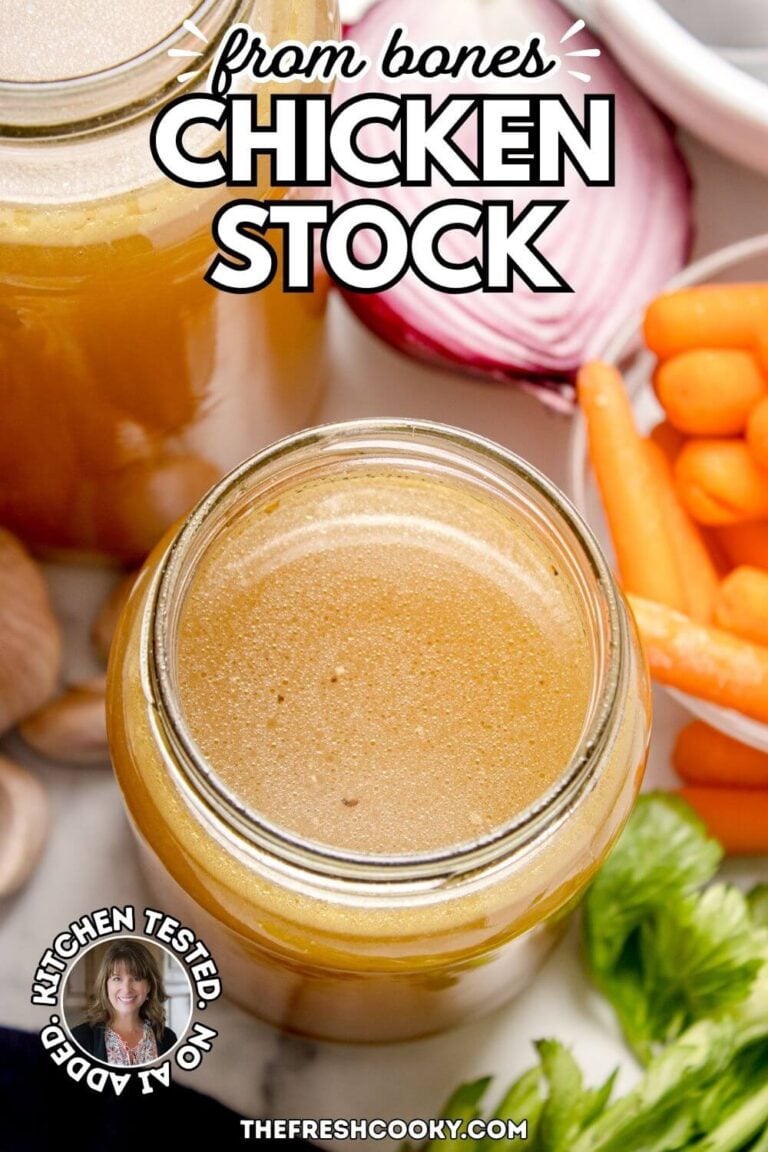

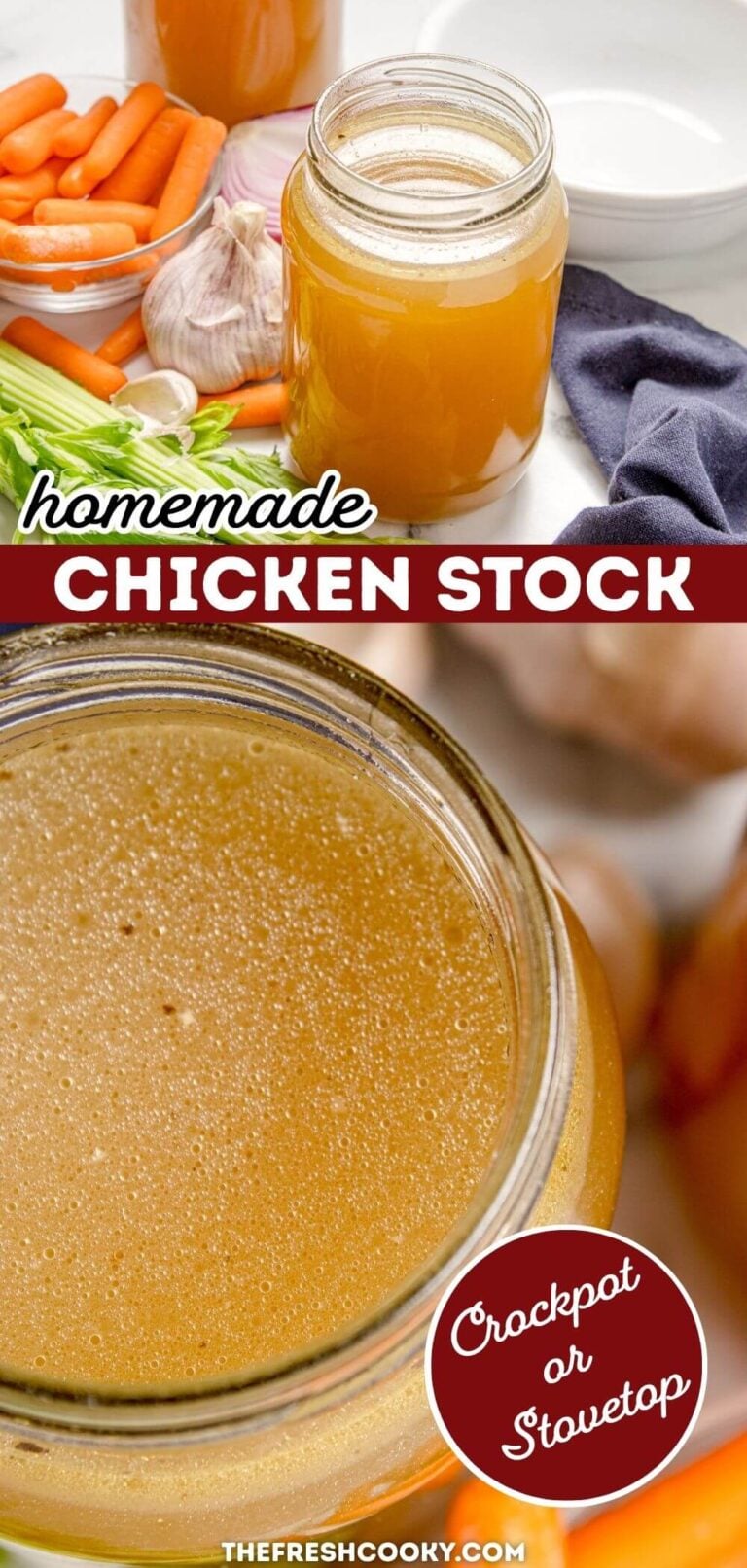

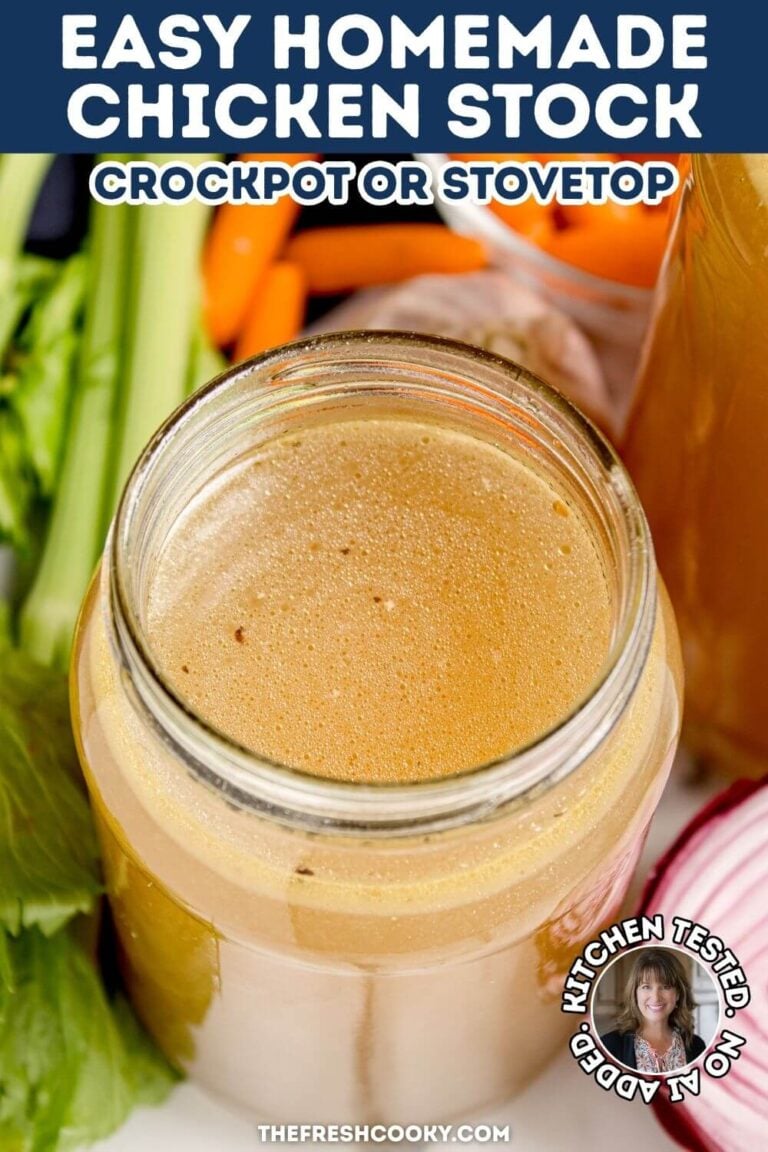
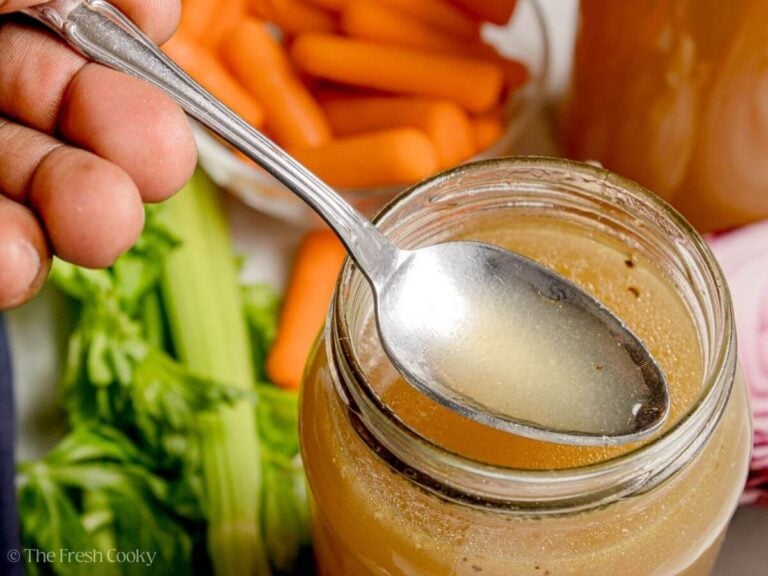
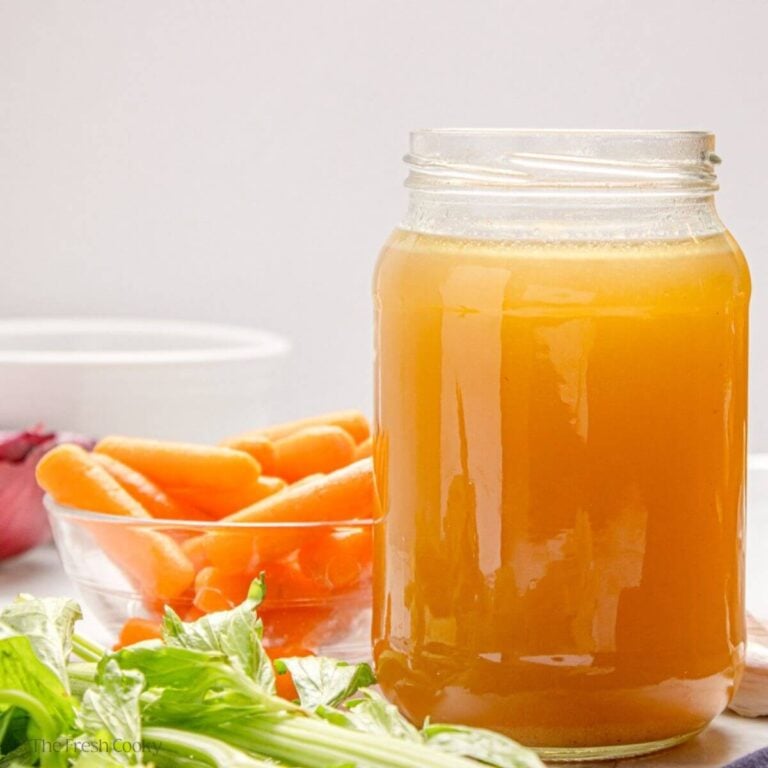
Skip the store-bought carton! This Slow Cooker Chicken Broth turns a leftover chicken carcass into rich, golden stock. Almost no effort. No stovetop babysitting.
I’ve served it in mugs to dinner guests on a chilly day, as a sipping appetizer. Every single one of them asked for the recipe. It’s that good!
I’m not a canner, so I freeze mine. I pour it into 1- and 2-cup Souper Cubes, then pop the frozen blocks into labeled bags. Need a cup for gravy? Grab one block. Recipe calls for a can of broth? That’s about 1¾ cups, so one 2-cup block covers it. A whole carton? Grab two. Done.
So grab that carcass. Let’s put your slow cooker to work.
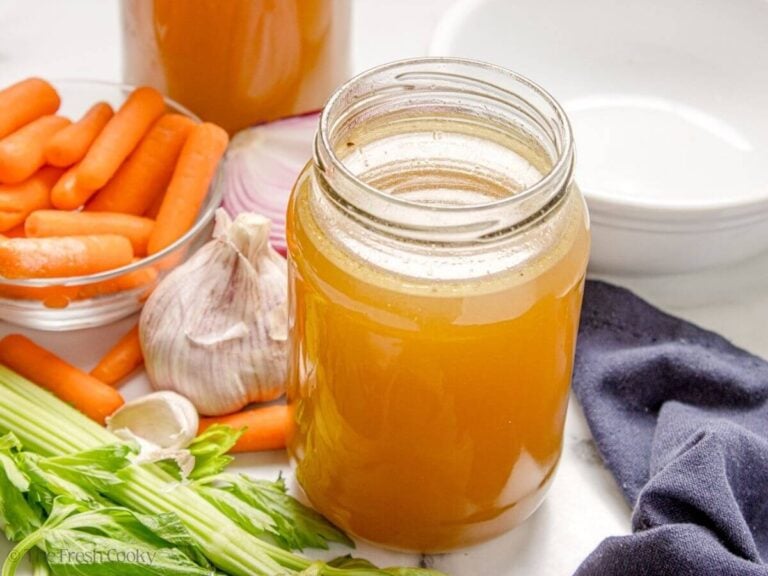
The Homemade Chicken Stock Everyone Asks Me For
I’ve been making homemade stock for years. Honestly, I can’t believe it took me this long to blog about it.
Lately, I’ve been bringing it to a friend who’s been recovering. I heat it up, pour it in a jar, and bring along a to-go coffee cup so she can sip it right away. She raves about it. Every. Single. Time.

It’s versatile and way easier than you think. The crockpot does the work. A carcass, a few veggies, herbs, some water. That’s it.
Save the bones from your next roast chicken (or turkey!). That’s the start of chicken noodle soup, gravy, or rice with way more flavor.

Why You’ll Love This Crockpot Chicken Stock
- Hands-off, start to finish. This crockpot chicken broth needs a quick chop and an optional broil. Then the slow cooker takes over while you go about your day.
- It gels. Hours of low heat pull collagen from the bones, so it turns jiggly in the fridge. You won’t find that in a carton.
- Three ways to make it. Slow cooker, Instant Pot, or stovetop. Cooked or raw carcass. No carcass? Wings, backs, necks, or drumsticks work too.
- Uses what you already have. A rotisserie carcass, celery ends, those tired carrots in the crisper drawer. In they go.
- You control the salt. Season lightly for cooking, or salt it well for sipping.
- Made for the freezer. Portion it out and you’ve got stock for soups, gravy, and rice for up to 3 months. Meal prep, done!
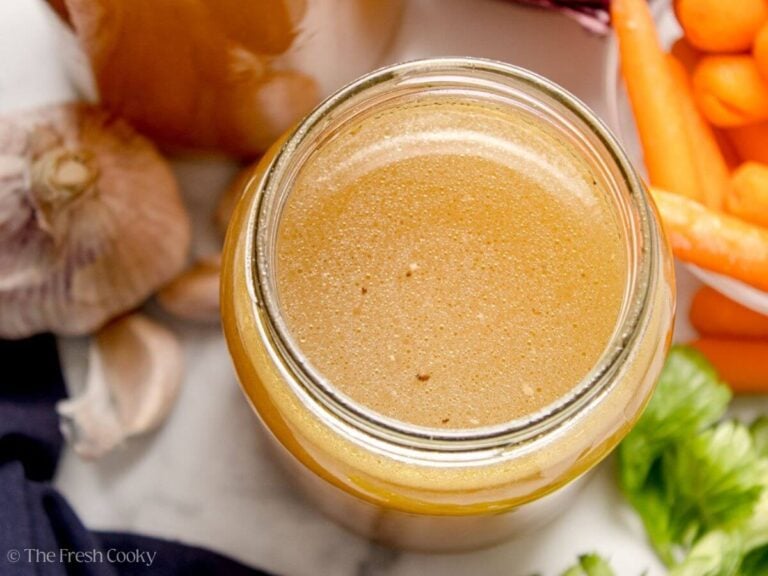
Chicken Broth vs. Chicken Stock
People constantly swap the two terms, and there’s no official rulebook. In general, stock is simmered from bones (with a little meat still clinging to them) for hours, which builds body and a slightly jiggly texture once chilled. Broth leans on the meat, simmers for less time, and is usually seasoned to sip on its own.
This recipe is technically a stock. I season it lightly and use it anywhere a recipe calls for homemade chicken broth or stock. But thanks to that long, slow cook, it crosses into bone broth territory.
Can You Make Chicken Bone Broth in a Crock Pot?
You sure can. In fact, I just did!
Chicken bone broth usually simmers 12 to 24 hours. At 10 to 12 hours on Low, this recipe lands right at the start of that range.
And the proof is in the fridge. My last batch used one carcass, just shy of 2 pounds with some meat still on it. It set up with that tell-tale jiggle, just like every batch before it. That’s collagen from the bones. It’s what makes bone broth, bone broth.
Want an even firmer gel? Toss in a few wings or a couple of chicken feet.
So yes. In my book, this is chicken bone broth!
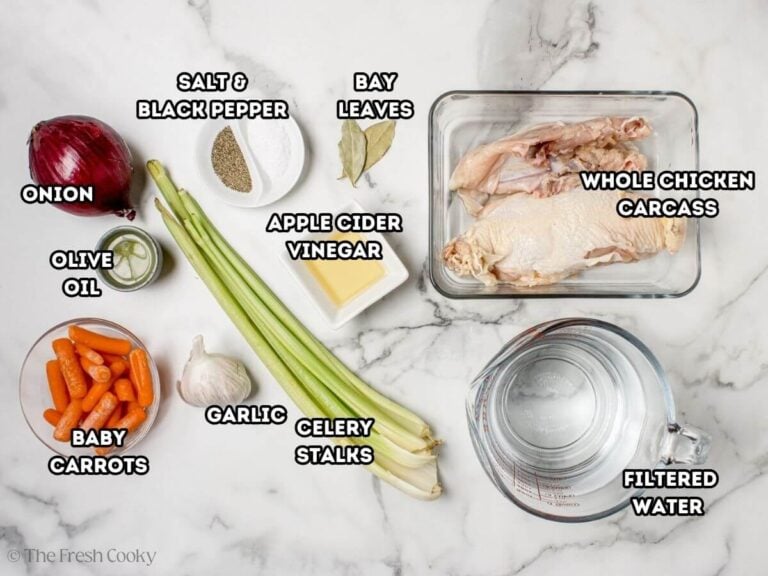
Homemade Chicken Broth Ingredients
One carcass (about 2 pounds) makes about 8 cups of stock.
- Chicken carcass: The foundation. Cooked or raw both work, and turkey does too. The bones, skin, and leftover meat are what create that rich, collagen-packed flavor.
- Chicken feet or wings (optional): Two cleaned chicken feet or 3 to 4 wings add extra collagen for a firmer gel. Raw or cooked both work.
- Apple cider vinegar: A small splash you won’t taste in the finished stock. Many cooks add it to help pull more from the bones. White vinegar or lemon juice work too.
- Onion: Sweet, savory depth. Any variety works. Wash it and leave the peel on. It adds a gorgeous golden color.
- Celery: A classic stock veggie that adds depth without overpowering. Celery leaves or celery root are good swaps.
- Baby carrots: Natural sweetness and a golden color. Regular carrots cut into large pieces work too.
- Garlic: Halve a bulb to infuse slowly without taking over. Cloves or roasted garlic work in a pinch.
- Bay leaves: A subtle herbal note. Fresh thyme, parsley stems, or Italian seasoning can stand in.
- Optional spices: I like adding whole peppercorns and 4 to 5 whole allspice berries, like in my beef bone broth. It adds a special flavor without taking over.
- Water: Cold, filtered water. Use just enough to cover, because too much dilutes the flavor.
- Salt and black pepper: Keep it light, since you’ll likely season again when you use the stock.
- Olive oil: Only needed for browning a raw carcass.
Get the full recipe in the recipe card below.
How to Make Slow Cooker Chicken Broth
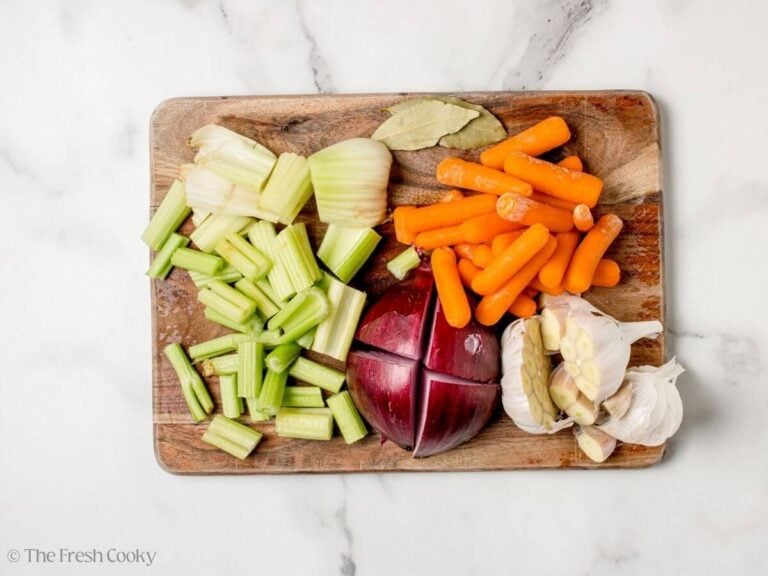
Step 1 | Prep the veggies
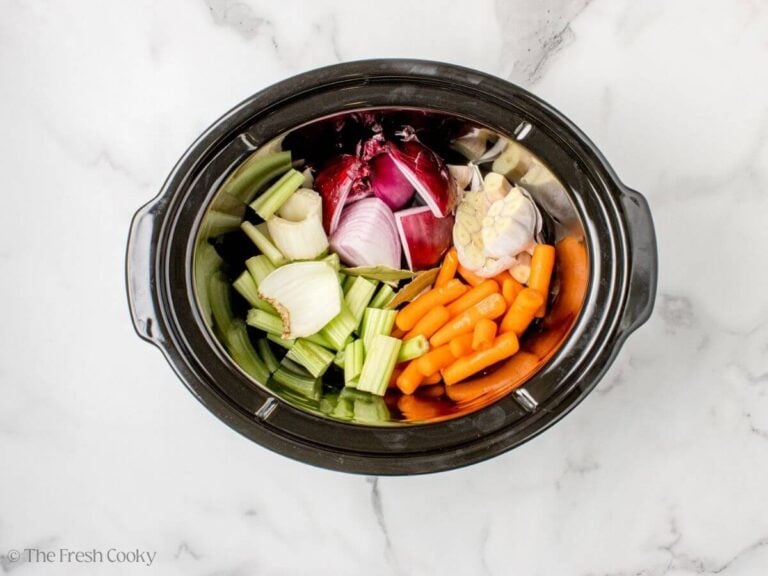
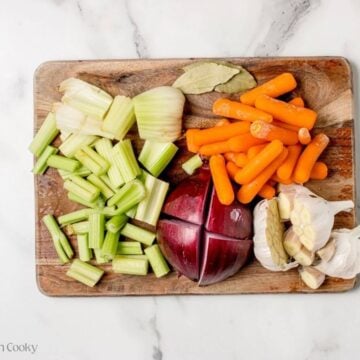
Chop the celery into large pieces, halve the garlic bulb, and quarter the onion. This is a great way to use up older veggies and the bases and tops of celery.
Step 2 | Brown the carcass
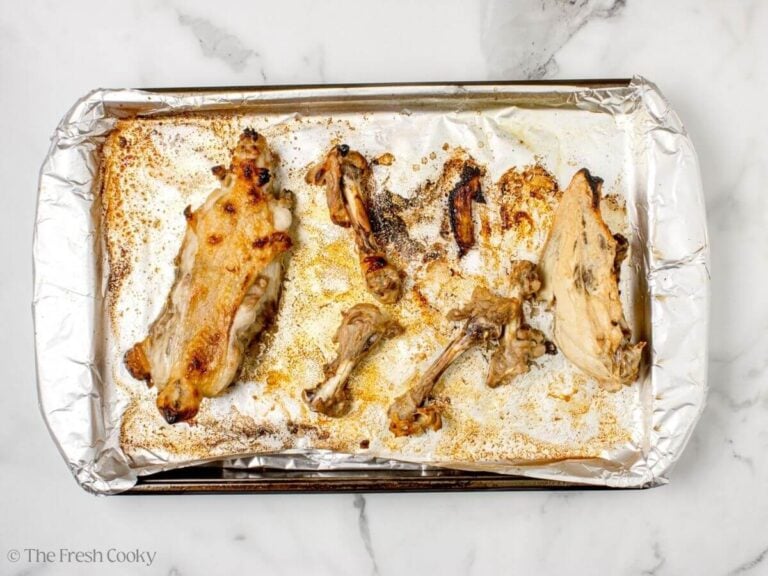
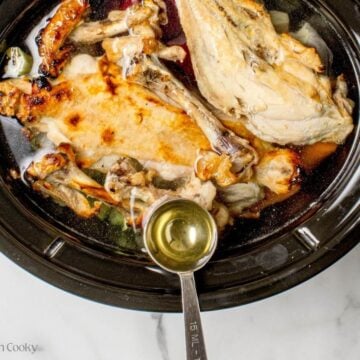
For a raw carcass, set it on a foil-lined baking sheet, brush with olive oil, and broil 6 to 10 minutes until lightly browned. For a rotisserie or roasted carcass, skip this or broil 3 to 5 minutes for extra flavor.
Pro tip: roast the veggies alongside it with a little olive oil, salt, and pepper for even more flavor.
Step 3 | Fill the slow cooker
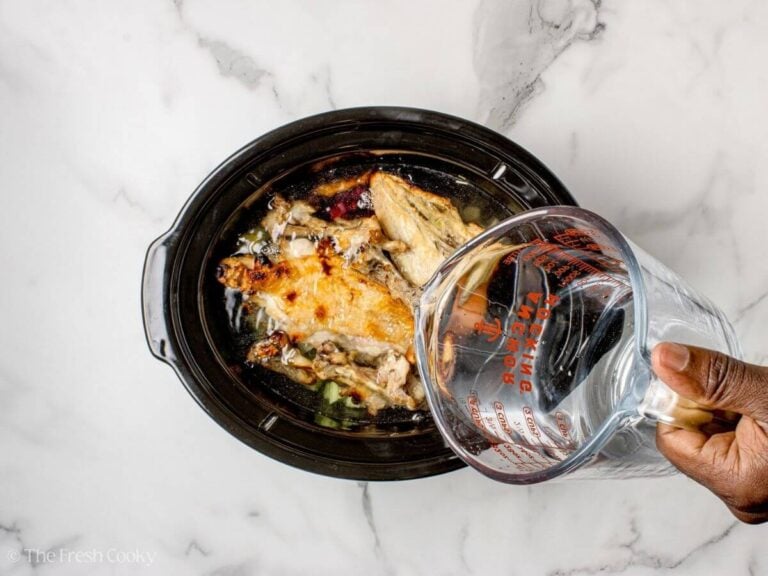
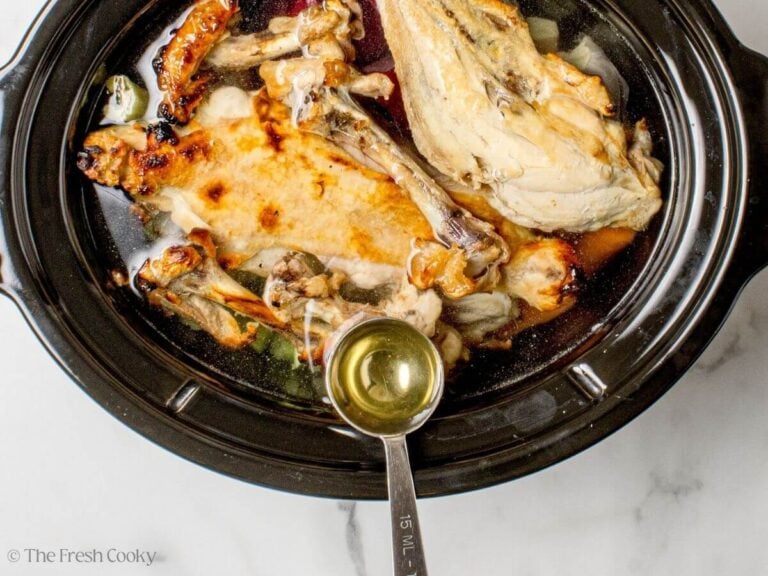
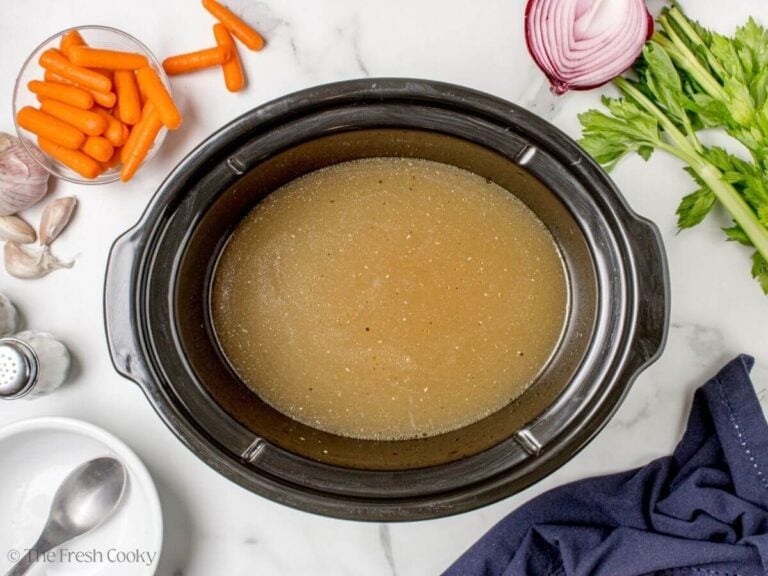
Add the celery, carrots, garlic, onion, and bay leaves, then set the carcass on top. Tuck in the wings or feet, if using.
Step 4 | Cook
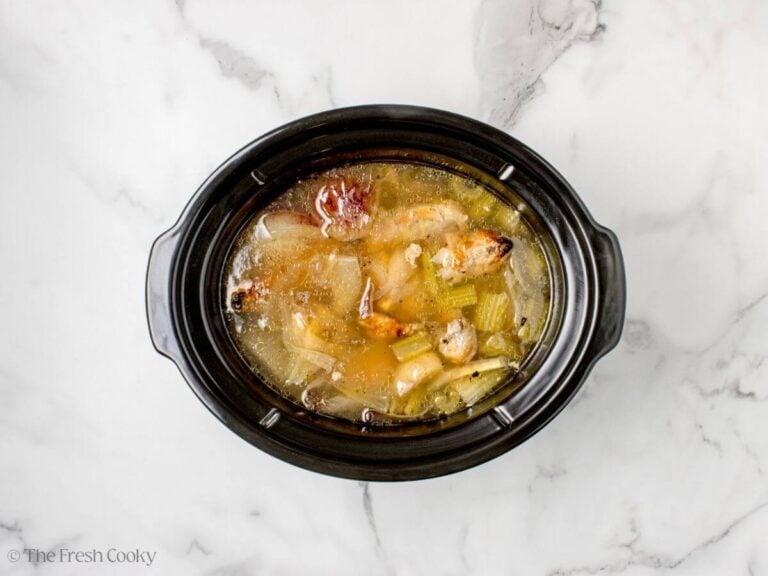
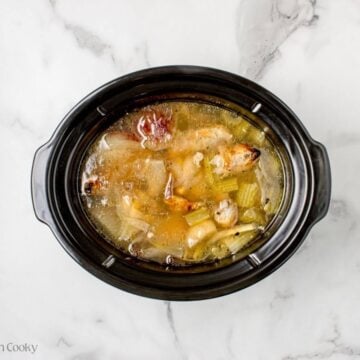
Cover and cook on Low for 10 to 12 hours, or High for 6 to 7 hours. For the richest slow cooker chicken stock, go low and slow.
I stop mine at 12 hours. But if life gets in the way, it’s fine to keep it going on Low for up to about 24 hours.
Step 5 | Strain
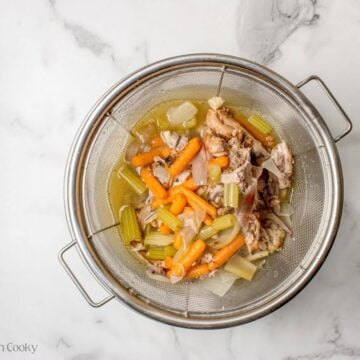
Remove the bones and veggies, then pour the stock through a fine-mesh strainer into a large bowl. Want it crystal clear? Line the strainer with cheesecloth first.
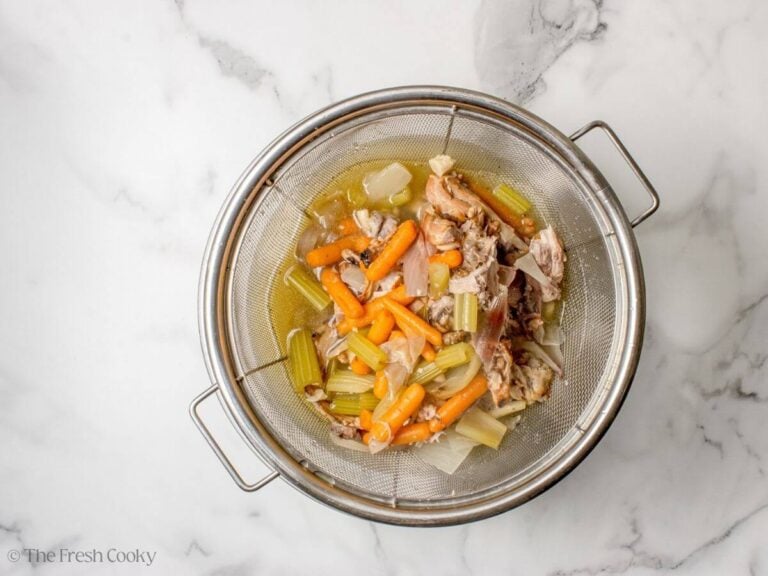
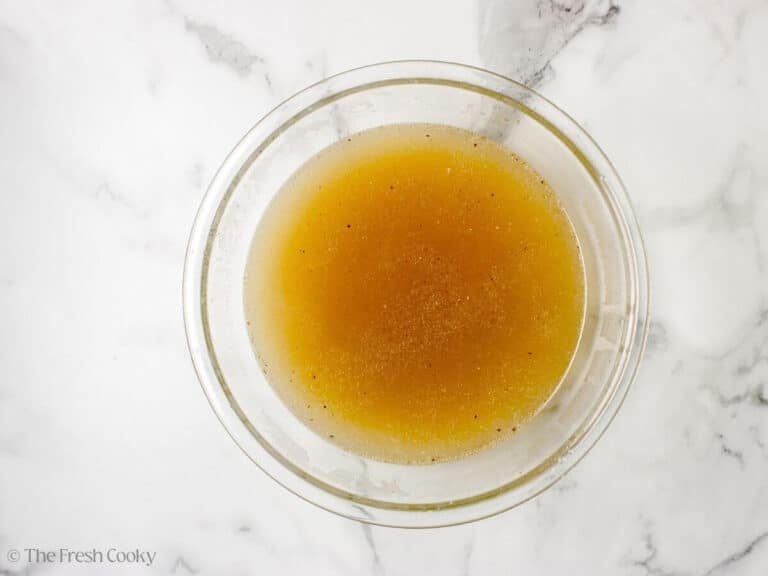
Step 6 | Cool and store
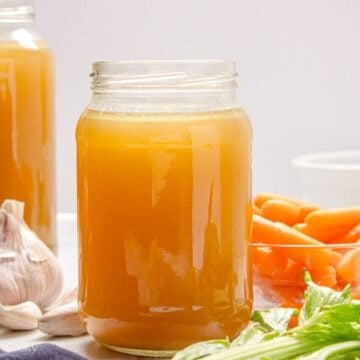
Let it cool for about 30 minutes, then pour into jars or airtight containers. Once it’s no longer hot, cover, label, and refrigerate (within 2 hours of finishing).
How to Make Chicken Stock in an Instant Pot
No time for an all-day simmer? Your Instant Pot gets you there in a fraction of the time.
- Prep and brown. Follow Steps 1 and 2 above. Break the carcass into a few pieces so it fits.
- Load the pot. Add the bones (plus any feet or wings), veggies, herbs, bay leaves, vinegar, and salt.
- Add water. Pour it over everything. A little extra is fine, but never fill past two-thirds full.
- Seal it. Lock the lid and turn the valve to Sealing, not Venting.
- Cook. Press Pressure Cook (or Manual) on High. Set it for 45 minutes for chicken stock (55 for high altitude) or 120 minutes for bone broth.
- Let it release. Let the pressure come down naturally for at least 30 minutes. Be patient here. With this much hot liquid, a quick release can sputter broth out of the valve.
- Strain and store. Strain, let it cool slightly, then transfer to containers.
Homemade Chicken Broth Variations
One of the best things about this homemade chicken broth recipe is how flexible it is.
- Fresh herbs: Rosemary and thyme are my favorites. Tarragon makes a fun twist. Got herbs about to go bad? Toss them in, stems and all.
- Turkey stock: The same method works for a turkey carcass. Use a large slow cooker or split it into smaller batches. It’s the base I use for my Turkey Giblet Gravy.
- No leftover carcass: Use chicken wings, backs, necks, or drumsticks.
- Stovetop: Same ingredients, big stockpot, barely simmering. Let it go 6 to 24 hours. Check every couple of hours and add a splash of hot water if the level drops below the bones.
- Unsalted: Skip the salt and season whatever you make with it. Planning to sip it? Salt it well first.
Gluten-Free, Dairy-Free, and Low-Carb
Good news for just about everyone at your table. This homemade chicken broth is naturally gluten-free, dairy-free, low-carb, and keto-friendly. Paleo and Whole30 too.
If you cook gluten-free, that’s a big deal. Store-bought broths can sneak in flavorings and additives, so you’re stuck reading labels. With homemade, you know exactly what went in the pot.
Tips for the Best Slow Cooker Chicken Broth
- Keep a bone bag (and a veggie scrap bag). Toss leftover bones from rotisserie chickens, roasts, and drumsticks in a freezer bag. Start a second bag for onion peels, carrot ends, and celery tops. Skip broccoli, cabbage, and cauliflower, though. They make stock taste sulfury and bitter.
- Cook low and slow. High works in a pinch. Low gives you better flavor and more body.
- Cooking at high altitude? Give it more time. Water simmers at a lower temperature up here, so it takes longer to pull everything from the bones. At 5,280 feet, I always go the full 12 hours on Low in the crockpot. On the stovetop, I aim for the longer end of the range too.
- Start with cold, filtered water. It heats up gradually with the bones, which pulls out flavor slowly.
- Use the right size slow cooker. Fill it at least halfway but no more than two-thirds full. This batch fits comfortably in a 6-quart. A smaller one may overflow.
- Thaw frozen bones first. Move them to the fridge the night before.
- Skim the fat, and save it. Spoon it off while the stock is warm, or chill it overnight. The fat hardens on top and lifts off in one piece. That’s schmaltz, rendered chicken fat, and it’s wonderful for roasting potatoes or sautéing onions. To keep it longer, scrape off any jelly stuck to the bottom. Melt it in a small pan until it stops sputtering, then strain it into a jar and refrigerate. Used a rotisserie carcass? The fat will be salty, so taste before you salt. Or skip all that and leave it in for extra richness.
Storage
Here’s how I store my crockpot chicken stock.
Refrigerator: Airtight containers, up to 3 to 4 days. Jiggly when cold? Perfect.
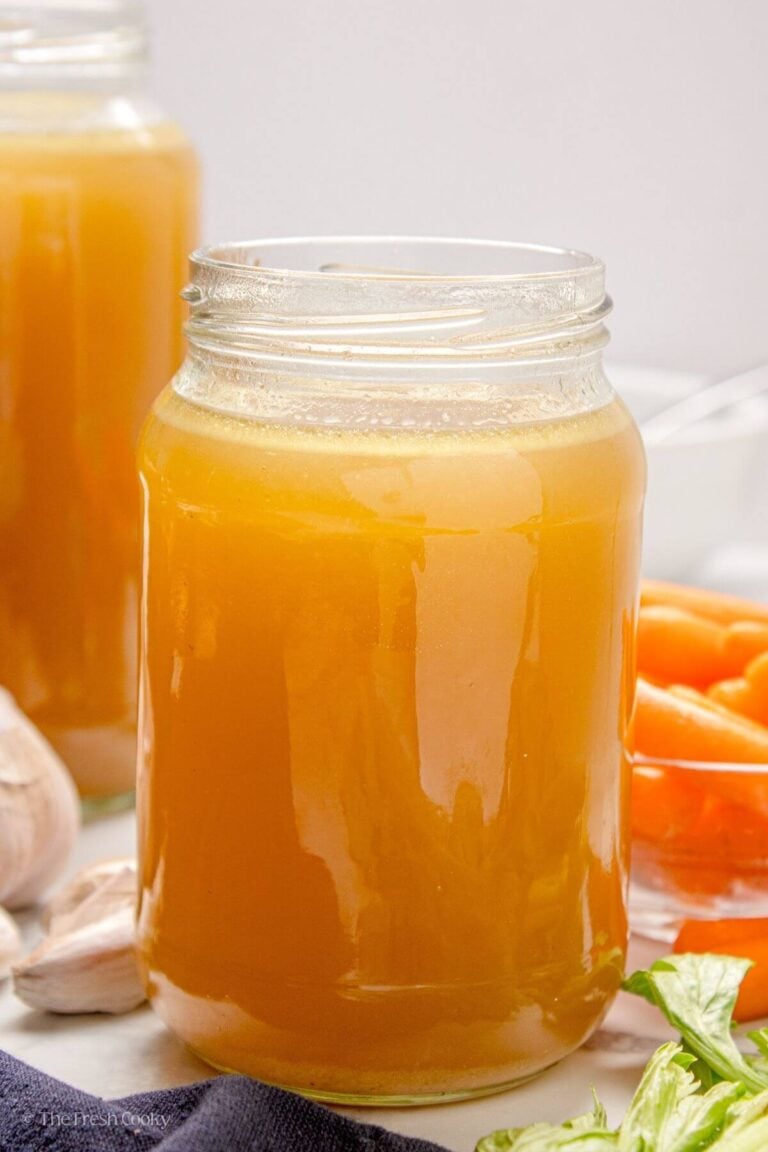
Freezer: Up to 3 months. I freeze mine in ½-cup, 1-cup, and 2-cup Souper Cubes. Freezer bags, ice cube trays, and mason jars work too. Lay bags flat so they stack. In jars, leave at least an inch of headspace (fill only to the “shoulders”).
Swap guide: A 14.5-ounce can of broth is about 1¾ cups, so one 2-cup block covers it. A 32-ounce carton is 4 cups, or two 2-cup blocks.
Reheating: Thaw overnight in the fridge, or warm it gently in a saucepan. Bring it to a boil before using.
How to Use Slow Cooker Chicken Broth
Once you’ve got a few containers of homemade chicken broth in the freezer, you’ll find yourself reaching for it all the time. Use it anywhere a recipe calls for chicken broth or stock, swapping it in cup for cup. Because I season this one lightly, taste as you go and adjust the salt at the end.
Sip It Straight
Yes, you can drink it straight. I do!
The secret? Salt. I keep it light when I’m cooking with it, but for sipping, I make sure it’s well salted. Salt is what wakes up all that flavor. Heat a cup, salt it, taste, and add more if needed.
It’s my go-to for anyone who’s under the weather.
Want a meatless mug? My vegetable mineral broth is the other one I keep in the freezer for sipping.
Soups and Stews
This is where homemade stock really shines, since the broth is the flavor base.
- Lemon Chicken Soup
- Creamy Chicken and Wild Rice Soup
- Chicken Tortilla Soup
- Copycat Cracker Barrel Chicken and Dumplings
- Ramen
- Slow Cooker Ham and Bean Soup
Browse more in my Soups & Stews and Crockpot recipe collections.
Everyday Cooking
- Rice, pasta, and grains: Cook them in stock instead of water for a big flavor boost with zero extra effort.
- Mashed potatoes: Swap some of the milk or cooking water for stock for a savory twist.
- Gravy and pan sauces: Stock is the base for both, and small frozen cubes are perfect for a quick pan sauce.
- Sautéing and reheating: A splash keeps leftovers, vegetables, and shredded chicken from drying out.
Slow Cooker Chicken Stock FAQs
That’s collagen from the bones turning into gelatin, and it’s a good thing. That’s why homemade beats the carton. It melts right back to liquid when heated.
Usually it’s too much water, not enough bones, or not enough time. Mine gels every time at 10 to 12 hours on Low. If yours didn’t, use just enough water to cover next time and add a few wings or chicken feet. Still didn’t gel? It’s great stock anyway. Use it!
Save it! That’s schmaltz. Scrape off any jelly clinging to the bottom, then melt it in a small pan until it stops sputtering. Strain it into a jar and refrigerate. Use it anywhere you’d use butter or oil. Potatoes roasted in schmaltz? Oh my.
Yes! Salt it well first, then sip it warm. Salt is what brings out all the flavor.
Yes. After about 24 hours, the bones have given up most of what they have to offer, and the flavor can turn flat or bitter.
Yes. Slow cookers are built to run unattended for hours. Set it on a heat-safe counter, away from the wall, with the lid on.
Thaw them in the refrigerator first. Starting with thawed bones helps everything heat evenly and safely.
It’s harmless. It usually happens when stock boils instead of gently simmering, which churns fat and bits into the liquid. Stick with Low and strain through a fine-mesh strainer lined with cheesecloth.
Yes! Use the Instant Pot method above. Or use a large stockpot on your lowest burner and keep it at a gentle simmer for 6 to 24 hours. Check the water every couple of hours and top it off so the bones stay covered. If you aren’t comfortable leaving a burner on overnight (I get it), use the slow cooker method instead.
More Crockpot Recipes to Try
Like this recipe?
Don’t forget to give it a ⭐️⭐️⭐️⭐️⭐️ star rating and leave a comment below the recipe!
Video
Equipment
Ingredients
- 8 cups filtered water
- 1 chicken carcass cooked or raw, okay to use rotisserie chicken carcass (or 2 lbs, wings, drumsticks, back, or combo).
- 3 – 4 chicken wings or 2 cleaned chicken feet (optional, for extra gel)
- 1 tablespoon apple cider vinegar
- 2 small bay leaves
- Salt and black pepper Start with about 1 teaspoon salt & pepper, you'll season it after it's strained too.
- 4 stalks celery rough chopped
- 1 bulb garlic halved
- 1 ½ cups baby carrots or regular carrots, peeled, washed and rough chopped
- ½ – 1 red onion quartered, keeping skin on, wash outside before cutting, yellow or other onions may be used
- 1 tablespoon olive oil only if using an uncooked chicken carcass
Optional Ingredients
- 1 teaspoon black peppercorns in place of ground black pepper
- 6 whole allspice
Instructions
Prep the Vegetables (wash veggies first)
- Chop the celery into large pieces. Cut the garlic bulb in half and quarter the onion.4 stalks celery , 1 bulb garlic, ½ – 1 red onion

- Tip: This is also a great way to use up pieces and parts or older veggies. When I am preparing things like celery, I’ll often save the base and the tops and freeze and use in my stocks.
Brown the Chicken Carcass
- If you're using a raw chicken carcass or chicken pieces, line a baking sheet with aluminum foil and place the carcass on top. Brush it lightly with olive oil, then broil for 6 to 10 minutes, or until it’s lightly browned. *If you're using a rotisserie chicken or roasted chicken carcass, you can skip this step or broil it for 3 to 5 minutes for extra flavor. *This method can also be used to make turkey stock; you'll just need a large crockpot or split it into smaller portions.1 chicken carcass, 1 tablespoon olive oil, 3 – 4 chicken wings
- Pro Tip: If you want even more flavor, roast the veggies (toss in a little bit of olive oil and season with salt and pepper) along with the chicken, similar to my beef bone broth.

Fill the Slow Cooker
- Add the celery, carrots, garlic, onion, and bay leaves to the slow cooker. Place the chicken carcass on top, then pour in the water. Stir in the apple cider vinegar and season it lightly with salt and pepper or use black peppercorns.8 cups filtered water, 1 tablespoon apple cider vinegar, 2 small bay leaves, Salt and black pepper, 4 stalks celery , 1 bulb garlic, 1 ½ cups baby carrots, ½ – 1 red onion, 1 teaspoon black peppercorns, 6 whole allspice
Cook
- Cover with the lid and cook it on Low for 10 to 12 hours or High for 6 to 7 hours. Though for optimum collagen extraction, I suggest LOW and slow on this one. May be cooked for up to 24 hours.
Strain the Stock
- Remove the chicken bones and vegetables from the slow cooker. Carefully pour the stock through a fine-mesh strainer into a large bowl or measuring cup to catch any small pieces.
Cool and Store
- Let the stock cool for about 30 minutes, then pour it into glass jars or airtight containers. Once it’s no longer warm, cover, label and refrigerate it. Store it in the refrigerator for up to 5 days or freeze it for up to 3 months. If freezing, be sure to leave enough head room for the liquid to expand as it freezes, usually just up to the “shoulders” of the jar.
Notes
- Low vs. High: Low for 10 to 12 hours (up to 24 hours) gives the best collagen and flavor. High for 6 to 7 hours works in a pinch.
- High altitude: Plan on the longer end of the cook times, both in the slow cooker and on the stovetop.
- Frozen bones: Thaw them in the refrigerator first.
- No carcass? Use chicken wings, backs, necks, or drumsticks (about 2 pounds total). A mix of parts works well.
- Firmer gel: Add 2 cleaned chicken feet or 3 to 4 wings for extra collagen.
- Instant Pot: Follow Steps 1 and 2. Break the carcass into pieces so it fits, then add everything to the pot. Add water, but never fill past two-thirds full. Seal and cook on High Pressure for 45 minutes for stock or 120 minutes for bone broth. Let the pressure release naturally for at least 30 minutes, then strain. Details in post
- Stovetop: Add everything to a large stockpot and bring to a bare simmer over low heat. Don’t let it boil. Simmer 6 to 24 hours, checking every couple of hours and adding hot water as needed to keep the bones covered. Strain. Details in post
- Storage: Refrigerate within 2 hours of finishing. Store in airtight containers for up to 3 to 4 days. It may turn jelly-like when chilled, which is normal and means the bones released collagen.
- Freeze: Up to 3 months in freezer-safe containers, Souper Cubes, freezer bags, or ice cube trays. In jars, leave at least an inch of headspace (up to the “shoulders”) for expansion. Label with the date and amount.
- Reheating: Thaw overnight in the fridge or warm slowly in a saucepan. Bring to a boil before using.
Nutrition







Rate & Comment